Kumar Dinesh, Kumar Swapnil, Ayachit Garima, Bhairappanavar Shivarudrappa B, Ansari Afzal, Sharma Priyanka, Soni Subhash, Das Jayashankar
Gujarat Institute of Bioinformatics, Gujarat State Biotechnology Mission, Department of Science & Technology, Government of Gujarat, Gandhinagar 382011, India.
Int J Mol Sci. 2017 Jun 3;18(6):1191. doi: 10.3390/ijms18061191.
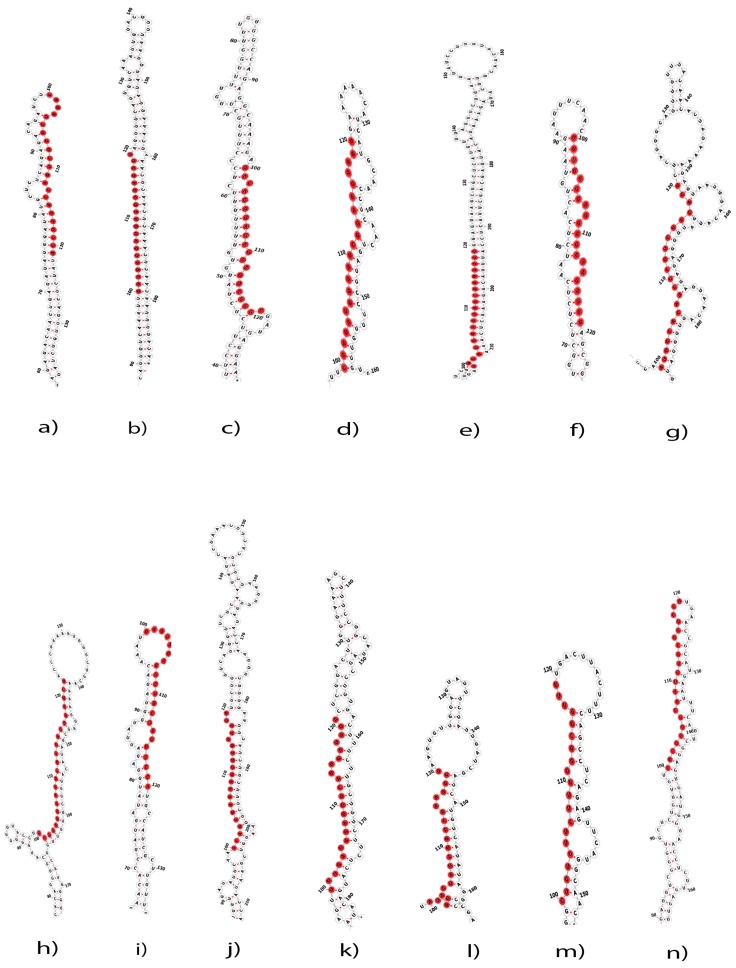
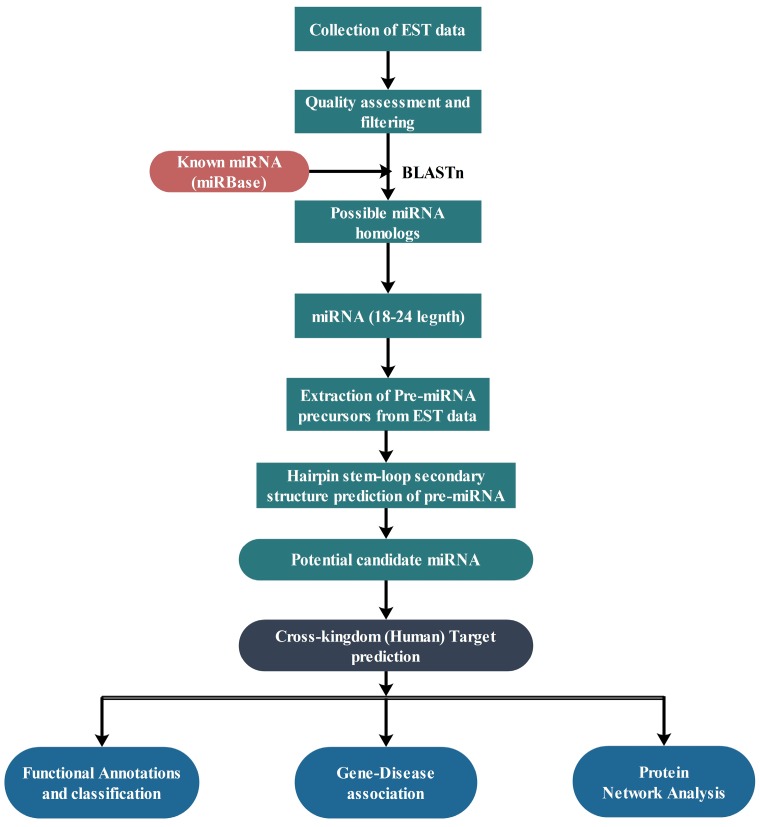
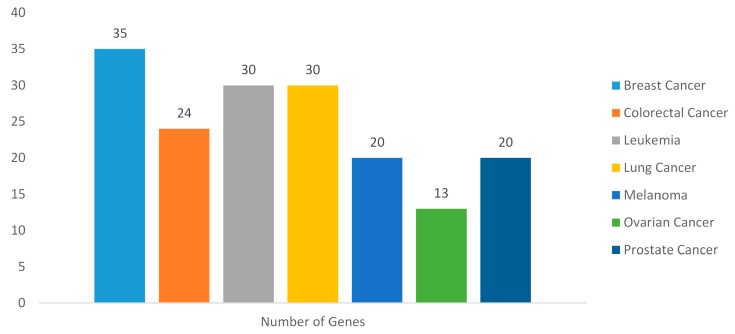
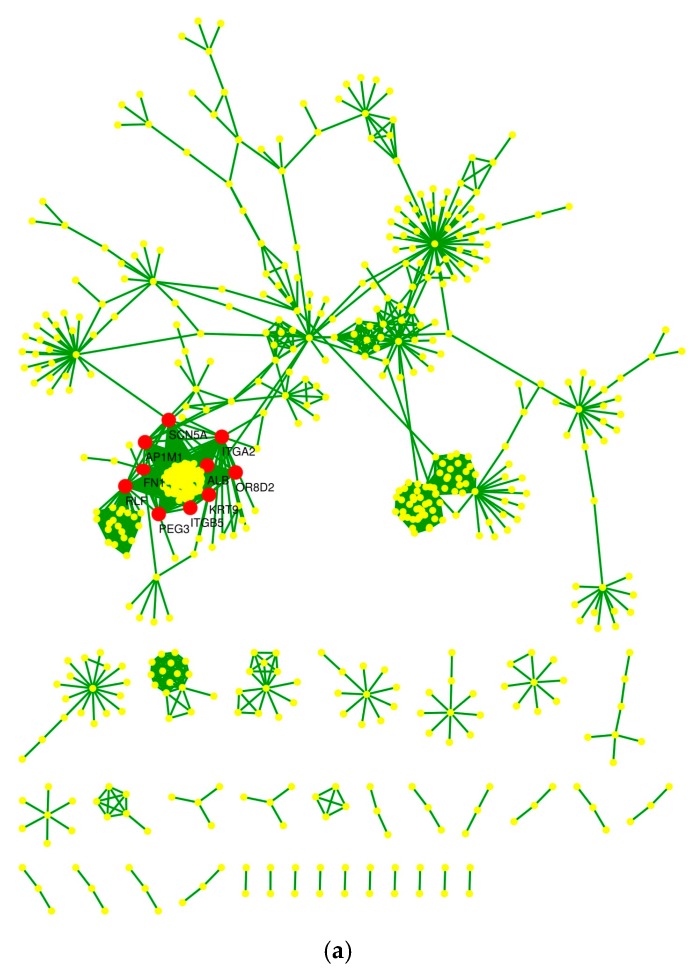
MicroRNAs (miRNAs) are well-known key regulators of gene expression primarily at the post-transcriptional level. Plant-derived miRNAs may pass through the gastrointestinal tract, entering into the body fluid and regulate the expression of endogenous mRNAs. , a highly important medicinal plant known for its anti-cancer potential was selected to investigate cross-kingdom regulatory mechanism and involvement of miRNAs derived from this plant in cancer-associated pathways through in silico systems biology approach. In this study, total 33 highly stable putative novel miRNAs were predicted from the publically available 53,294 ESTs of , out of which 14 miRNAs were found to be regulating 152 target genes in human. Functional enrichment, gene-disease associations and network analysis of these target genes were carried out and the results revealed their association with prominent types of cancers like breast cancer, leukemia and lung cancer. Pathways like focal adhesion, regulation of lipolysis in adipocytes and mTOR signaling pathways were found significantly associated with the target genes. The regulatory network analysis showed the association of some important hub proteins like GSK3B, NUMB, PEG3, ITGA2 and DLG2 with cancer-associated pathways. Based on the analysis results, it can be suggested that the ingestion of the miRNAs may have a functional impact on tumorigenesis in a cross-kingdom way and may affect the physiological condition at genetic level. Thus, the predicted miRNAs seem to hold potentially significant role in cancer pathway regulation and therefore, may be further validated using in vivo experiments for a better insight into their mechanism of epigenetic action of miRNA.
微小RNA(miRNA)是众所周知的基因表达关键调节因子,主要作用于转录后水平。植物来源的miRNA可能会穿过胃肠道,进入体液并调节内源性mRNA的表达。本研究选用了一种以其抗癌潜力而闻名的重要药用植物,通过计算机系统生物学方法研究其跨界调节机制以及该植物来源的miRNA在癌症相关途径中的作用。在本研究中,从公开可得的该植物53294条EST序列中预测出总共33个高度稳定的假定新型miRNA,其中14个miRNA被发现可调节人类的152个靶基因。对这些靶基因进行了功能富集、基因-疾病关联和网络分析,结果显示它们与乳腺癌、白血病和肺癌等主要癌症类型相关。发现诸如粘着斑、脂肪细胞中脂解调节和mTOR信号通路等途径与靶基因显著相关。调控网络分析表明,一些重要的枢纽蛋白如GSK3B、NUMB、PEG3、ITGA2和DLG与癌症相关途径有关联。基于分析结果,可以推测摄入该植物的miRNA可能以跨界方式对肿瘤发生产生功能影响,并可能在基因水平上影响生理状况。因此,预测的miRNA似乎在癌症途径调节中具有潜在的重要作用,因此,可能需要通过体内实验进一步验证,以便更好地了解其miRNA表观遗传作用机制。