Jha Neha, Mangukia Naman, Gadhavi Harshida, Patel Maulik, Bhavsar Mansi, Rawal Rakesh, Patel Saumya
Department of Botany, Bioinformatics and Climate Change Impacts Management, School of Sciences, Gujarat University, Ahmedabad, 380009, Gujarat, India.
BioInnovations, Bhayander (West), Mumbai, 401101, Maharashtra, India.
Mol Genet Genomics. 2022 Jul;297(4):981-997. doi: 10.1007/s00438-022-01904-3. Epub 2022 May 16.
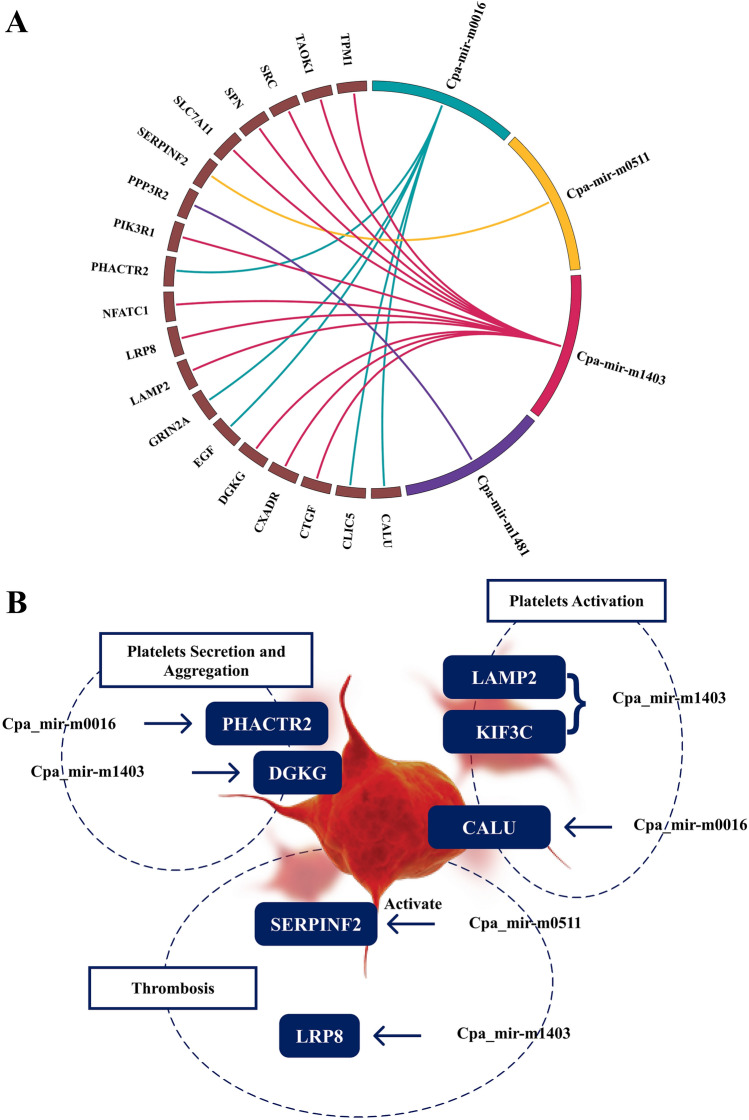
Several studies have demonstrated potential role of plant-derived miRNAs in cross-kingdom species relationships by transferring into non-plant host cells to regulate certain host cellular functions. How nutrient-rich plants regulate host cellular functions, which in turn alleviate physiological and disease conditions in the host remains to be explored in detail. This computational study explores the potential targets, putative role, and functional implications of miRNAs derived from Carica papaya L., one of the most cultivated tropical crops in the world and a rich source of phytochemicals and enzymes, in human diet. Using the next-generation sequencing, -Illumina HiSeq2500, ~ 30 million small RNA sequence reads were generated from C. papaya young leaves, resulting in the identification of a total of 1798 known and 49 novel miRNAs. Selected novel C. papaya miRNAs were predicted to regulate certain human targets, and subsequent annotation of gene functions indicated a probable role in various biological processes and pathways, such as MAPK, WNT, and GPCR signaling pathways, and platelet activation. These presumptive target gene in humans were predominantly linked to various diseases, including cancer, diabetes, mental illness, and platelet disorder. The computational finding of this study provides insights into how C. papaya-derived miRNAs may regulate certain conditions of human disease and provide a new perspective on human health. However, the therapeutic potential of C. papaya miRNA can be further explored through experimental studies.
多项研究表明,植物源微小RNA(miRNA)通过转移到非植物宿主细胞中以调节某些宿主细胞功能,在跨物种关系中具有潜在作用。营养丰富的植物如何调节宿主细胞功能,进而缓解宿主的生理和疾病状况,仍有待详细探索。这项计算研究探讨了番木瓜(世界上种植最广泛的热带作物之一,也是植物化学物质和酶的丰富来源)来源的miRNA在人类饮食中的潜在靶点、假定作用和功能影响。利用下一代测序技术——Illumina HiSeq2500,从番木瓜幼叶中产生了约3000万个小RNA序列读数,共鉴定出1798个已知miRNA和49个新miRNA。预测所选的新番木瓜miRNA可调节某些人类靶点,随后的基因功能注释表明其在各种生物过程和途径中可能发挥作用,如丝裂原活化蛋白激酶(MAPK)、WNT和G蛋白偶联受体(GPCR)信号通路以及血小板活化。这些人类中的假定靶基因主要与包括癌症、糖尿病、精神疾病和血小板紊乱在内的各种疾病相关。本研究的计算结果为番木瓜来源的miRNA如何调节人类疾病的某些状况提供了见解,并为人类健康提供了新的视角。然而,番木瓜miRNA的治疗潜力可通过实验研究进一步探索。