Pohorille Andrew, Wilson Michael A, Shannon Gareth
Exobiology Branch, MS 239-4, NASA Ames Research Center, Moffett Field, CA 94035, USA.
Department of Pharmaceutical Chemistry, University of California, San Francisco, CA 94132, USA.
Life (Basel). 2017 Jun 5;7(2):23. doi: 10.3390/life7020023.
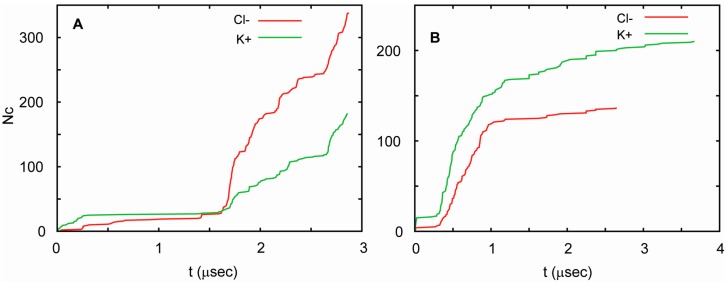
Almost all modern proteins possess well-defined, relatively rigid scaffolds that provide structural preorganization for desired functions. Such scaffolds require the sufficient length of a polypeptide chain and extensive evolutionary optimization. How ancestral proteins attained functionality, even though they were most likely markedly smaller than their contemporary descendants, remains a major, unresolved question in the origin of life. On the basis of evidence from experiments and computer simulations, we argue that at least some of the earliest water-soluble and membrane proteins were markedly more flexible than their modern counterparts. As an example, we consider a small, evolved in vitro ligase, based on a novel architecture that may be the archetype of primordial enzymes. The protein does not contain a hydrophobic core or conventional elements of the secondary structure characteristic of modern water-soluble proteins, but instead is built of a flexible, catalytic loop supported by a small hydrophilic core containing zinc atoms. It appears that disorder in the polypeptide chain imparts robustness to mutations in the protein core. Simple ion channels, likely the earliest membrane protein assemblies, could also be quite flexible, but still retain their functionality, again in contrast to their modern descendants. This is demonstrated in the example of antiamoebin, which can serve as a useful model of small peptides forming ancestral ion channels. Common features of the earliest, functional protein architectures discussed here include not only their flexibility, but also a low level of evolutionary optimization and heterogeneity in amino acid composition and, possibly, the type of peptide bonds in the protein backbone.
几乎所有现代蛋白质都拥有明确、相对刚性的支架结构,这些结构为实现所需功能提供了结构预组织。这样的支架需要足够长的多肽链以及广泛的进化优化。尽管祖先蛋白质很可能明显小于它们现代的后代,但它们是如何获得功能的,仍然是生命起源中一个主要的、尚未解决的问题。基于实验和计算机模拟的证据,我们认为至少一些最早的水溶性和膜蛋白比它们现代的对应物明显更具灵活性。例如,我们考虑一种基于新型结构的、在体外进化的小连接酶,它可能是原始酶的原型。该蛋白质不包含现代水溶性蛋白质特有的疏水核心或二级结构的传统元件,而是由一个柔性的催化环构成,该催化环由一个含有锌原子的小亲水性核心支撑。似乎多肽链中的无序赋予了蛋白质核心突变的稳健性。简单的离子通道,可能是最早的膜蛋白组装体,也可能相当灵活,但与它们现代的后代不同,仍然保留其功能。抗变形虫蛋白的例子证明了这一点,它可以作为形成祖先离子通道的小肽的有用模型。这里讨论的最早功能性蛋白质结构的共同特征不仅包括它们的灵活性,还包括进化优化程度低、氨基酸组成的异质性,以及可能的蛋白质主链中肽键的类型。