Song Jingwen, Yang Yunzhong, Mauvais-Jarvis Franck, Wang Yu-Ping, Niu Tianhua
Department of Global Biostatistics and Data Science, Tulane University School of Public Health and Tropical Medicine, New Orleans, LA, 70112, USA.
Division of Endocrinology and Metabolism, Department of Medicine, Tulane University Health Sciences Center, New Orleans, LA, 70112, USA.
BMC Med Genet. 2017 Jun 6;18(1):64. doi: 10.1186/s12881-017-0422-7.
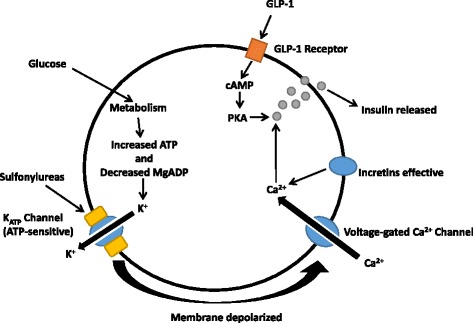
Type 2 diabetes (T2D) is a worldwide epidemic with considerable health and economic consequences. Sulfonylureas are widely used drugs for the treatment of patients with T2D. KCNJ11 and ABCC8 encode the K6.2 (pore-forming subunit) and SUR1 (regulatory subunit that binds to sulfonylurea) of pancreatic β cell K channel respectively with a critical role in insulin secretion and glucose homeostasis. TCF7L2 encodes a transcription factor expressed in pancreatic β cells that regulates insulin production and processing. Because mutations of these genes could affect insulin secretion stimulated by sulfonylureas, the aim of this study is to assess associations between molecular variants of KCNJ11, ABCC8 and TCF7L2 genes and response to sulfonylurea treatment and to predict their potential functional effects.
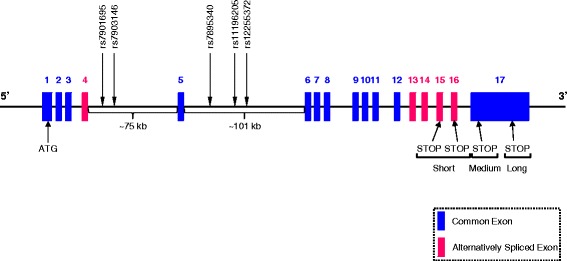
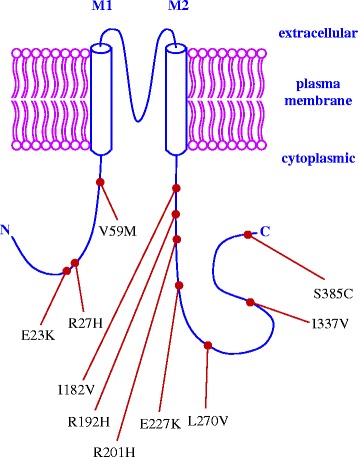
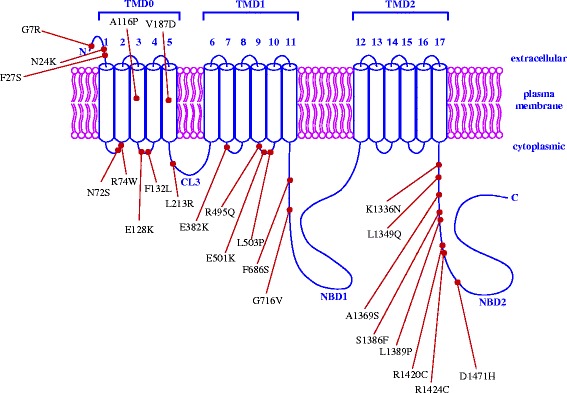
Based on a comprehensive literature search, we found 13 pharmacogenetic studies showing that single nucleotide polymorphisms (SNPs) located in KCNJ11: rs5219 (E23K), ABCC8: rs757110 (A1369S), rs1799854 (intron 15, exon 16 -3C/T), rs1799859 (R1273R), and TCF7L2: rs7903146 (intron 4) were significantly associated with responses to sulfonylureas. For in silico bioinformatics analysis, SIFT, PolyPhen-2, PANTHER, MutPred, and SNPs3D were applied for functional predictions of 36 coding (KCNJ11: 10, ABCC8: 24, and TCF7L2: 2; all are missense), and HaploReg v4.1, RegulomeDB, and Ensembl's VEP were used to predict functions of 7 non-coding (KCNJ11: 1, ABCC8: 1, and TCF7L2: 5) SNPs, respectively.
Based on various in silico tools, 8 KCNJ11 missense SNPs, 23 ABCC8 missense SNPs, and 2 TCF7L2 missense SNPs could affect protein functions. Of them, previous studies showed that mutant alleles of 4 KCNJ11 missense SNPs and 5 ABCC8 missense SNPs can be successfully rescued by sulfonylurea treatments. Further, 3 TCF7L2 non-coding SNPs (rs7903146, rs11196205 and rs12255372), can change motif(s) based on HaploReg v4.1 and are predicted as risk factors by Ensembl's VEP.
Our study indicates that a personalized medicine approach by tailoring sulfonylurea therapy of T2D patients according to their genotypes of KCNJ11, ABCC8, and TCF7L2 could attain an optimal treatment efficacy.
2型糖尿病(T2D)是一种全球性流行病,会带来严重的健康和经济后果。磺脲类药物是治疗T2D患者的常用药物。KCNJ11和ABCC8分别编码胰腺β细胞K通道的K6.2(孔形成亚基)和SUR1(与磺脲类药物结合的调节亚基),在胰岛素分泌和葡萄糖稳态中起关键作用。TCF7L2编码一种在胰腺β细胞中表达的转录因子,可调节胰岛素的产生和加工。由于这些基因的突变可能影响磺脲类药物刺激的胰岛素分泌,本研究的目的是评估KCNJ11、ABCC8和TCF7L2基因的分子变异与磺脲类药物治疗反应之间的关联,并预测其潜在的功能影响。
基于全面的文献检索,我们发现13项药物遗传学研究表明,位于KCNJ11的单核苷酸多态性(SNP):rs5219(E23K)、ABCC8的rs757110(A1369S)、rs1799854(内含子15,外显子16 -3C/T)、rs1799859(R1273R)以及TCF7L2的rs7903146(内含子4)与磺脲类药物的反应显著相关。对于计算机生物信息学分析,应用SIFT、PolyPhen-2、PANTHER、MutPred和SNPs3D对36个编码SNP(KCNJ11:10个,ABCC8:24个,TCF7L2:2个;均为错义突变)进行功能预测,分别使用HaploReg v4.1、RegulomeDB和Ensembl的VEP预测7个非编码SNP(KCNJ11:1个,ABCC8:1个,TCF7L2:5个)的功能。
基于各种计算机工具,8个KCNJ11错义SNP、23个ABCC8错义SNP和2个TCF7L2错义SNP可能影响蛋白质功能。其中,先前的研究表明,4个KCNJ11错义SNP和5个ABCC8错义SNP的突变等位基因可以通过磺脲类药物治疗成功挽救。此外,3个TCF7L2非编码SNP(rs7903146、rs11196205和rs12255372),根据HaploReg v4.1可改变基序,并被Ensembl的VEP预测为危险因素。
我们的研究表明,根据T2D患者的KCNJ11、ABCC8和TCF7L2基因型定制磺脲类药物治疗的个性化医疗方法可以达到最佳治疗效果。