Fleischauer Aaron T, Ruhl Laura, Rhea Sarah, Barnes Erin
MMWR Morb Mortal Wkly Rep. 2017 Jun 9;66(22):569-573. doi: 10.15585/mmwr.mm6622a1.
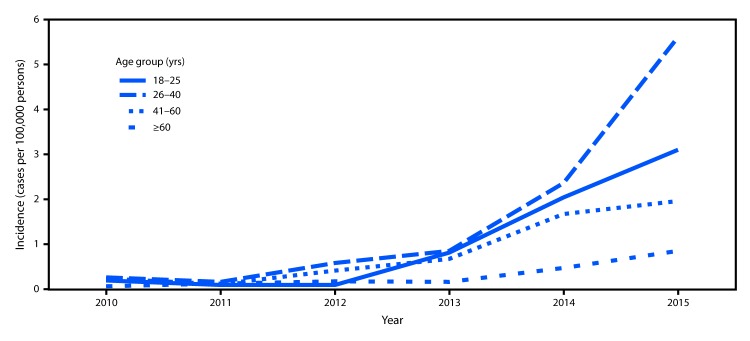
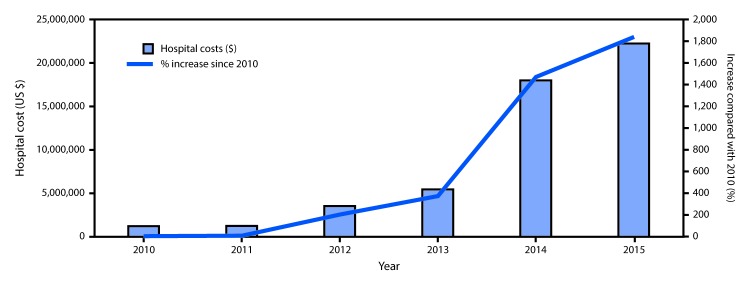
Opioid dependence and overdose have increased to epidemic levels in the United States. The 2014 National Survey on Drug Use and Health estimated that 4.3 million persons were nonmedical users of prescription pain relievers (1). These users are 40 times more likely than the general population to use heroin or other injection drugs (2). Furthermore, CDC estimated a near quadrupling of heroin-related overdose deaths during 2002-2014 (3). Although overdose contributes most to drug-associated mortality, infectious complications of intravenous drug use constitute a major cause of morbidity leading to hospitalization (4). In addition to infections from hepatitis C virus (HCV) and human immunodeficiency virus (HIV), injecting drug users are at increased risk for acquiring invasive bacterial infections, including endocarditis (5,6). Evidence that hospitalizations for endocarditis are increasing in association with the current opioid epidemic exists (7-9). To examine trends in hospitalizations for endocarditis among persons in North Carolina with drug dependence during 2010-2015, data from the North Carolina Hospital Discharge database were analyzed. The incidence of hospital discharge diagnoses for drug dependence combined with endocarditis increased more than twelvefold from 0.2 to 2.7 per 100,000 persons per year over this 6-year period. Correspondingly, hospital costs for these patients increased eighteenfold, from $1.1 million in 2010 to $22.2 million in 2015. To reduce the risk for morbidity and mortality related to opioid-associated endocarditis, public health programs and health care systems should consider collaborating to implement syringe service programs, harm reduction strategies, and opioid treatment programs.
在美国,阿片类药物依赖和过量使用已达到流行程度。2014年全国药物使用和健康调查估计,有430万人非医疗使用处方止痛药(1)。这些使用者使用海洛因或其他注射类毒品的可能性比普通人群高40倍(2)。此外,疾病控制与预防中心估计,2002 - 2014年期间与海洛因相关的过量用药死亡人数几乎增加了两倍(3)。尽管过量用药是与药物相关死亡率的主要原因,但静脉注射吸毒的感染并发症是导致住院的主要发病原因(4)。除了丙型肝炎病毒(HCV)和人类免疫缺陷病毒(HIV)感染外,注射吸毒者感染侵袭性细菌感染(包括心内膜炎)的风险也增加(5,6)。有证据表明,与当前阿片类药物流行相关的心内膜炎住院人数正在增加(7 - 9)。为了研究2010 - 2015年北卡罗来纳州药物依赖者心内膜炎住院趋势,分析了北卡罗来纳州医院出院数据库的数据。在这6年期间,药物依赖合并心内膜炎的医院出院诊断发病率从每年每10万人0.2例增加到2.7例,增加了12倍多。相应地,这些患者的住院费用增加了18倍,从2010年的110万美元增加到2015年的2220万美元。为降低与阿片类药物相关的心内膜炎的发病和死亡风险,公共卫生项目和医疗保健系统应考虑合作实施注射器服务项目、减少伤害策略和阿片类药物治疗项目。