Lampreht Tratar Ursa, Loiacono Luisa, Cemazar Maja, Kamensek Urska, Fazio Vito Michele, Sersa Gregor, Signori Emanuela
Department of Experimental Oncology, Institute of Oncology Ljubljana, Zaloska 2, Ljubljana, Slovenia.
Laboratory of Genetic and Clinical Pathology, University Campus Bio-Medico of Rome, Via Álvaro del Portillo 21, 00128 Rome, Italy.
Mediators Inflamm. 2017;2017:5285890. doi: 10.1155/2017/5285890. Epub 2017 May 16.
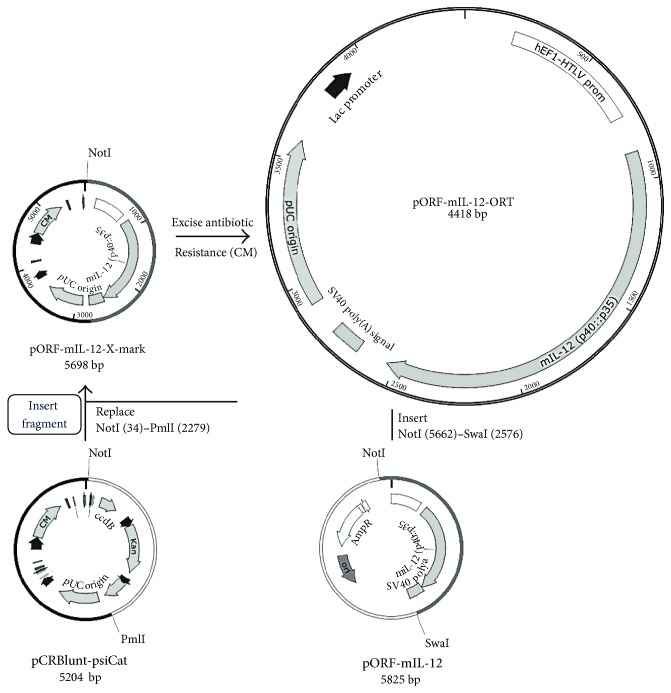
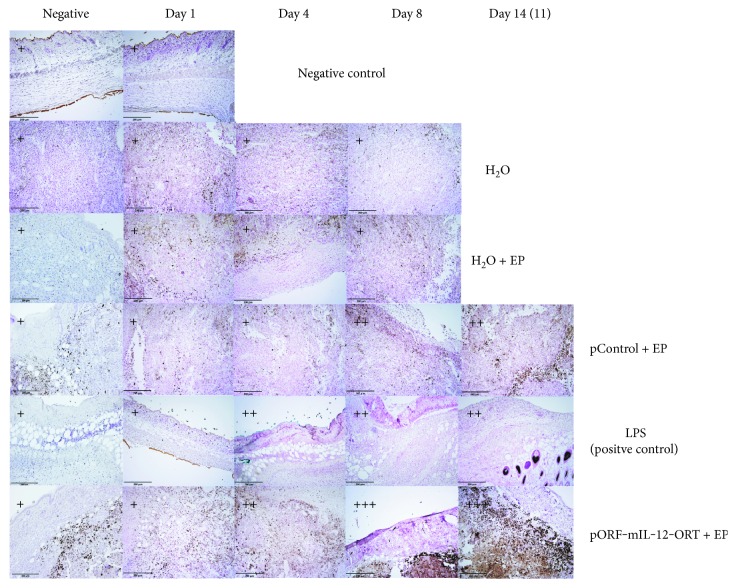
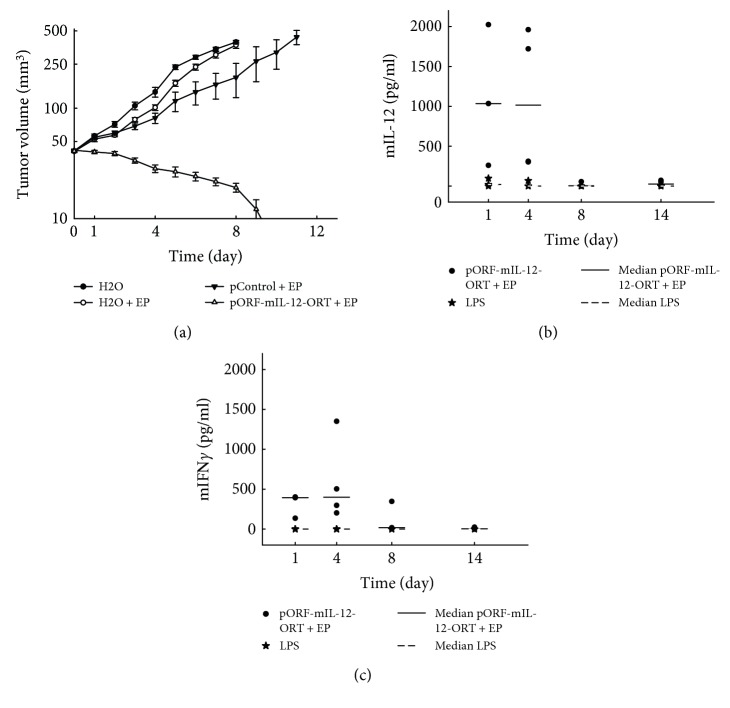
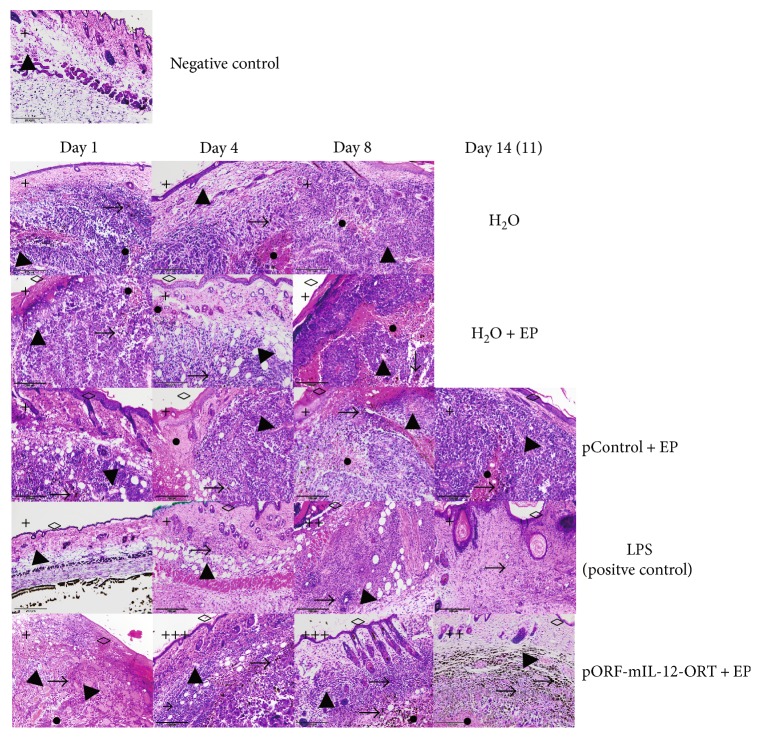
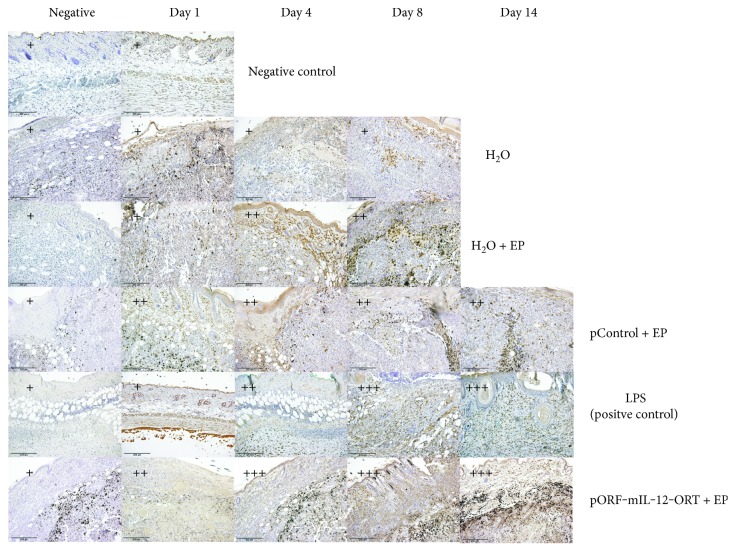
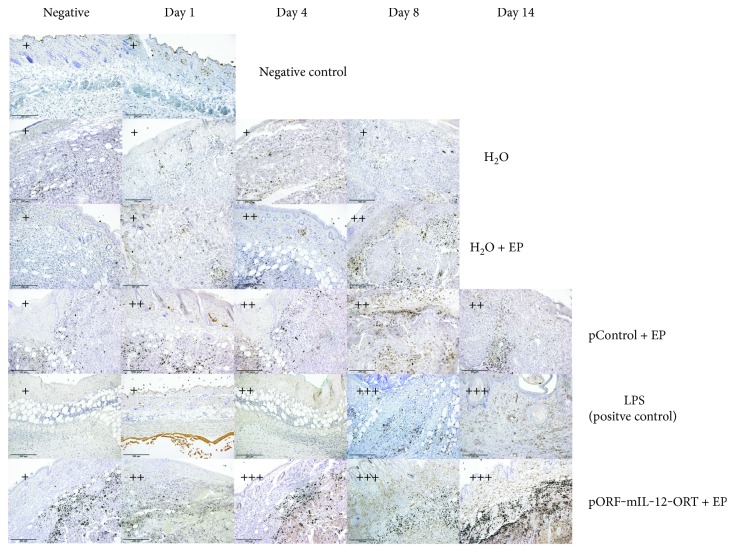
Cancer immunotherapy is currently one of the leading approaches in cancer treatment. Gene electrotransfer of plasmids encoding interleukin 12 (IL-12) into the cells leads to the production of IL-12, which drives immune cell polarization to an antitumoral response. One of the cell types that shows great promise in targeting tumor cells under the influence of IL-12 cytokine milieu is that of macrophages. Therefore, the aim of this study was to evaluate gene electrotransfer of antibiotic resistance-free plasmid DNA-encoding murine IL-12 (mIL-12) in mice bearing aggressive B16F10 murine melanoma. IL-12 electrotransfer resulted in the complete long-term eradication of the tumors. Serum mIL-12 and murine interferon (mIFN) were increased after IL-12 gene electrotransfer. Further on, hematoxylin and eosin (HE) staining showed increased infiltration of immune cells that lasted from day 4 until day 14. Immunohistochemistry (IHC) staining of F4/80, MHCII, and CD11c showed higher positive staining in the IL-12 gene electrotransfer group than in the control groups. Immune cell infiltration into the tumors and the high density of MHCII- and CD11c-positive cells suggest an antitumor polarization of macrophages and the presence of antigen-presenting cells that contributes to the important antitumor effectiveness of IL-12.
癌症免疫疗法是目前癌症治疗的主要方法之一。将编码白细胞介素12(IL-12)的质粒进行基因电穿孔导入细胞会导致IL-12的产生,从而促使免疫细胞极化以产生抗肿瘤反应。在IL-12细胞因子环境影响下,巨噬细胞是一种在靶向肿瘤细胞方面极具潜力的细胞类型。因此,本研究的目的是评估在携带侵袭性B16F10小鼠黑色素瘤的小鼠中,对无抗生素抗性的编码小鼠IL-12(mIL-12)的质粒DNA进行基因电穿孔的效果。IL-12电穿孔导致肿瘤的长期完全根除。IL-12基因电穿孔后,血清mIL-12和小鼠干扰素(mIFN)水平升高。此外,苏木精和伊红(HE)染色显示免疫细胞浸润增加,从第4天持续到第14天。F4/80、MHCII和CD11c的免疫组织化学(IHC)染色显示,IL-12基因电穿孔组的阳性染色高于对照组。免疫细胞浸润到肿瘤中以及MHCII和CD11c阳性细胞的高密度表明巨噬细胞发生了抗肿瘤极化,并且存在抗原呈递细胞,这有助于IL-12产生重要的抗肿瘤效果。