Department of Biochemistry and Molecular Biology, University of Texas Medical Branch, Galveston, TX-77555, USA.
Department of Microbiology and Immunology, University of Texas Medical Branch, Galveston, TX-77555, USA.
Sci Rep. 2017 Jun 9;7(1):3182. doi: 10.1038/s41598-017-03284-w.
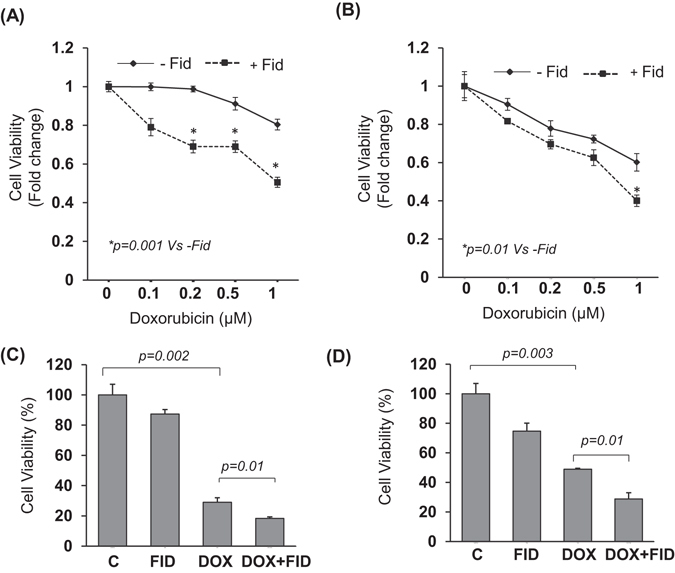
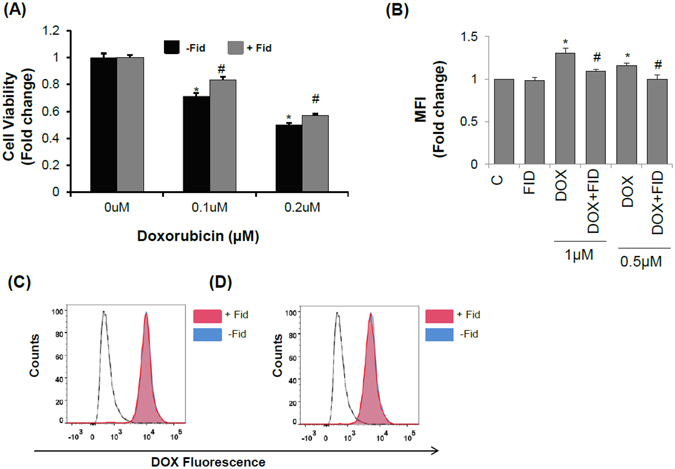
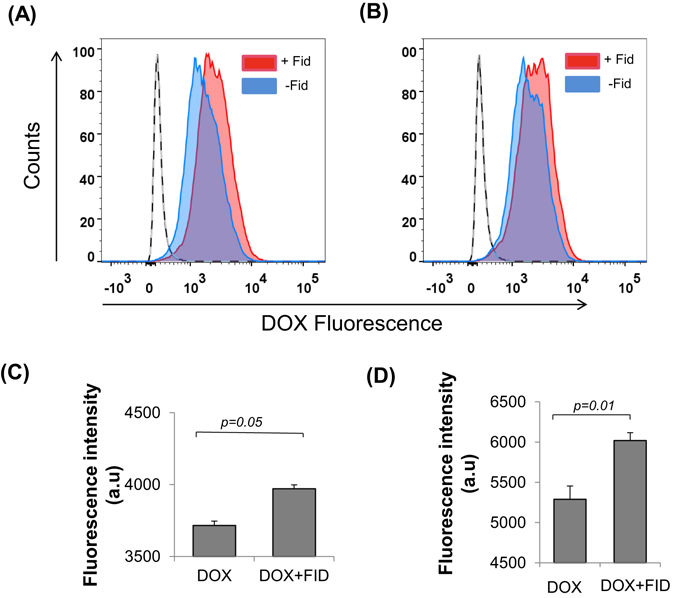
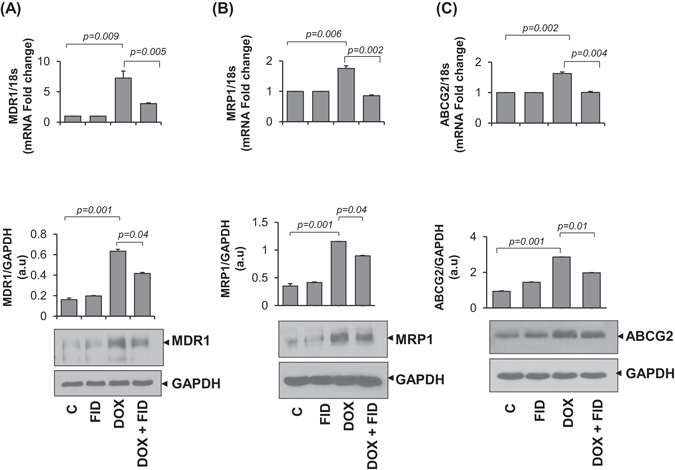
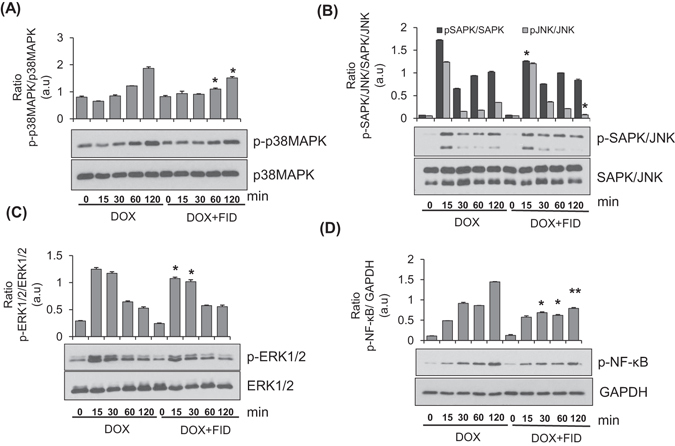
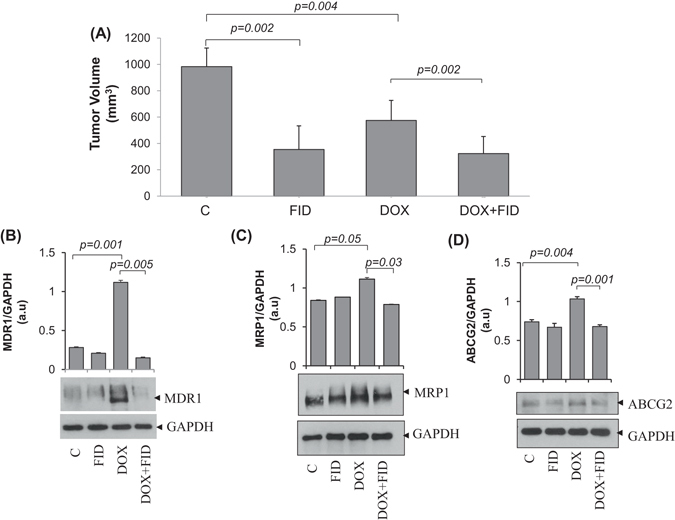
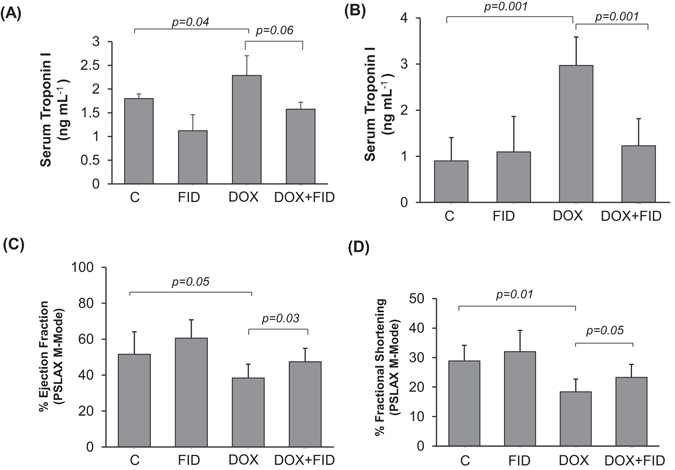
Anthracycline drugs such as doxorubicin (DOX) and daunorubicin remain some of the most active wide-spectrum and cost-effective drugs in cancer therapy. However, colorectal cancer (CRC) cells are inherently resistant to anthracyclines which at higher doses cause cardiotoxicity. Our recent studies indicate that aldose reductase (AR) inhibitors such as fidarestat inhibit CRC growth in vitro and in vivo. Here, we show that treatment of CRC cells with fidarestat increases the efficacy of DOX-induced death in HT-29 and SW480 cells and in nude mice xenografts. AR inhibition also results in higher intracellular accumulation of DOX and decreases the expression of drug transporter proteins MDR1, MRP1, and ABCG2. Further, fidarestat also inhibits DOX-induced increase in troponin-I and various inflammatory markers in the serum and heart and restores cardiac function in mice. These results suggest that fidarestat could be used as adjuvant therapy to enhance DOX sensitivity of CRC cells and to reduce DOX-associated cardiotoxicity.
蒽环类药物如多柔比星(DOX)和柔红霉素仍然是癌症治疗中最广谱、最具成本效益的药物之一。然而,结直肠癌细胞对蒽环类药物具有内在的耐药性,而高剂量的蒽环类药物会导致心脏毒性。我们最近的研究表明,醛糖还原酶(AR)抑制剂如非达司他抑制结直肠癌细胞在体外和体内的生长。在这里,我们表明,用非达司他处理结直肠癌细胞可增加 DOX 诱导的 HT-29 和 SW480 细胞和裸鼠异种移植细胞死亡的疗效。AR 抑制还导致 DOX 在内细胞内积累增加,并降低药物转运蛋白 MDR1、MRP1 和 ABCG2 的表达。此外,非达司他还抑制 DOX 诱导的肌钙蛋白 I 和血清和心脏中各种炎症标志物的增加,并恢复小鼠的心脏功能。这些结果表明,非达司他可用作辅助治疗,以增强 CRC 细胞对 DOX 的敏感性,并降低 DOX 相关的心脏毒性。