Li Haiqin, Tao Rong, Wang Jing, Xia Lingjie
Department of Clinical Pain, The People's Hospital of Henan Province, Zhengzhou, People's Republic of China.
J Pain Res. 2017 May 26;10:1279-1287. doi: 10.2147/JPR.S125264. eCollection 2017.
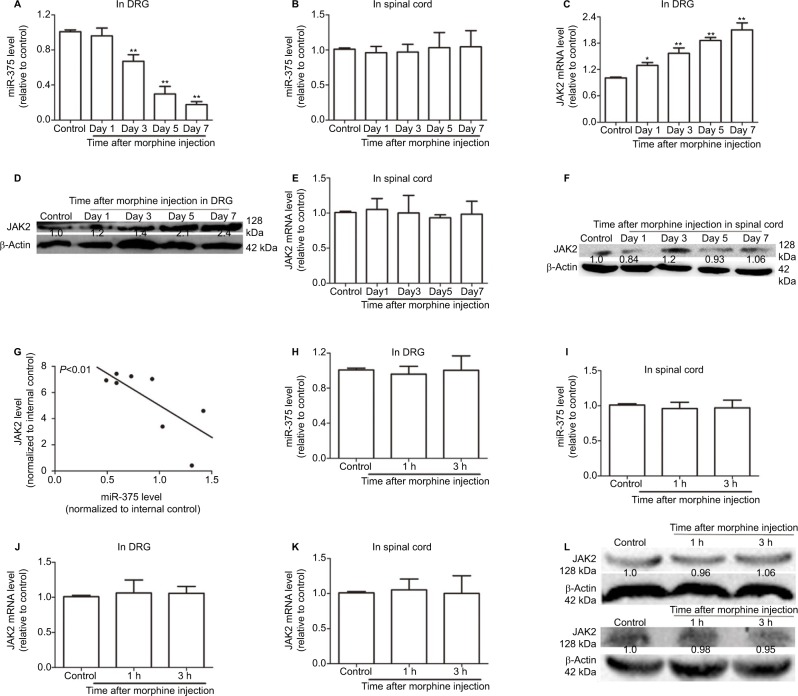
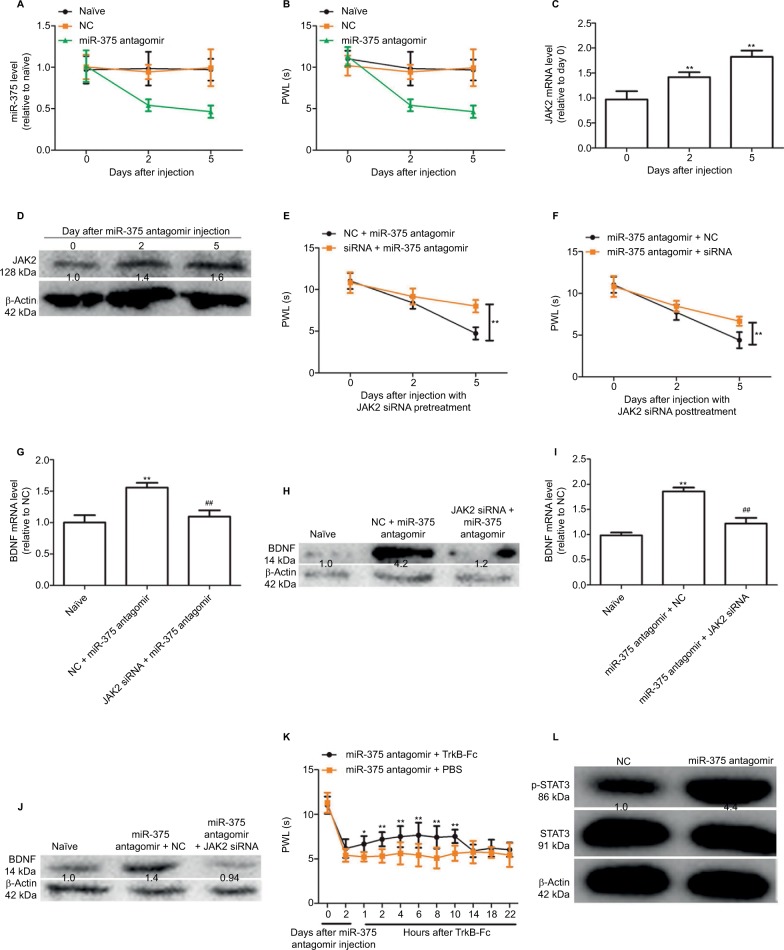
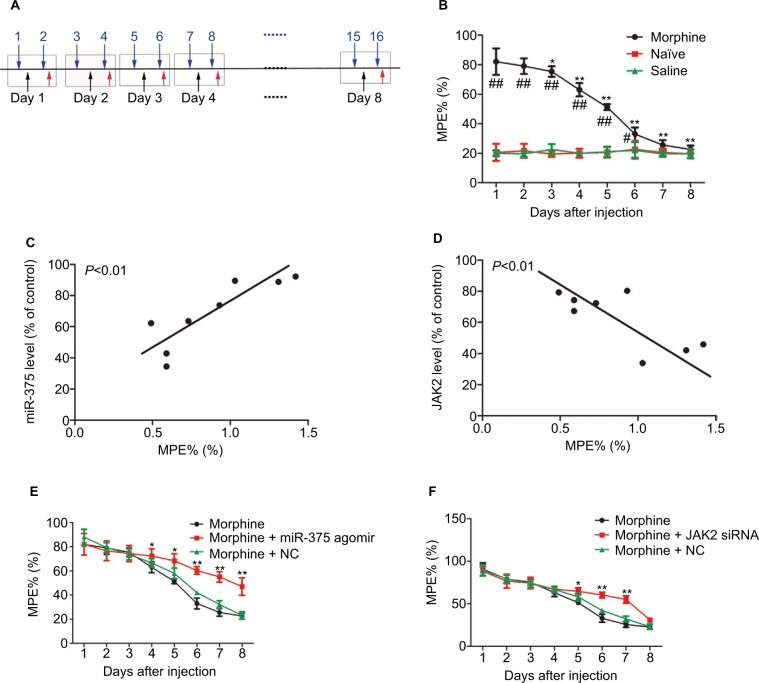
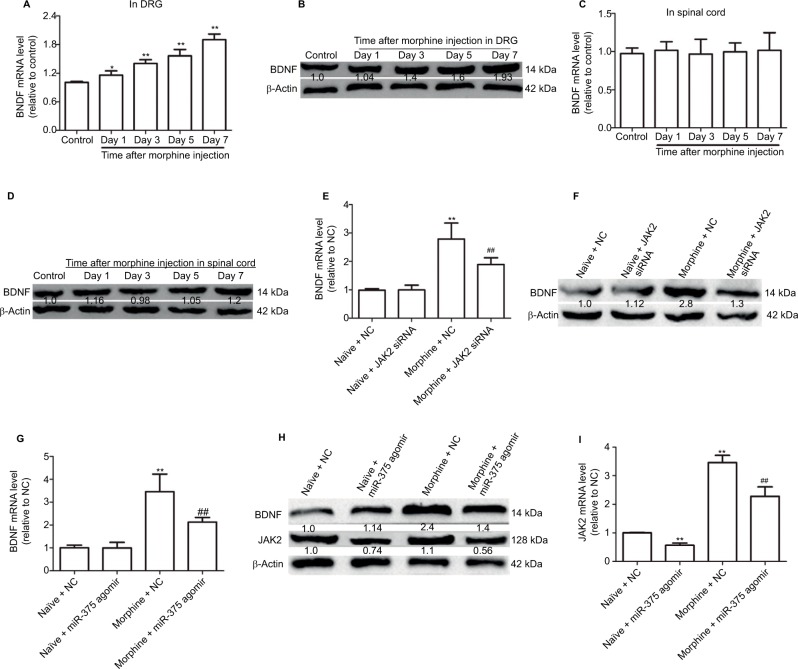
Several lines of evidence indicate that microRNAs (miRNAs) modulate tolerance to the analgesic effects of morphine via regulation of pain-related genes, making dysregulation of miRNA levels a clinical target for controlling opioid tolerance. However, the precise mechanisms by which miRNAs regulate opioid tolerance are unclear. In the present study, we noted that the miR-375 level was downregulated but the expression of Janus kinase 2 (JAK2) was upregulated in mouse dorsal root ganglia (DRG) following chronic morphine treatment. The miR-375 levels and JAK2 expression were correlated with the progression of morphine tolerance, and upregulation of miR-375 level could significantly hinder morphine tolerance. This was ameliorated by JAK2 knockdown. Prolonged morphine exposure induced the expression of brain-derived neurotrophic factor (BDNF) in a time-dependent manner in the DRG. This was regulated by the miR-375 and JAK2-signal transducer and activator of transcription 3 (STAT3) pathway, and inhibition of this pathway decreased BDNF production, and thus, attenuated morphine tolerance. More importantly, we found that miR-375 could target JAK2 and increase BDNF expression in a JAK2/STAT3 pathway-dependent manner.
多项证据表明,微小RNA(miRNA)通过调节疼痛相关基因来调控对吗啡镇痛作用的耐受性,使得miRNA水平失调成为控制阿片类药物耐受性的临床靶点。然而,miRNA调节阿片类药物耐受性的确切机制尚不清楚。在本研究中,我们注意到,慢性吗啡处理后,小鼠背根神经节(DRG)中miR-375水平下调,但Janus激酶2(JAK2)的表达上调。miR-375水平和JAK2表达与吗啡耐受性的进展相关,miR-375水平上调可显著阻碍吗啡耐受性。JAK2基因敲低可改善这种情况。长时间吗啡暴露以时间依赖性方式诱导DRG中脑源性神经营养因子(BDNF)的表达。这受miR-375和JAK2-信号转导子和转录激活子3(STAT3)通路调控,抑制该通路可减少BDNF生成,从而减轻吗啡耐受性。更重要的是,我们发现miR-375可以靶向JAK2,并以JAK2/STAT3通路依赖性方式增加BDNF表达。