Chun Youngpil, Mulcahy Dennis, Zou Linda, Kim In S
Natural and Built Environments Research Centre, School of Natural and Built Environments, University of South Australia, Mawson Lakes 5095, Australia.
Singapore Membrane Technology Centre, Nanyang Environment & Water Research Institute, Nanyang Technological University, Singapore 637141, Singapore.
Membranes (Basel). 2017 Jun 12;7(2):30. doi: 10.3390/membranes7020030.
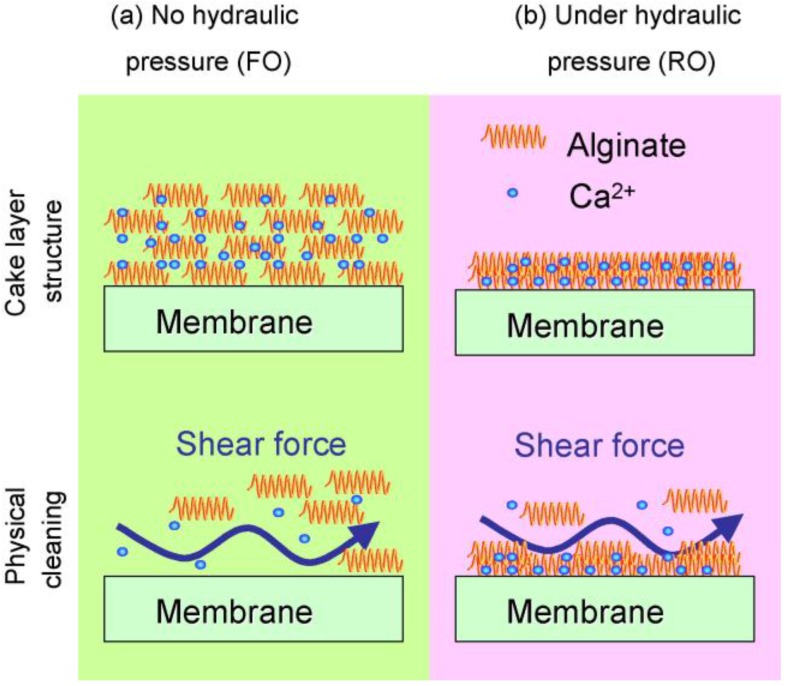
Interest in forward osmosis (FO) research has rapidly increased in the last decade due to problems of water and energy scarcity. FO processes have been used in many applications, including wastewater reclamation, desalination, energy production, fertigation, and food and pharmaceutical processing. However, the inherent disadvantages of FO, such as lower permeate water flux compared to pressure driven membrane processes, concentration polarisation (CP), reverse salt diffusion, the energy consumption of draw solution recovery and issues of membrane fouling have restricted its industrial applications. This paper focuses on the fouling phenomena of FO processes in different areas, including organic, inorganic and biological categories, for better understanding of this long-standing issue in membrane processes. Furthermore, membrane fouling monitoring and mitigation strategies are reviewed.
由于水和能源短缺问题,在过去十年中,对正向渗透(FO)研究的兴趣迅速增加。FO工艺已被应用于许多领域,包括废水回收、海水淡化、能源生产、施肥灌溉以及食品和制药加工。然而,FO固有的缺点,如与压力驱动膜工艺相比渗透水通量较低、浓差极化(CP)、反向盐扩散、汲取液回收的能量消耗以及膜污染问题,限制了其工业应用。本文重点关注FO工艺在不同领域的污染现象,包括有机、无机和生物类别,以便更好地理解膜工艺中这一长期存在的问题。此外,还综述了膜污染监测和缓解策略。