Department of Orthopedics, Sun Yat-sen Memorial Hospital, Sun Yat-sen University, Guangzhou, People's Republic of China.
Department of Biotherapy Center, Sun Yat-sen Memorial Hospital, Sun Yat-sen University, Guangzhou, People's Republic of China.
Exp Mol Med. 2017 Jun 9;49(6):e343. doi: 10.1038/emm.2017.69.
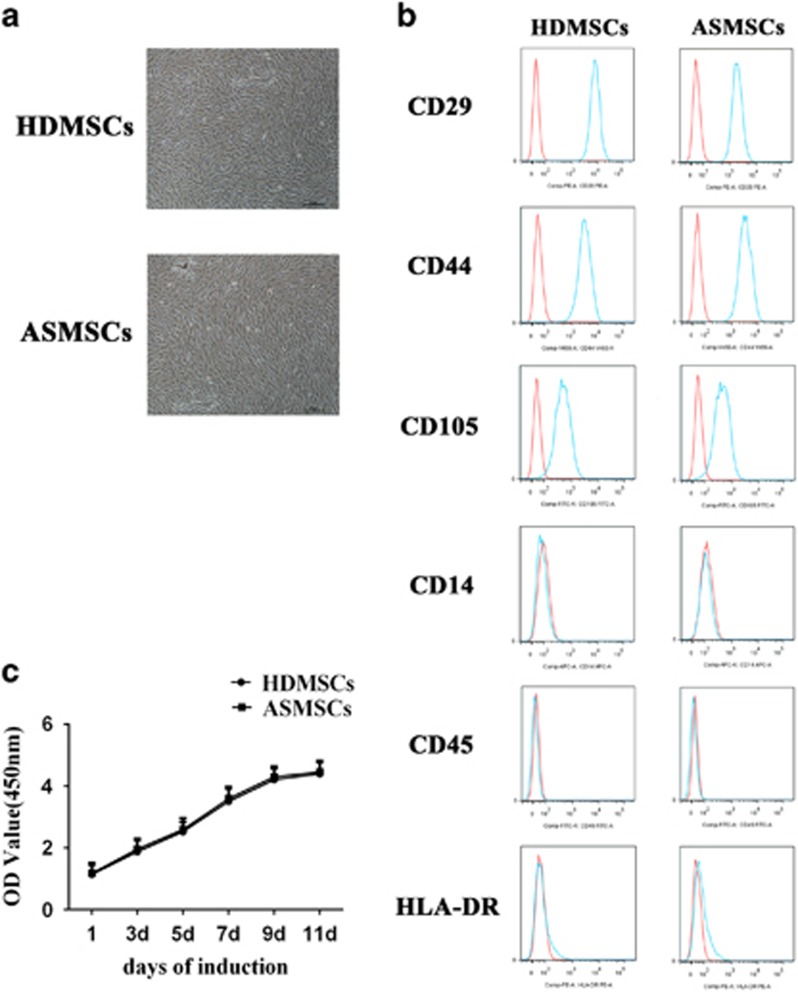
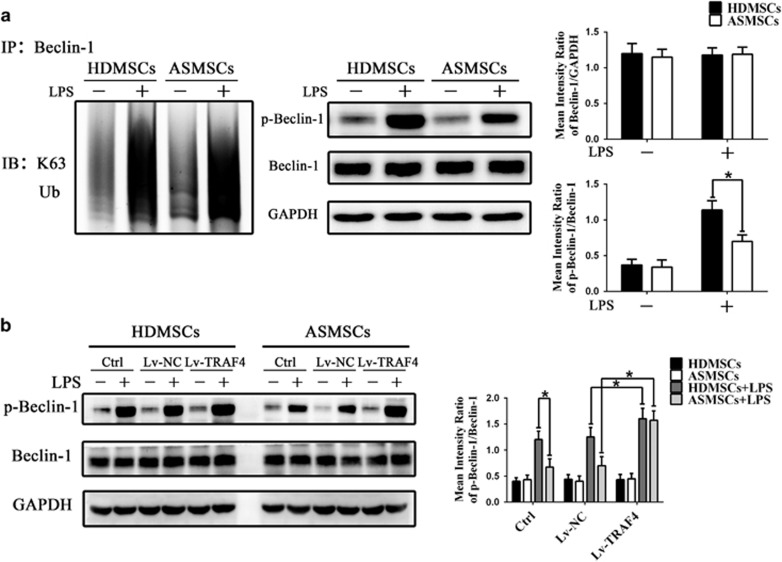
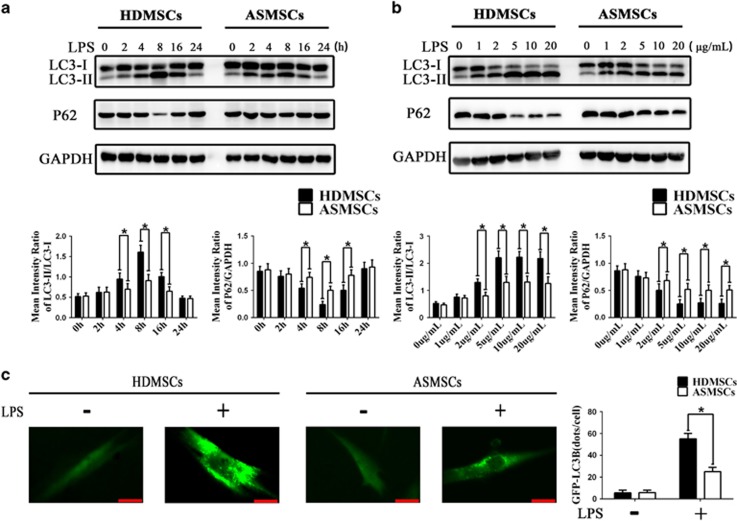
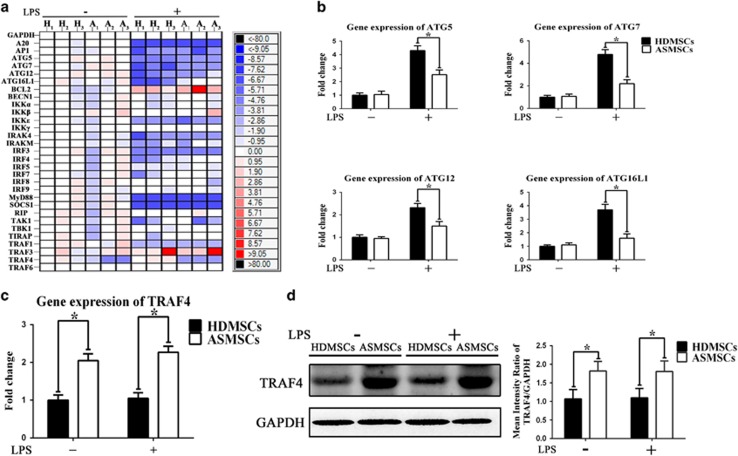
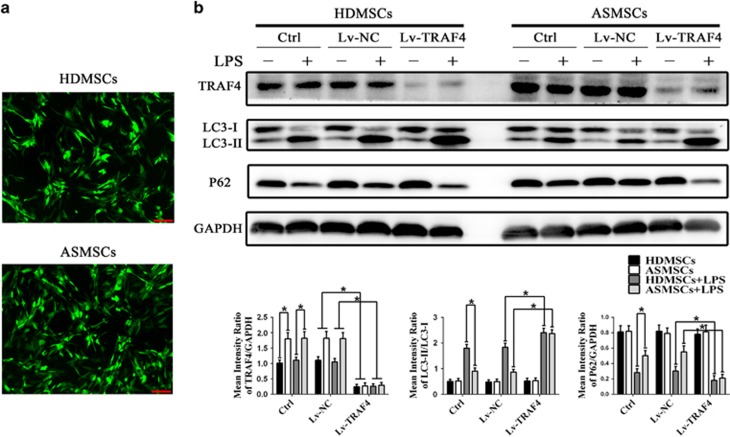
Ankylosing spondylitis (AS) is a type of autoimmune disease that predominantly affects the spine and sacroiliac joints. However, the pathogenesis of AS remains unclear. Some evidence indicates that infection with bacteria, especially Gram-negative bacteria, may have an important role in the onset and progression of AS. Recently, many studies have demonstrated that mesenchymal stem cells (MSCs) dysfunction may contribute to the pathogenesis of many rheumatic diseases. We previously demonstrated that MSCs from AS patients exhibited markedly enhanced osteogenic differentiation capacity in vitro under non-inflammatory conditions. However, the properties of MSCs from AS patients in an inflammatory environment have never been explored. Lipopolysaccharide (LPS), a proinflammatory substance derived from the outer membrane of Gram-negative bacteria, can alter the status and function of MSCs. However, whether MSCs from AS patients exhibit abnormal responses to LPS stimulation has not been reported. Autophagy is a lysosome-mediated catabolic process that participates in many physiological and pathological processes. The link between autophagy and AS remains largely unknown. The level of autophagy in ASMSCs after LPS stimulation remains to be addressed. In this study, we demonstrated that although the basal level of autophagy did not differ between MSCs from healthy donors (HDMSCs) and ASMSCs, LPS-induced autophagy was weaker in ASMSCs than in HDMSCs. Specifically, increased TRAF4 expression in ASMSCs impaired LPS-induced autophagy, potentially by inhibiting the phosphorylation of Beclin-1. These data may provide further insight into ASMSC dysfunction and the precise mechanism underlying the pathogenesis of AS.
强直性脊柱炎(AS)是一种主要影响脊柱和骶髂关节的自身免疫性疾病。然而,AS 的发病机制仍不清楚。一些证据表明,细菌感染,尤其是革兰氏阴性菌感染,可能在 AS 的发病和进展中起重要作用。最近,许多研究表明间充质干细胞(MSCs)功能障碍可能与许多风湿性疾病的发病机制有关。我们之前的研究表明,在非炎症条件下,AS 患者的 MSCs 体外表现出明显增强的成骨分化能力。然而,AS 患者的 MSCs 在炎症环境中的特性从未被探索过。脂多糖(LPS)是一种源自革兰氏阴性菌外膜的促炎物质,可以改变 MSCs 的状态和功能。然而,AS 患者的 MSCs 是否对 LPS 刺激表现出异常反应尚未报道。自噬是一种溶酶体介导的分解代谢过程,参与许多生理和病理过程。自噬与 AS 之间的联系在很大程度上仍不清楚。LPS 刺激后 ASMSCs 中的自噬水平仍有待解决。在这项研究中,我们证明,尽管健康供体(HDMSCs)和 ASMSCs 之间的自噬基础水平没有差异,但 LPS 诱导的自噬在 ASMSCs 中比在 HDMSCs 中较弱。具体而言,ASMSCs 中 TRAF4 表达的增加损害了 LPS 诱导的自噬,可能是通过抑制 Beclin-1 的磷酸化来实现的。这些数据可能为进一步了解 ASMSC 功能障碍和 AS 发病机制的精确机制提供了依据。