Glanz Bonnie I, Greeke Emily, LaRussa Allison, Stuart Fiona, Rintell David J, Chitnis Tanuja, Healy Brian C
Department of Neurology, Harvard Medical School, USA.
Partners Multiple Sclerosis Center, Brigham and Women's Hospital, USA.
Mult Scler J Exp Transl Clin. 2016 Sep 2;2:2055217316665406. doi: 10.1177/2055217316665406. eCollection 2016 Jan-Dec.
Little is known about risk attitudes and risk perceptions in multiple sclerosis (MS).
The objectives of this paper are to investigate the range of risk attitudes and risk perceptions and examine associations between risk attitudes and risk perceptions and demographic and clinical features of the disease.
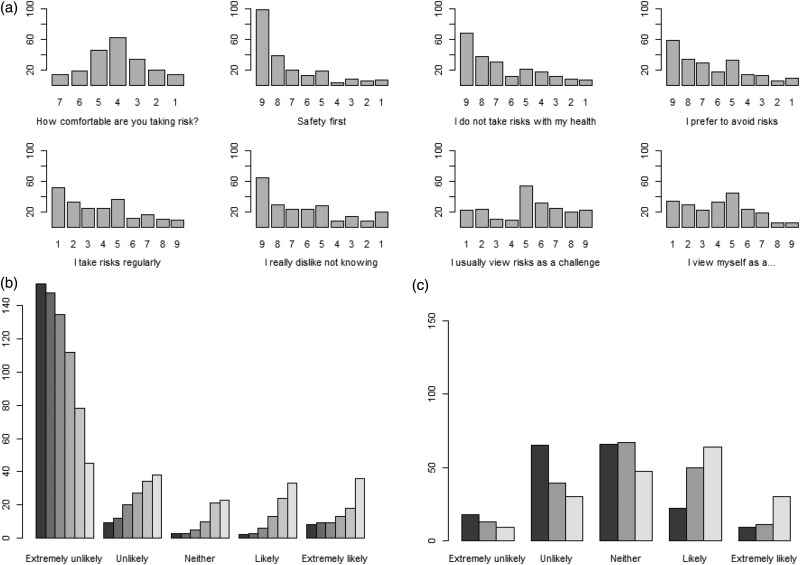
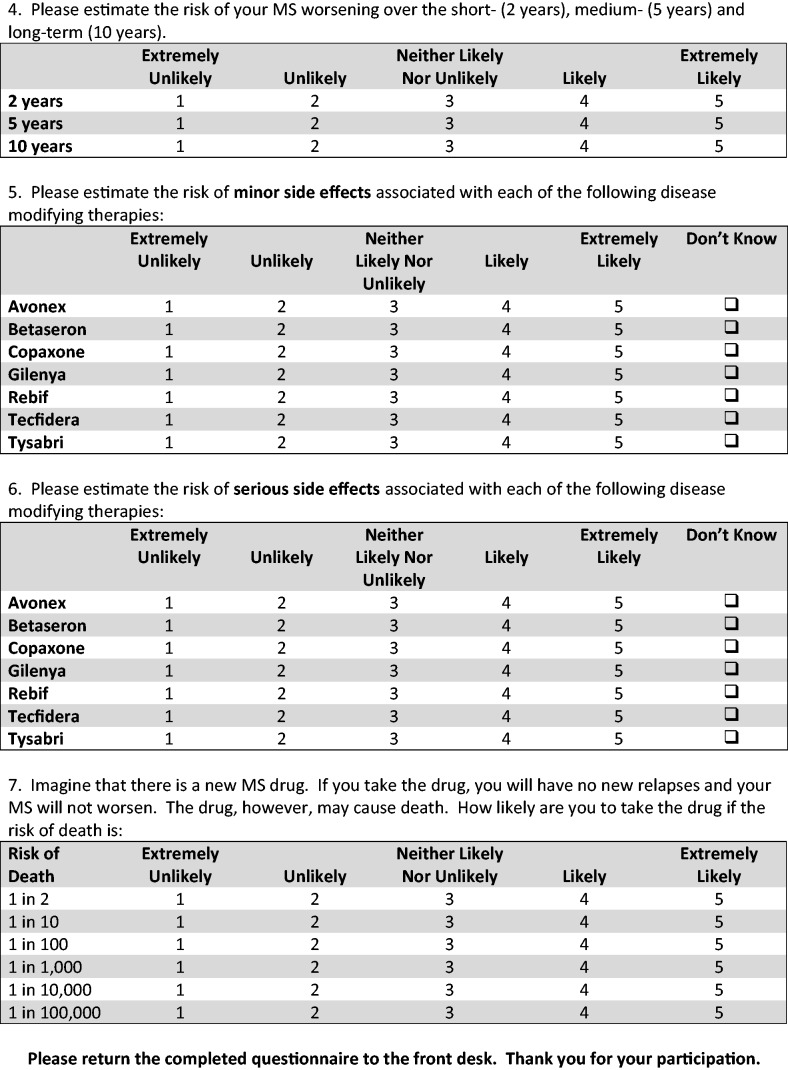
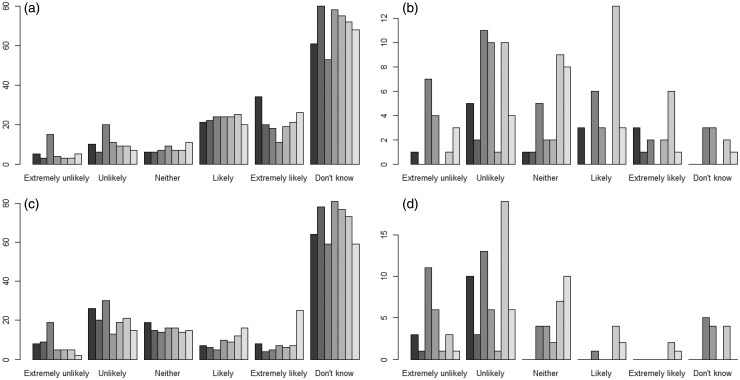
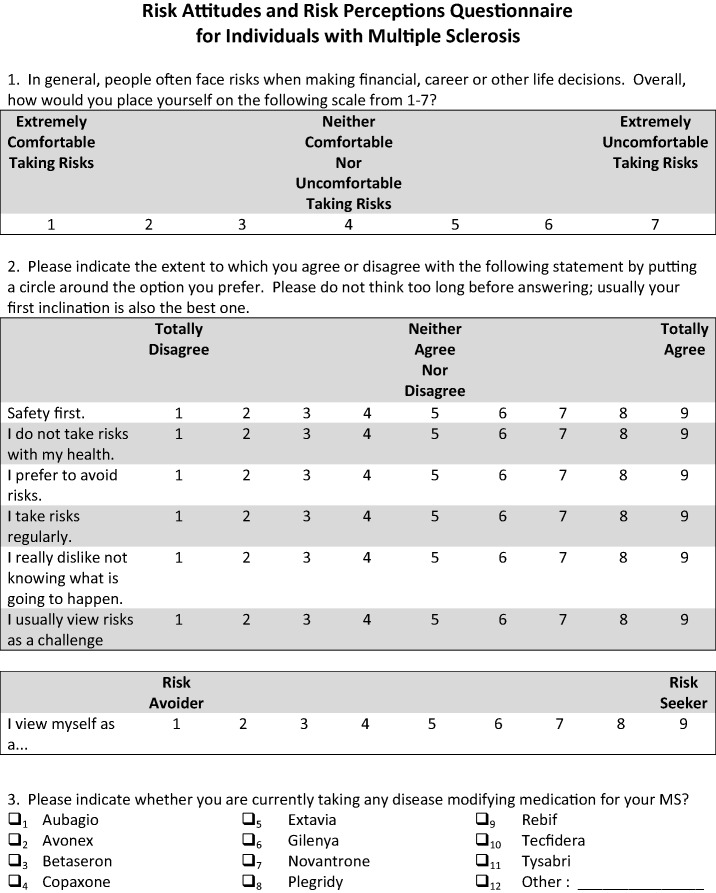
A total of 223 individuals completed a risk questionnaire. Risk attitude was measured using two rating scales and a standard gamble scenario. Risk perception was measured by asking participants to estimate the likelihood of disease progression and the likelihood of minor and serious side effects associated with common MS therapies.
Participants were risk neutral overall and risk averse on issues related to health and safety. There was a significant association between disease duration and risk attitude, with patients with longer disease duration showing greater tolerance for risk. On the standard gamble scenario, males were significantly more likely to take treatments with a likelihood of death of 1:10,000 or 1:100,000 than females. Individuals with higher disability or a progressive disease course were significantly more likely to expect progression at two, five and 10 years.
Individuals with MS demonstrate low tolerance for risk. Risk attitudes and perceptions are influenced by some demographic and clinical features of the disease.
人们对多发性硬化症(MS)患者的风险态度和风险认知了解甚少。
本文的目的是调查风险态度和风险认知的范围,并研究风险态度与风险认知以及该疾病的人口统计学和临床特征之间的关联。
共有223名个体完成了一份风险问卷。风险态度通过两个评分量表和一个标准赌博情景来衡量。风险认知通过要求参与者估计疾病进展的可能性以及与常见MS疗法相关的轻微和严重副作用的可能性来衡量。
参与者总体上是风险中性的,但在与健康和安全相关的问题上是风险厌恶的。疾病持续时间与风险态度之间存在显著关联,疾病持续时间较长的患者对风险的耐受性更高。在标准赌博情景中,男性比女性更有可能接受死亡可能性为1:10000或1:100000的治疗。残疾程度较高或疾病进程为进展型的个体在2年、5年和10年时更有可能预期疾病进展。
MS患者对风险的耐受性较低。风险态度和认知受该疾病的一些人口统计学和临床特征的影响。