Boon Niels, Schurtenberger Peter
Division of Physical Chemistry, Department of Chemistry, Lund University, SE-22100 Lund, Sweden.
Phys Chem Chem Phys. 2017 Sep 13;19(35):23740-23746. doi: 10.1039/c7cp02434g.
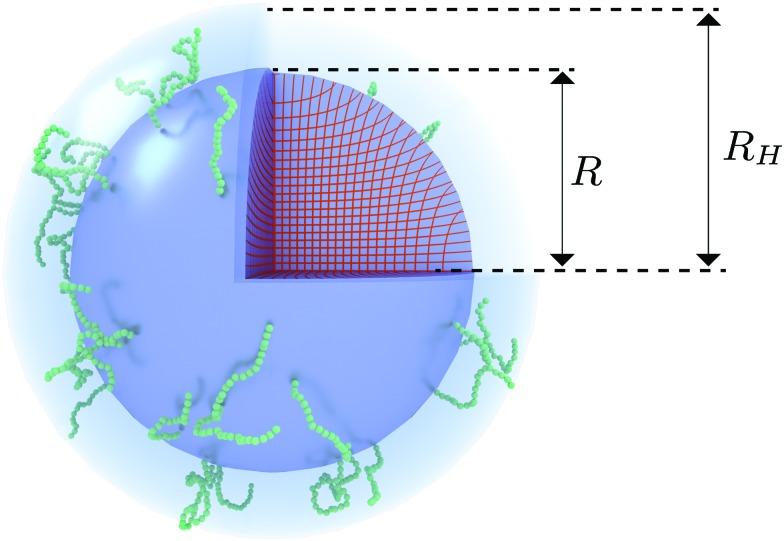
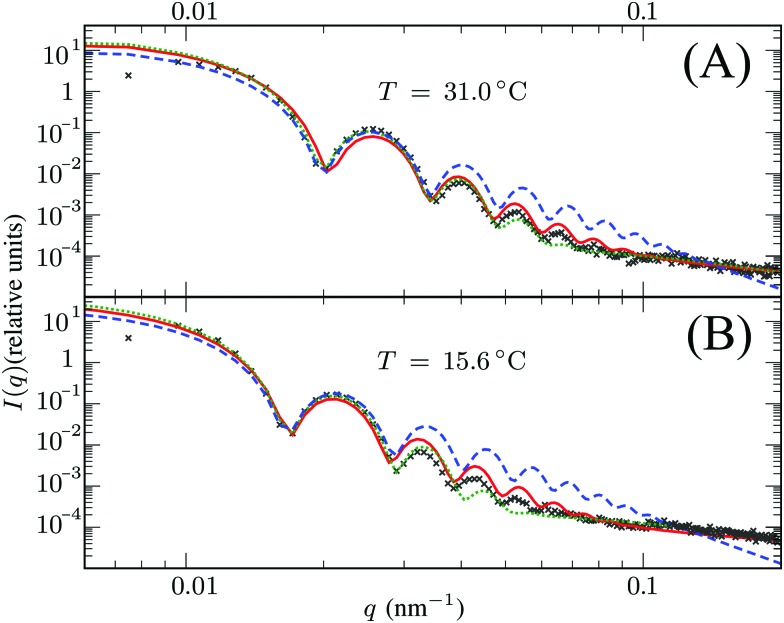
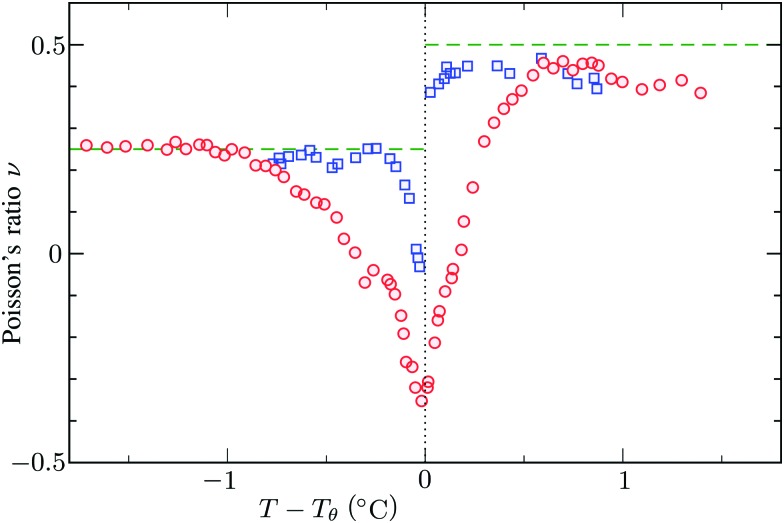
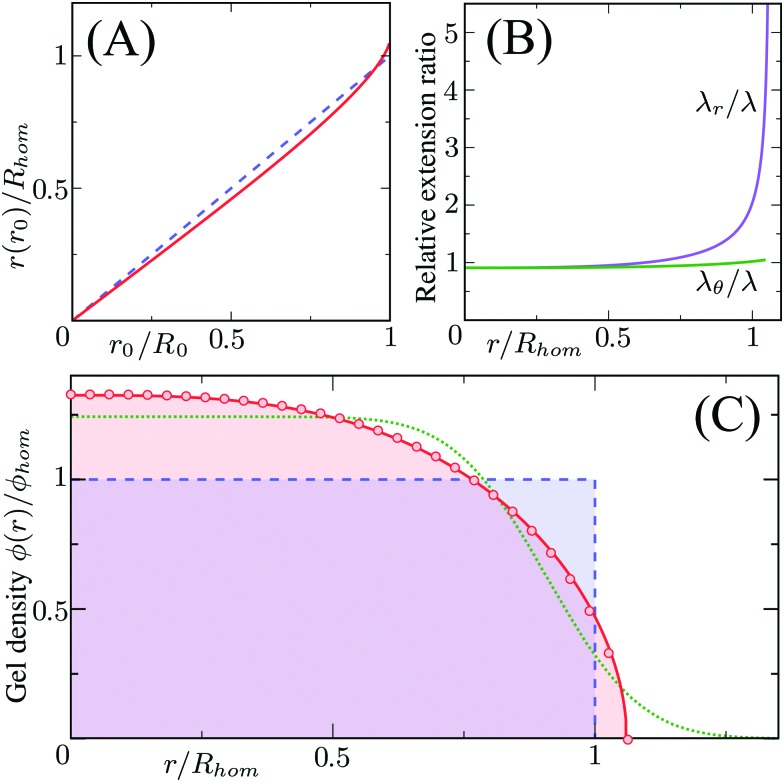
A heterogeneous distribution of crosslinker in micro-hydrogels (microgels) results in a non-uniform polymer density inside the particles. Identifying the morphology of the hydrogel backbone enables a bottom-up approach towards the structural and rheological properties of microgel systems. On a local level we use a Flory-Rehner inspired model that focuses on highly swollen networks, characterized by a Poisson's ratio of 1/4. Our ab initio calculations take account for the nonuniform distribution of crosslinker species during the synthesis of poly(N-isopropylacylamide) (PNIPAM) microgels, yet the method is also applicable to other microgel architectures. We recover a single-particle density profile that is in close agreement with SAXS data. Comparison with experimental data confirms that the surface of the cross-linked particle is decorated with dangling polymers ends of considerable size.
微水凝胶(微凝胶)中交联剂的不均匀分布导致颗粒内部聚合物密度不均匀。确定水凝胶主链的形态有助于采用自下而上的方法研究微凝胶体系的结构和流变性质。在局部层面上,我们使用了一个受弗洛里-雷纳启发的模型,该模型专注于高度溶胀的网络,其泊松比为1/4。我们的从头算计算考虑了聚(N-异丙基丙烯酰胺)(PNIPAM)微凝胶合成过程中交联剂种类的不均匀分布,但该方法也适用于其他微凝胶结构。我们得到了与小角X射线散射(SAXS)数据高度吻合的单颗粒密度分布。与实验数据的比较证实,交联颗粒的表面装饰有相当大尺寸的悬空聚合物末端。