Staecker Hinrich, Morelock Michael, Kramer Timothy, Chrbolka Pavel, Ahn Joong Ho, Meyer Thomas
1 Department of Otolaryngology Head and Neck Surgery, University of Kansas Medical Center, Kansas City, Kansas, USA.
2 Alliance Clinical Research, Escondido, California, USA.
Otolaryngol Head Neck Surg. 2017 Sep;157(3):478-487. doi: 10.1177/0194599817711378. Epub 2017 Jun 13.
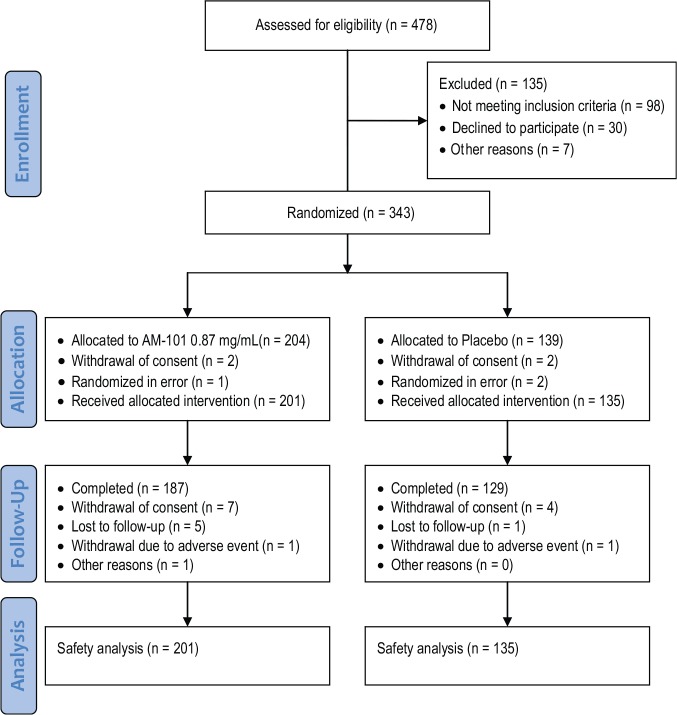
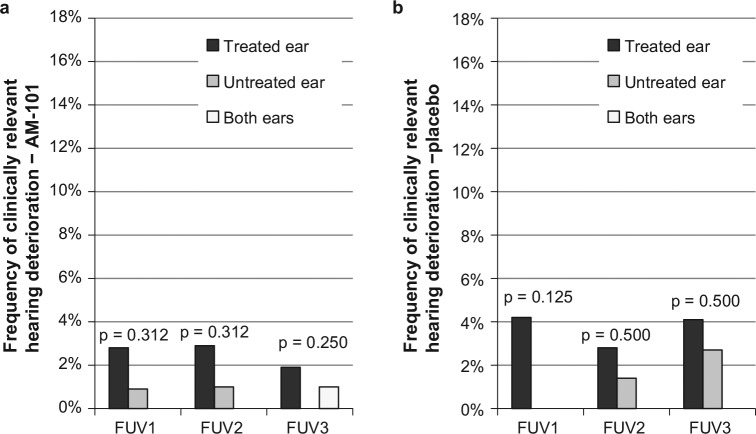
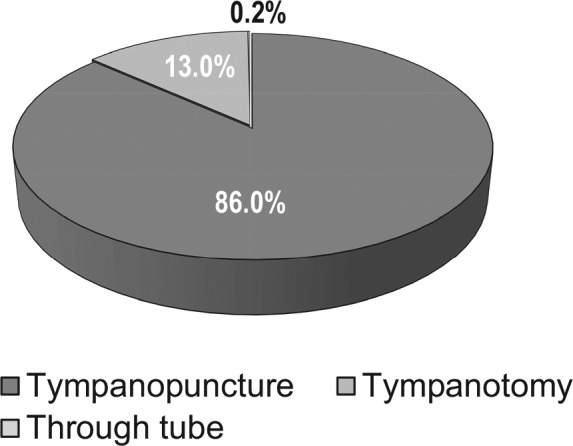
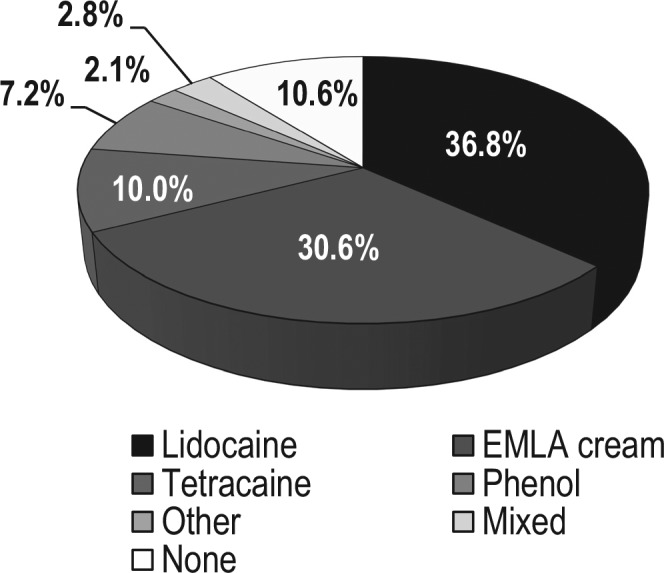
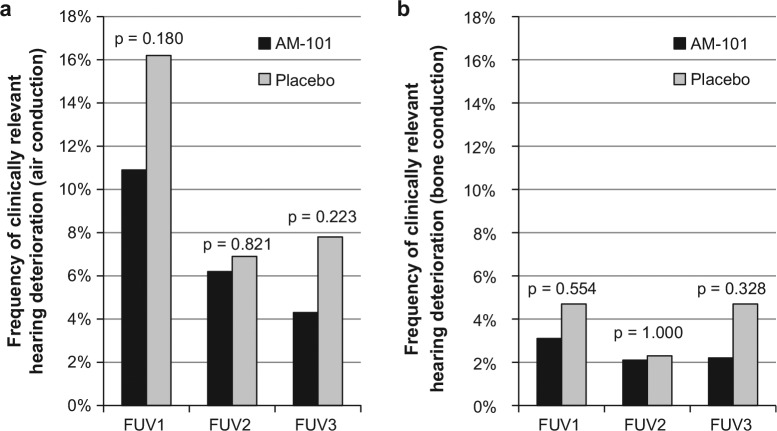
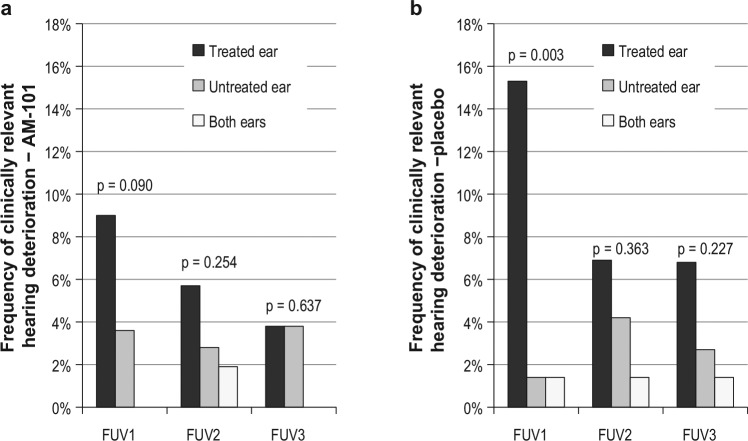
Objective To evaluate the safety and tolerability of repeated intratympanic administration of the gel-formulated NMDA receptor antagonist AM-101 in acute patients with inner ear tinnitus. Study Design Prospective, double-blind, randomized, placebo-controlled study. Setting Sixty-nine secondary and tertiary sites in North America, Europe, and Asia. Subjects and Methods In total, 343 subjects with persistent acute tinnitus after traumatic cochlear injury or otitis media were randomized to receive 3 intratympanic doses of either AM-101 0.87 mg/mL or placebo over 3 to 5 days. They were followed for 84 days. The primary safety end point was the incidence of a clinically meaningful hearing deterioration from baseline to study day 35. Further safety assessments included tympanic membrane closure rates, analysis of adverse events, hematology, blood chemistry, and vital signs. In addition, data were collected on applied anesthetics and injection techniques. Results The treatment was well tolerated, with no intervention-related serious adverse events. The incidence of clinically meaningful hearing deterioration was low, comparable between treatment groups ( P = .82 for the primary safety end point) and not different between treated and untreated ears in unilaterally treated subjects. The rate of treatment and procedure-related adverse events was similar among treatment groups. The tympanic membrane was closed in 92% of subjects within 1 week and in all subjects by study day 84. Blood values and vital signs were inconspicuous. Conclusion Repeated intratympanic injections of AM-101 over a 3- to 5-day period appear to be safe and well tolerated, demonstrating the ability to potentially use this delivery approach over longer time periods.
目的 评估凝胶剂型N-甲基-D-天冬氨酸(NMDA)受体拮抗剂AM-101反复鼓室内给药治疗内耳急性耳鸣患者的安全性和耐受性。研究设计 前瞻性、双盲、随机、安慰剂对照研究。地点 北美、欧洲和亚洲的69个二级和三级医疗机构。受试者与方法 共有343例创伤性耳蜗损伤或中耳炎后持续性急性耳鸣患者被随机分为两组,在3至5天内接受3次鼓室内注射,分别给予0.87 mg/mL的AM-101或安慰剂。对患者进行84天的随访。主要安全性终点是从基线到研究第35天出现具有临床意义的听力恶化的发生率。进一步的安全性评估包括鼓膜闭合率、不良事件分析、血液学、血液化学和生命体征。此外,还收集了有关所用麻醉剂和注射技术的数据。结果 该治疗耐受性良好,未出现与干预相关的严重不良事件。具有临床意义的听力恶化发生率较低,治疗组之间相当(主要安全性终点P = 0.82),单侧治疗患者中治疗耳与未治疗耳之间无差异。治疗组之间与治疗和操作相关的不良事件发生率相似。92%的受试者在1周内鼓膜闭合,到研究第84天时所有受试者的鼓膜均已闭合。血液指标和生命体征无明显异常。结论 在3至5天内反复鼓室内注射AM-101似乎是安全且耐受性良好的,表明有可能在更长时间段内使用这种给药方法。