Warren Christopher, Shechter David
Department of Biochemistry, Albert Einstein College of Medicine, 1300 Morris Park Avenue, Bronx, NY 10461, USA.
Department of Biochemistry, Albert Einstein College of Medicine, 1300 Morris Park Avenue, Bronx, NY 10461, USA.
J Mol Biol. 2017 Aug 4;429(16):2401-2426. doi: 10.1016/j.jmb.2017.06.005. Epub 2017 Jun 10.
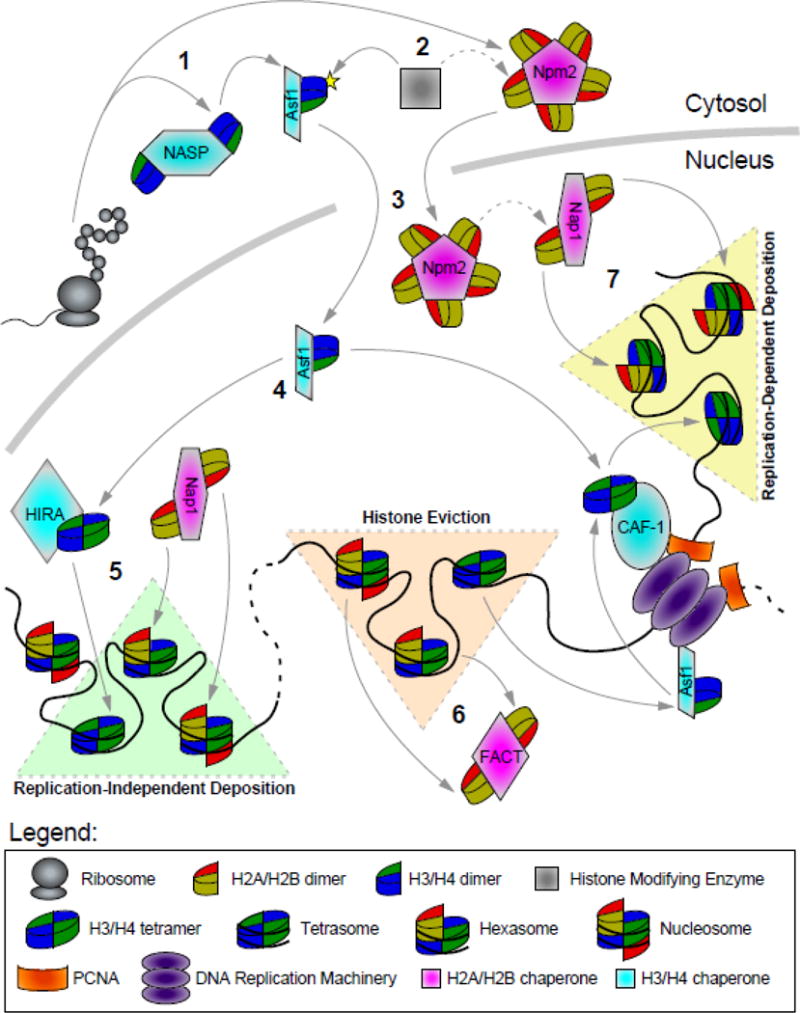
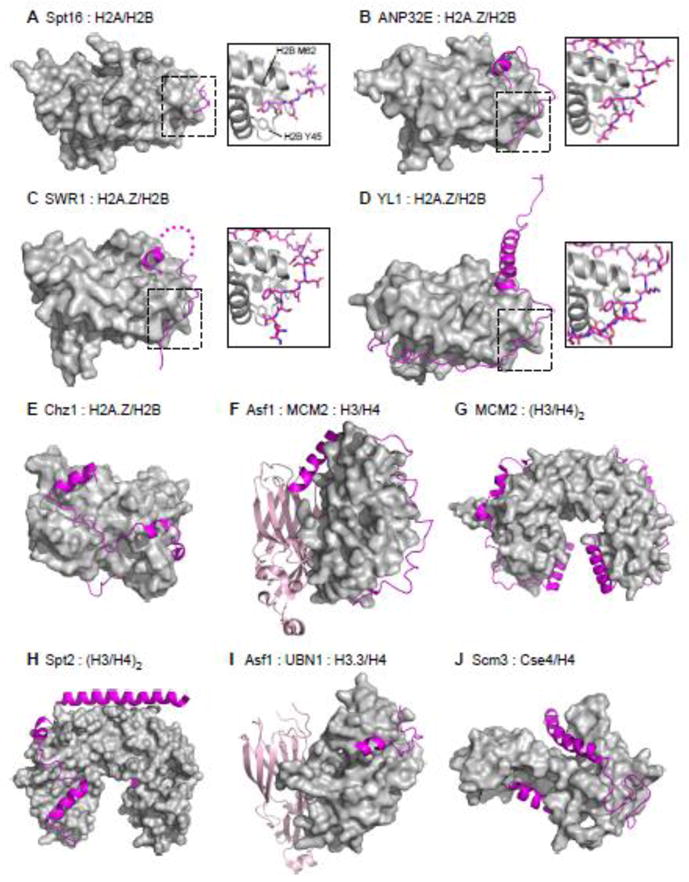
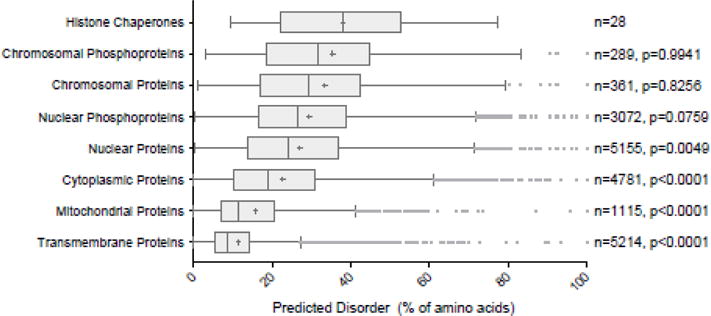
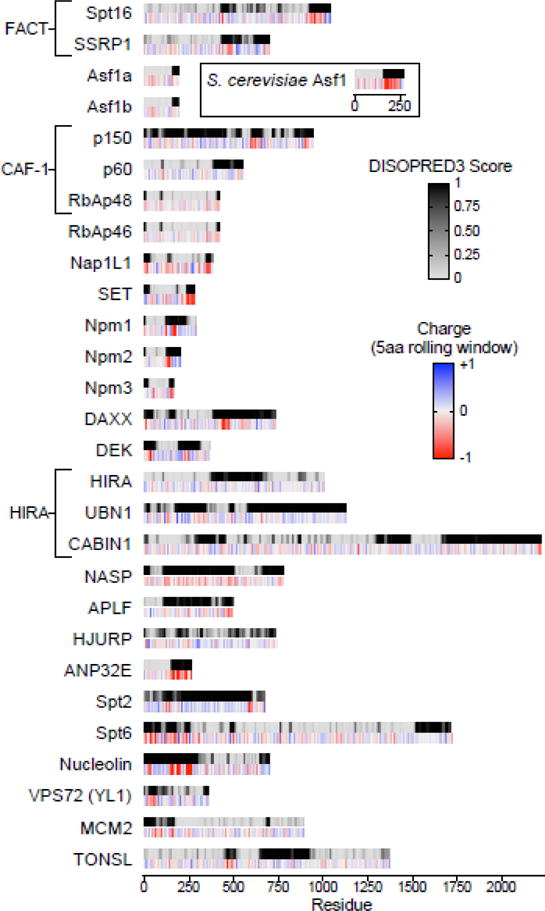
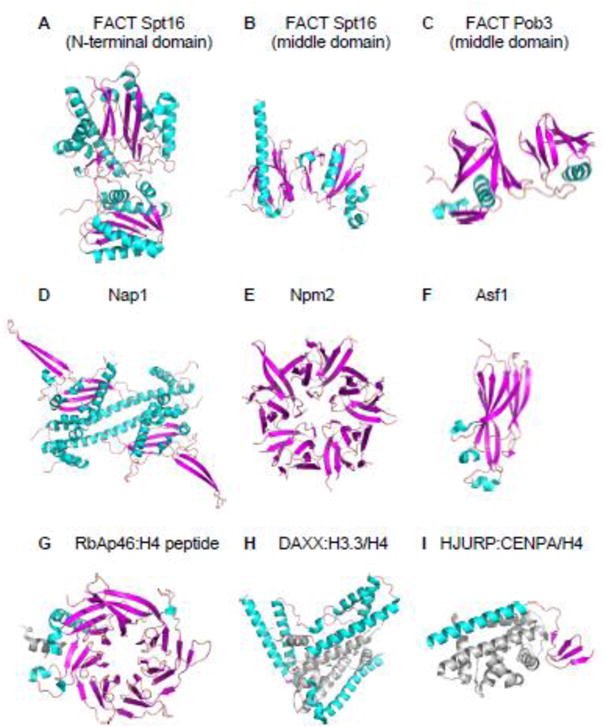
Chromatin is the complex of eukaryotic DNA and proteins required for the efficient compaction of the nearly 2-meter-long human genome into a roughly 10-micron-diameter cell nucleus. The fundamental repeating unit of chromatin is the nucleosome: 147bp of DNA wrapped about an octamer of histone proteins. Nucleosomes are stable enough to organize the genome yet must be dynamically displaced and reassembled to allow access to the underlying DNA for transcription, replication, and DNA damage repair. Histone chaperones are a non-catalytic group of proteins that are central to the processes of nucleosome assembly and disassembly and thus the fluidity of the ever-changing chromatin landscape. Histone chaperones are responsible for binding the highly basic histone proteins, shielding them from non-specific interactions, facilitating their deposition onto DNA, and aiding in their eviction from DNA. Although most histone chaperones perform these common functions, recent structural studies of many different histone chaperones reveal that there are few commonalities in their folds. Importantly, sequence-based predictions show that histone chaperones are highly enriched in intrinsically disordered regions (IDRs) and acidic stretches. In this review, we focus on the molecular mechanisms underpinning histone binding, selectivity, and regulation of these highly dynamic protein regions. We highlight new evidence suggesting that IDRs are often critical for histone chaperone function and play key roles in chromatin assembly and disassembly pathways.
染色质是真核生物DNA与蛋白质的复合物,它能将近2米长的人类基因组高效压缩至直径约10微米的细胞核中。染色质的基本重复单元是核小体:由147个碱基对的DNA缠绕在一组八聚体组蛋白上构成。核小体足够稳定以组织基因组,但又必须动态地移位和重新组装,以便让潜在的DNA能够进行转录、复制及DNA损伤修复。组蛋白伴侣是一类非催化性蛋白质,对于核小体组装和拆卸过程以及不断变化的染色质格局的流动性至关重要。组蛋白伴侣负责结合高度碱性的组蛋白,保护它们免受非特异性相互作用,促进它们沉积到DNA上,并协助它们从DNA上移除。尽管大多数组蛋白伴侣都执行这些常见功能,但最近对许多不同组蛋白伴侣的结构研究表明,它们的折叠结构几乎没有共性。重要的是,基于序列的预测表明,组蛋白伴侣在内在无序区域(IDR)和酸性片段中高度富集。在本综述中,我们聚焦于这些高度动态的蛋白质区域在组蛋白结合、选择性及调控方面的分子机制。我们强调新证据表明,IDR通常对组蛋白伴侣功能至关重要,并在染色质组装和拆卸途径中发挥关键作用。