Jamjoom Ghazi A, El-Daly Mai M, Azhar Esam I, Fallatah Hind I, Akbar Hisham O, Babatin Mohammed, Alghamdi Abdullah S, Dgdgi Mohammed I, Hamid Mohamed A, Qari Yousef A, El-Kafrawy Sherif A
Special Infectious Agent Unit, King Fahd Medical Research Centre, King Abdulaziz University, Jeddah, Saudi Arabia.
Special Infectious Agent Unit, King Fahd Medical Research Centre, King Abdulaziz University; Department of Medical Laboratory Technology, Faculty of Applied Medical Sciences, King Abdulaziz University, Jeddah, Saudi Arabia.
Saudi J Gastroenterol. 2017 May-Jun;23(3):176-182. doi: 10.4103/sjg.SJG_515_16.
BACKGROUND/AIMS: Hepatitis D virus (HDV) is a defective RNA virus that is dependent on hepatitis B surface antigen (HBsAg) for transmission and replication. HDV significance arises from the possibility of poor prognosis of hepatitis B virus (HBV) infection. In Saudi Arabia, HDV prevalence varied from 8 to 32% before the HBV vaccination program and ranged from 0 to 14.7% after the vaccination program was started. The last study, performed in 2004, showed a prevalence of 8.6% in hospital-based HBV cases and 3.3% in healthy donors. The aim of this study was to investigate the prevalence and molecular characterization of HDV in chronic hepatitis B (CHB) patients at the King Abdulaziz University Hospital in Jeddah, Saudi Arabia by molecular and serological techniques. To the best of our knowledge, this is the first study to detect HDV at the molecular level in Saudi Arabia.
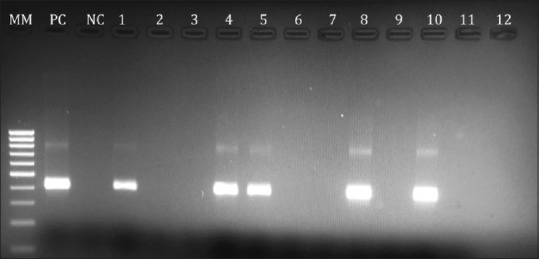
The study included samples from 182 CHB patients from Jeddah; 13 samples with HBsAg negative were excluded. Samples were tested for HDV-Ab, viral RNA by reverse transcriptase-polymerase chain reaction (RT-PCR) in the HDV L-Ag region and sequence analysis.
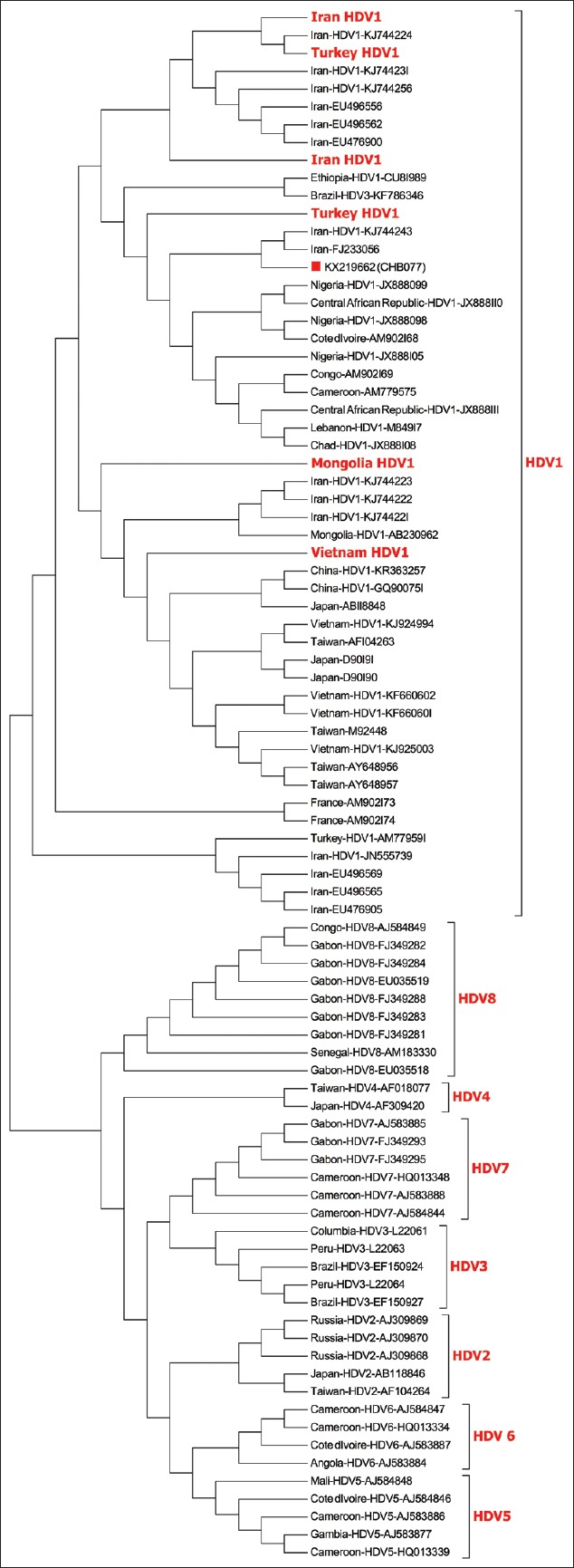
The mean age of the participants was 44.36 years; 75.1% of the participants were Saudi nationals, 58% were males. Nine samples were positive for HDV-Ab and four were borderline; all were subjected to RT-PCR amplification. Three of the positive HDV-Ab cases and 1 borderline case were positive by RT-PCR. All the positive cases had HBV genotype D, and the positive RT-PCR cases were positive for HBV DNA. One of the HDV viremic samples was of genotype 1 by sequencing. The prevalence of HDV in the study was 7.7%, which was lower in Saudis (6.3%) than in non-Saudis (11.9%).
HDV coinfection does not seem to have an effect on the clinical status of the recruited CHB cases in this study. More studies are needed to investigate the genetic diversity in other areas such as the southern parts of the Kingdom.
背景/目的:丁型肝炎病毒(HDV)是一种缺陷RNA病毒,其传播和复制依赖于乙型肝炎表面抗原(HBsAg)。HDV的重要性源于乙型肝炎病毒(HBV)感染预后不良的可能性。在沙特阿拉伯,HBV疫苗接种计划实施前HDV流行率在8%至32%之间,疫苗接种计划启动后在0%至14.7%之间。2004年进行的上一项研究显示,以医院为基础的HBV病例中HDV流行率为8.6%,健康献血者中为3.3%。本研究的目的是通过分子和血清学技术调查沙特阿拉伯吉达阿卜杜勒阿齐兹国王大学医院慢性乙型肝炎(CHB)患者中HDV的流行率和分子特征。据我们所知,这是沙特阿拉伯首次在分子水平检测HDV的研究。
该研究纳入了来自吉达的182例CHB患者的样本;排除13例HBsAg阴性样本。对样本进行HDV抗体、HDV L抗原区域的逆转录聚合酶链反应(RT-PCR)检测病毒RNA及序列分析。
参与者的平均年龄为44.36岁;75.1%的参与者为沙特国民,58%为男性。9份样本HDV抗体阳性,4份为临界值;所有样本均进行RT-PCR扩增。3例HDV抗体阳性病例和1例临界值病例RT-PCR呈阳性。所有阳性病例均为HBV D基因型,RT-PCR阳性病例HBV DNA呈阳性。通过测序,1份HDV病毒血症样本为1型基因型。本研究中HDV的流行率为7.7%,沙特人(6.3%)低于非沙特人(11.9%)。
在本研究中,HDV合并感染似乎对所招募的CHB病例的临床状况没有影响。需要更多研究来调查沙特王国其他地区(如南部地区)的基因多样性。