Zhang Heng, Menguy Nicolas, Wang Fuxian, Benzerara Karim, Leroy Eric, Liu Peiyu, Liu Wenqi, Wang Chunli, Pan Yongxin, Chen Zhibao, Li Jinhua
Department of Life Science and Technology, Heilongjiang Bayi Agricultural UniversityDaqing, China.
Key Laboratory of Earth and Planetary Physics, Institute of Geology and Geophysics, Chinese Academy of SciencesBeijing, China.
Front Microbiol. 2017 May 30;8:969. doi: 10.3389/fmicb.2017.00969. eCollection 2017.
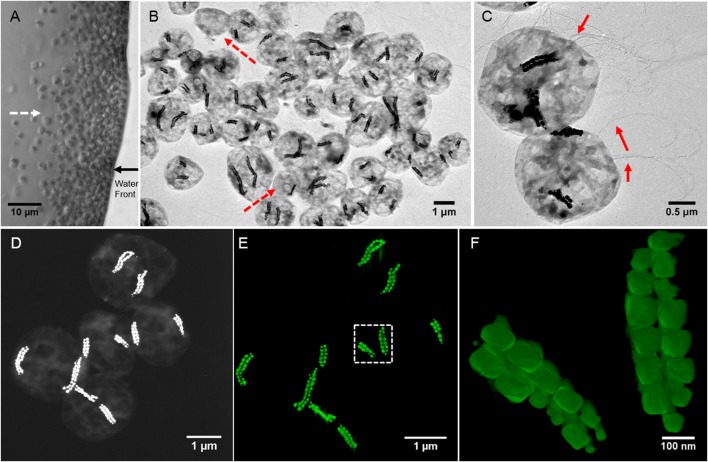
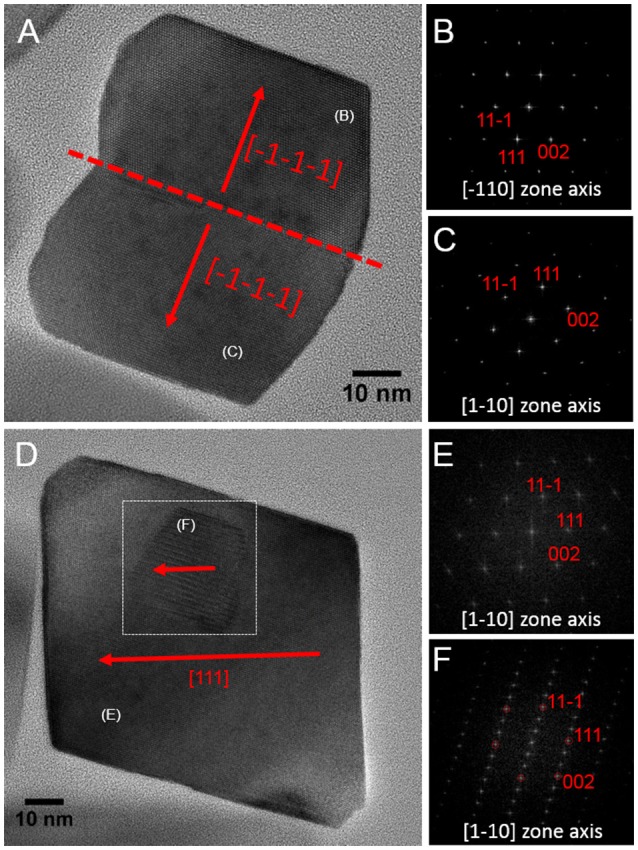
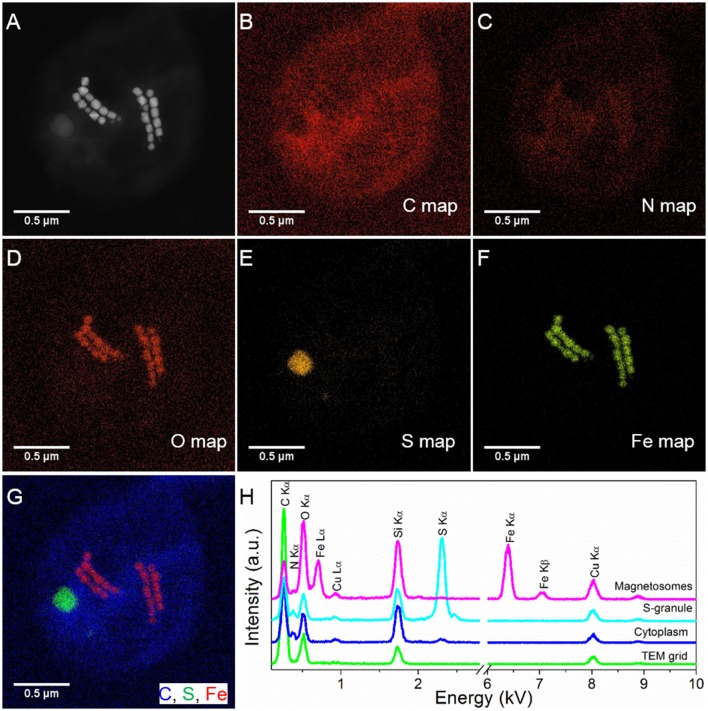
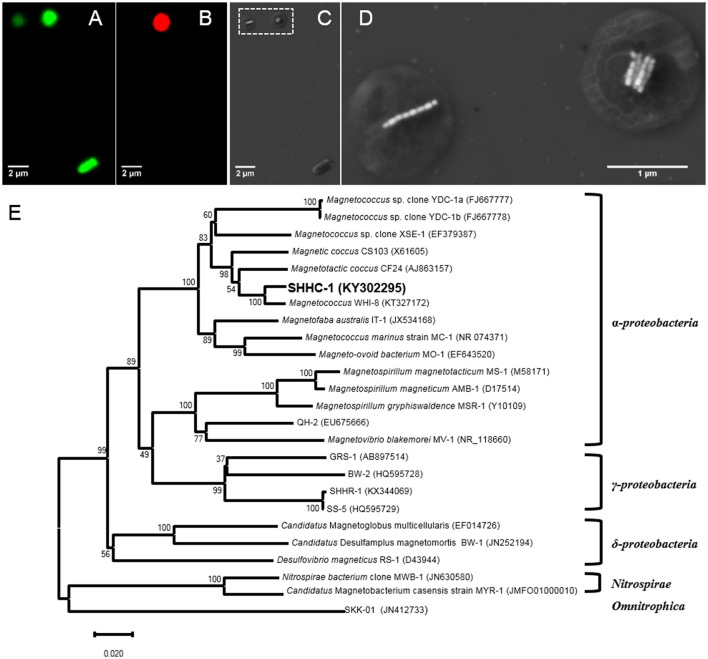
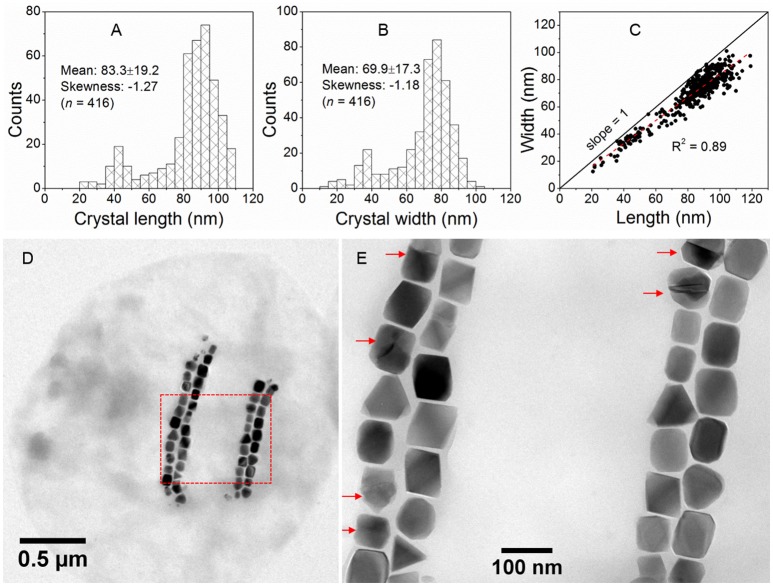
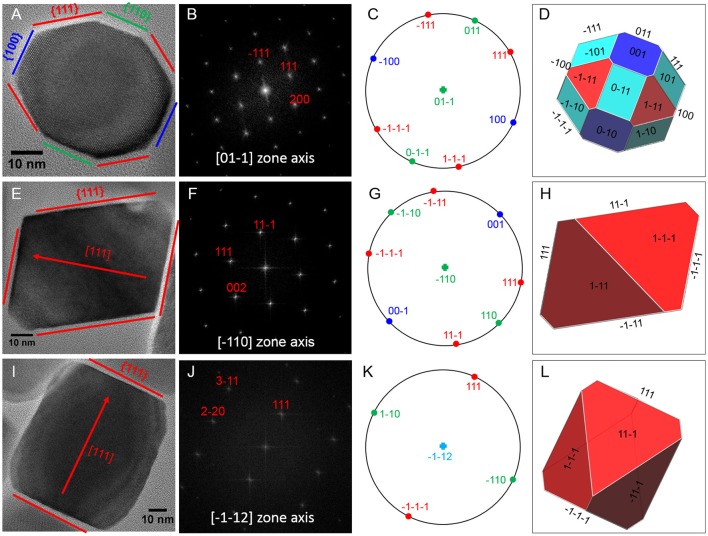
Magnetotactic bacteria (MTB) are morphologically and phylogenetically diverse prokaryotes. They can form intracellular chain-assembled magnetite (FeO) or greigite (FeS) nanocrystals each enveloped by a lipid bilayer membrane called a magnetosome. Magnetotactic cocci have been found to be the most abundant morphotypes of MTB in various aquatic environments. However, knowledge on magnetosome biomineralization within magnetotactic cocci remains elusive due to small number of strains that have been cultured. By using a coordinated fluorescence and scanning electron microscopy method, we discovered a unique magnetotactic coccus strain (tentatively named SHHC-1) in brackish sediments collected from the estuary of Shihe River in Qinhuangdao city, eastern China. It phylogenetically belongs to the class. Transmission electron microscopy analyses reveal that SHHC-1 cells formed many magnetite-type magnetosomes organized as two bundles in each cell. Each bundle contains two parallel chains with smaller magnetosomes generally located at the ends of each chain. Unlike most magnetotactic alphaproteobacteria that generally form magnetosomes with uniform crystal morphologies, SHHC-1 magnetosomes display a more diverse variety of crystal morphology even within a single cell. Most particles have rectangular and rhomboidal projections, whilst others are triangular, or irregular. High resolution transmission electron microscopy observations coupled with morphological modeling indicate an idealized model-elongated octahedral crystals, a form composed of eight {111} faces. Furthermore, twins, multiple twins and stack dislocations are frequently observed in the SHHC-1 magnetosomes. This suggests that biomineralization of strain SHHC-1 magnetosome might be less biologically controlled than other magnetotactic alphaproteobacteria. Alternatively, SHHC-1 is more sensitive to the unfavorable environments under which it lives, or a combination of both factors may have controlled the magnetosome biomineralization process within this unique MTB.
趋磁细菌(MTB)是形态和系统发育上多样的原核生物。它们能形成细胞内链组装的磁铁矿(FeO)或硫复铁矿(FeS)纳米晶体,每个晶体都被称为磁小体的脂质双分子层膜包裹。趋磁球菌被发现是各种水生环境中MTB最丰富的形态类型。然而,由于已培养的菌株数量较少,关于趋磁球菌内磁小体生物矿化的知识仍然难以捉摸。通过使用荧光和扫描电子显微镜协同方法,我们在中国东部秦皇岛市石河河口采集的咸淡沉积物中发现了一种独特的趋磁球菌菌株(暂命名为SHHC - 1)。它在系统发育上属于该类别。透射电子显微镜分析表明,SHHC - 1细胞形成了许多磁铁矿型磁小体,每个细胞中排列成两束。每束包含两条平行链,较小的磁小体通常位于每条链的末端。与大多数通常形成具有均匀晶体形态的磁小体的趋磁α-变形菌不同,即使在单个细胞内,SHHC - 1磁小体也呈现出更多样化的晶体形态。大多数颗粒具有矩形和菱形突起,而其他的则是三角形或不规则的。高分辨率透射电子显微镜观察与形态建模表明是一种理想化模型——拉长的八面体晶体,一种由八个{111}面组成的形态。此外,在SHHC - 1磁小体中经常观察到孪晶、多重孪晶和堆垛位错。这表明SHHC - 1菌株磁小体的生物矿化可能比其他趋磁α-变形菌受生物控制程度更低。或者,SHHC - 1对其生存的不利环境更敏感,或者这两个因素的组合可能控制了这种独特MTB内的磁小体生物矿化过程。