Department of Plant and Microbial Biology, University of California, Berkeley, Berkeley, California, USA.
Department of Plant and Microbial Biology, University of California, Berkeley, Berkeley, California, USA
Appl Environ Microbiol. 2018 Oct 30;84(22). doi: 10.1128/AEM.01724-18. Print 2018 Nov 15.
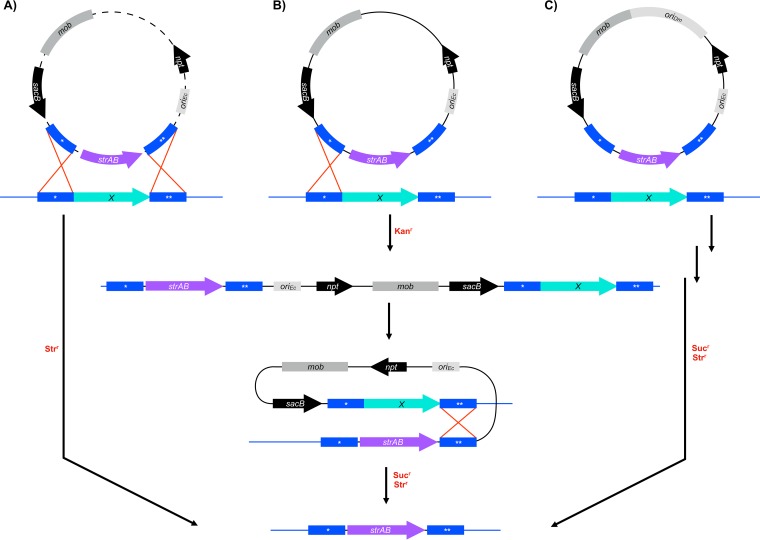
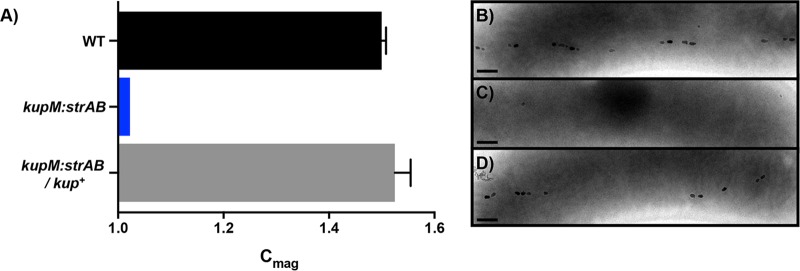
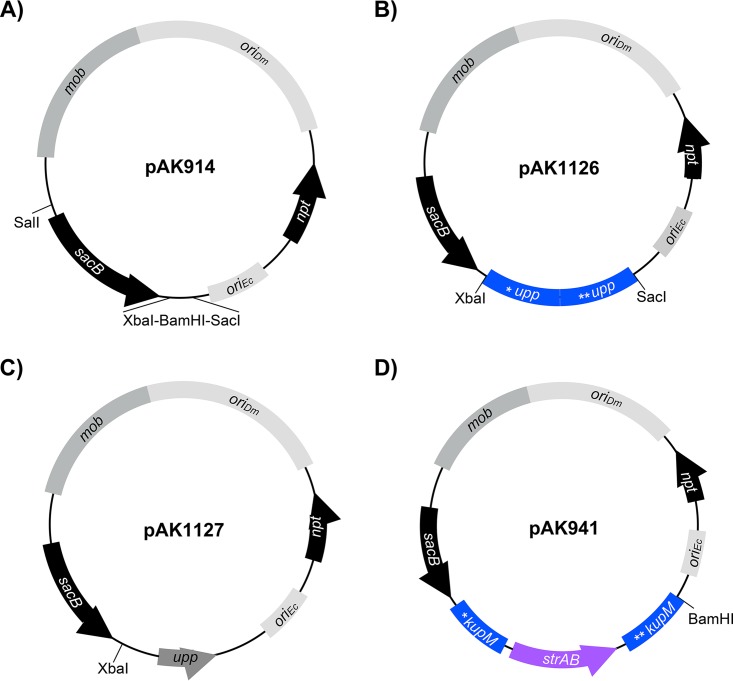
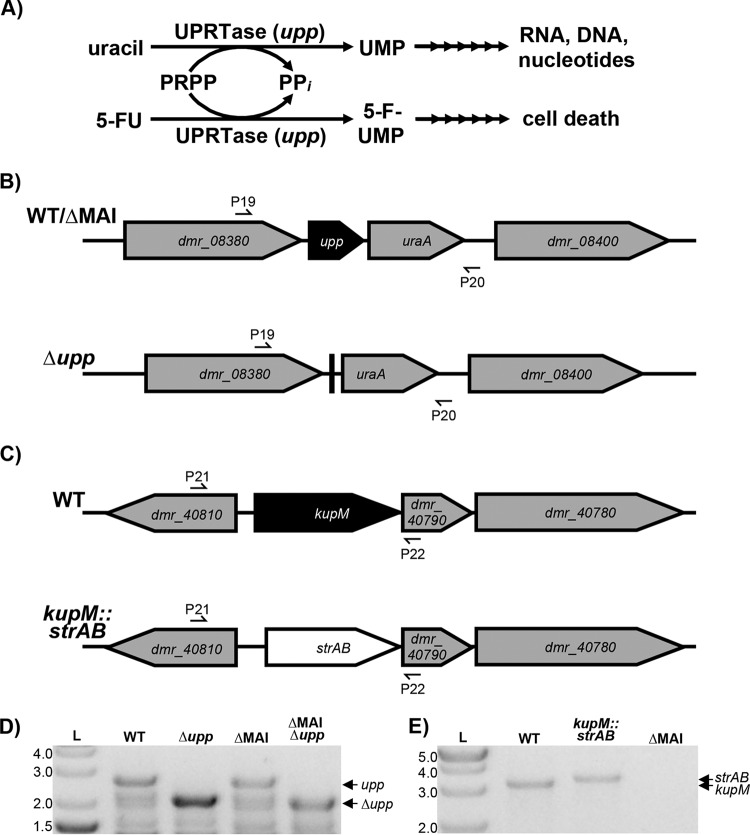
Magnetosomes are complex bacterial organelles that serve as model systems for studying bacterial cell biology, biomineralization, and global iron cycling. Magnetosome biogenesis is primarily studied in two closely related of the genus that form cubooctahedral-shaped magnetite crystals within a lipid membrane. However, chemically and structurally distinct magnetic particles have been found in physiologically and phylogenetically diverse bacteria. Due to a lack of molecular genetic tools, the mechanistic diversity of magnetosome formation remains poorly understood. RS-1 is an anaerobic sulfate-reducing deltaproteobacterium that forms bullet-shaped magnetite crystals. A recent forward genetic screen identified 10 genes in the conserved magnetosome gene island of that are essential for its magnetic phenotype. However, this screen likely missed mutants with defects in crystal size, shape, and arrangement. Reverse genetics to target the remaining putative magnetosome genes using standard genetic methods of suicide vector integration have not been feasible due to the low transconjugation efficiency. Here, we present a reverse genetic method for targeted mutagenesis in using a replicative plasmid. To test this method, we generated a mutant resistant to 5-fluorouracil by making a markerless deletion of the gene that encodes uracil phosphoribosyltransferase. We also used this method for targeted marker exchange mutagenesis by replacing , a gene identified in our previous screen as a magnetosome formation factor, with a streptomycin resistance cassette. Overall, our results show that targeted mutagenesis using a replicative plasmid is effective in and may also be applied to other genetically recalcitrant bacteria. Magnetotactic bacteria (MTB) are a group of organisms that form intracellular nanometer-scale magnetic crystals though a complex process involving lipid and protein scaffolds. These magnetic crystals and their lipid membranes, termed magnetosomes, are model systems for studying bacterial cell biology and biomineralization and are potential platforms for biotechnological applications. Due to a lack of genetic tools and unculturable representatives, the mechanisms of magnetosome formation in phylogenetically deeply branching MTB remain unknown. These MTB contain elongated bullet-/tooth-shaped magnetite and greigite crystals that likely form in a manner distinct from that of the cubooctahedral-shaped magnetite crystals of the genetically tractable MTB within the Here, we present a method for genome editing in RS-1, a cultured representative of the deeply branching MTB of the class This marks a crucial step in developing as a model for studying diverse mechanisms of magnetic particle formation by MTB.
磁小体是复杂的细菌细胞器,可作为研究细菌细胞生物学、生物矿化和全球铁循环的模型系统。磁小体生物发生主要在两个密切相关的 属中研究,它们在脂质膜内形成立方八面体形状的磁铁矿晶体。然而,在生理上和系统发育上多样化的细菌中已经发现了化学和结构上不同的磁性颗粒。由于缺乏分子遗传工具,磁小体形成的机制多样性仍未得到很好的理解。 RS-1 是一种厌氧硫酸盐还原的 δ-变形菌,它形成子弹形磁铁矿晶体。最近的正向遗传筛选在 中保守的磁小体基因岛中鉴定出 10 个对其磁性表型至关重要的基因。然而,该筛选可能错过了在晶体大小、形状和排列方面存在缺陷的突变体。由于转化效率低,使用自杀载体整合的标准遗传方法靶向其余假定的磁小体基因进行反向遗传学还不可行。在这里,我们提出了一种使用复制质粒在 中进行靶向诱变的反向遗传学方法。为了测试该方法,我们通过对编码尿嘧啶磷酸核糖基转移酶的 基因进行无标记缺失,生成了一种对 5-氟尿嘧啶有抗性的突变体。我们还使用该方法通过用链霉素抗性盒替换 ,即我们之前的筛选中鉴定出的一种磁小体形成因子,进行靶向标记交换诱变。总体而言,我们的结果表明,使用复制质粒进行靶向诱变在 中是有效的,并且也可能适用于其他遗传上难以处理的细菌。趋磁细菌(MTB)是一组通过涉及脂质和蛋白质支架的复杂过程形成细胞内纳米级磁性晶体的生物体。这些磁性晶体及其脂质膜,称为磁小体,是研究细菌细胞生物学和生物矿化的模型系统,也是生物技术应用的潜在平台。由于缺乏遗传工具和不可培养的代表,系统发育上分支很深的 MTB 中磁小体形成的机制仍不清楚。这些 MTB 含有拉长的子弹/牙形磁铁矿和 greigite 晶体,这些晶体可能以不同于遗传上可处理的 MTB 中的立方八面体形状磁铁矿晶体的方式形成。在这里,我们提出了一种在 RS-1 中进行基因组编辑的方法, RS-1 是 类中分支很深的 MTB 的培养代表。这标志着在将 开发为研究 MTB 形成不同磁性颗粒机制的模型方面迈出了关键一步。