Oliver Jeffrey C
University of Arizona Health Sciences Library, University of Arizona, Tucson, AZ, United States of America.
PLoS One. 2017 Jun 14;12(6):e0179581. doi: 10.1371/journal.pone.0179581. eCollection 2017.
Health sciences research is increasingly focusing on big data applications, such as genomic technologies and precision medicine, to address key issues in human health. These approaches rely on biological data repositories and bioinformatic analyses, both of which are growing rapidly in size and scope. Libraries play a key role in supporting researchers in navigating these and other information resources.
With the goal of supporting bioinformatics research in the health sciences, the University of Arizona Health Sciences Library established a Bioinformation program. To shape the support provided by the library, I developed and administered a needs assessment survey to the University of Arizona Health Sciences campus in Tucson, Arizona. The survey was designed to identify the training topics of interest to health sciences researchers and the preferred modes of training.
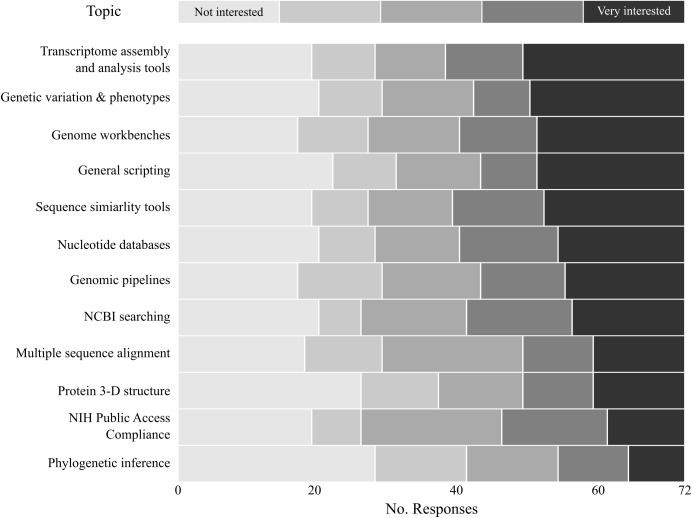
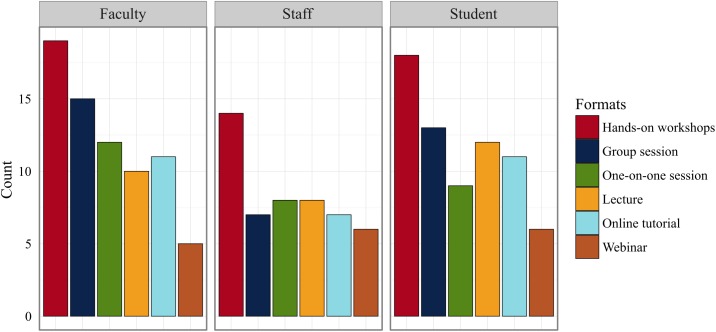
Survey respondents expressed an interest in a broad array of potential training topics, including "traditional" information seeking as well as interest in analytical training. Of particular interest were training in transcriptomic tools and the use of databases linking genotypes and phenotypes. Staff were most interested in bioinformatics training topics, while faculty were the least interested. Hands-on workshops were significantly preferred over any other mode of training. The University of Arizona Health Sciences Library is meeting those needs through internal programming and external partnerships.
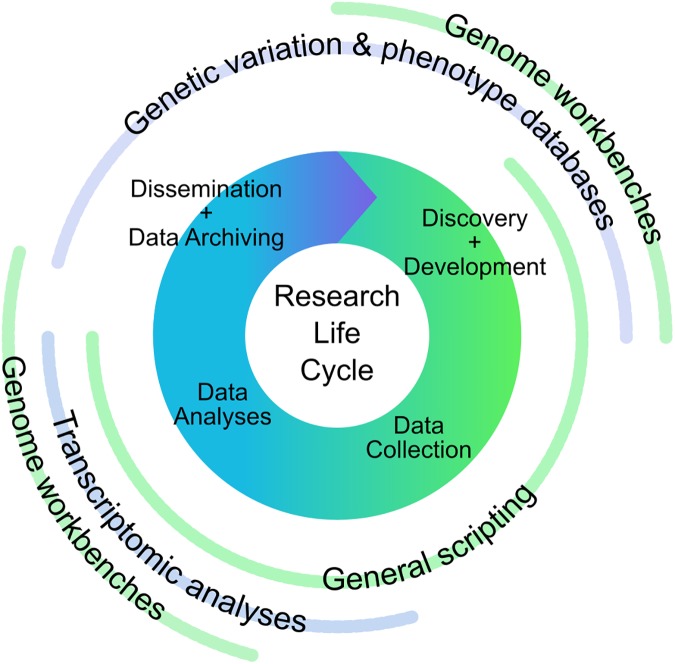
The results of the survey demonstrate a keen interest in a variety of bioinformatic resources; the challenge to the library is how to address those training needs. The mode of support depends largely on library staff expertise in the numerous subject-specific databases and tools. Librarian-led bioinformatic training sessions provide opportunities for engagement with researchers at multiple points of the research life cycle. When training needs exceed library capacity, partnering with intramural and extramural units will be crucial in library support of health sciences bioinformatic research.
健康科学研究越来越关注大数据应用,如基因组技术和精准医学,以解决人类健康的关键问题。这些方法依赖于生物数据存储库和生物信息分析,二者的规模和范围都在迅速增长。图书馆在支持研究人员使用这些及其他信息资源方面发挥着关键作用。
为支持健康科学领域的生物信息学研究,亚利桑那大学健康科学图书馆设立了生物信息项目。为确定图书馆提供的支持方向,我在亚利桑那州图森市的亚利桑那大学健康科学校区开展并管理了一项需求评估调查。该调查旨在确定健康科学研究人员感兴趣的培训主题以及首选的培训方式。
调查受访者对一系列潜在培训主题表现出兴趣,包括“传统”信息检索以及分析培训。特别受关注的是转录组学工具培训以及使用连接基因型和表型的数据库。工作人员对生物信息学培训主题最感兴趣,而教师兴趣最低。与其他任何培训方式相比,实践工作坊明显更受青睐。亚利桑那大学健康科学图书馆正在通过内部项目和外部合作来满足这些需求。
调查结果表明对各种生物信息资源有着浓厚兴趣;图书馆面临的挑战是如何满足这些培训需求。支持方式很大程度上取决于图书馆工作人员在众多特定学科数据库和工具方面的专业知识。由图书馆员主导的生物信息学培训课程为在研究生命周期的多个阶段与研究人员互动提供了机会。当培训需求超出图书馆能力时,与校内和校外单位合作对于图书馆支持健康科学领域的生物信息学研究至关重要。