Division of Collaboration and Education, Research Center for Zoonosis Control, Hokkaido University, North 20 West 10, Kita-ku, Sapporo, Hokkaido, 001-0020, Japan.
Global Station for Zoonosis Control, GI-CoRE, Hokkaido University, North 20 West 10, Kita-ku, Sapporo, Hokkaido, 001-0020, Japan.
Sci Rep. 2017 Jun 14;7(1):3510. doi: 10.1038/s41598-017-03734-5.
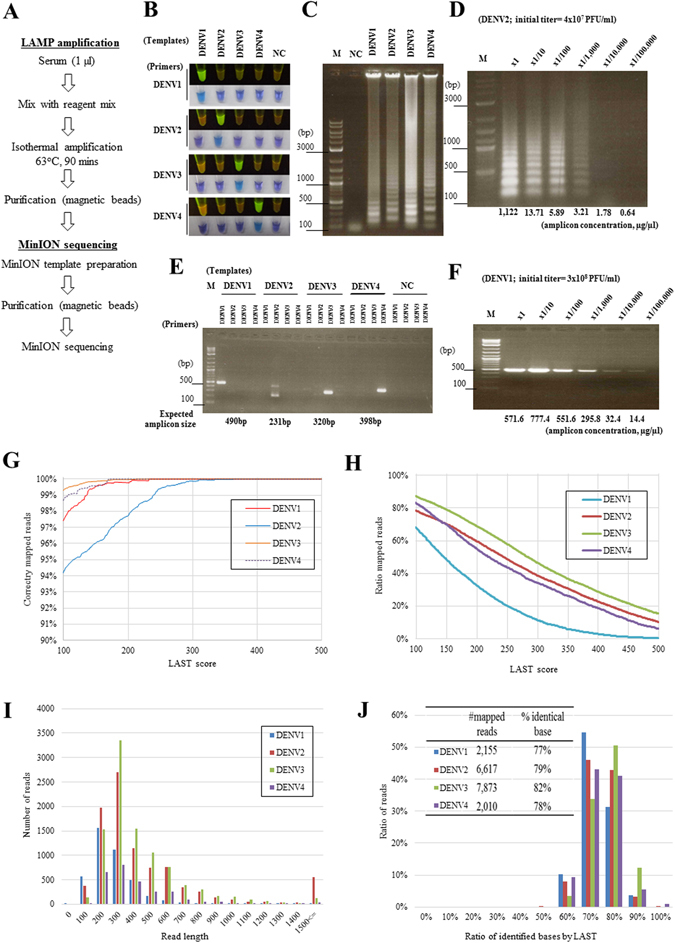
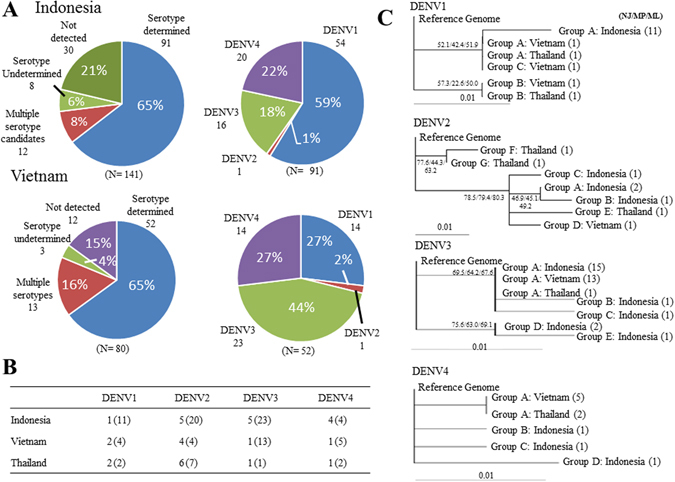
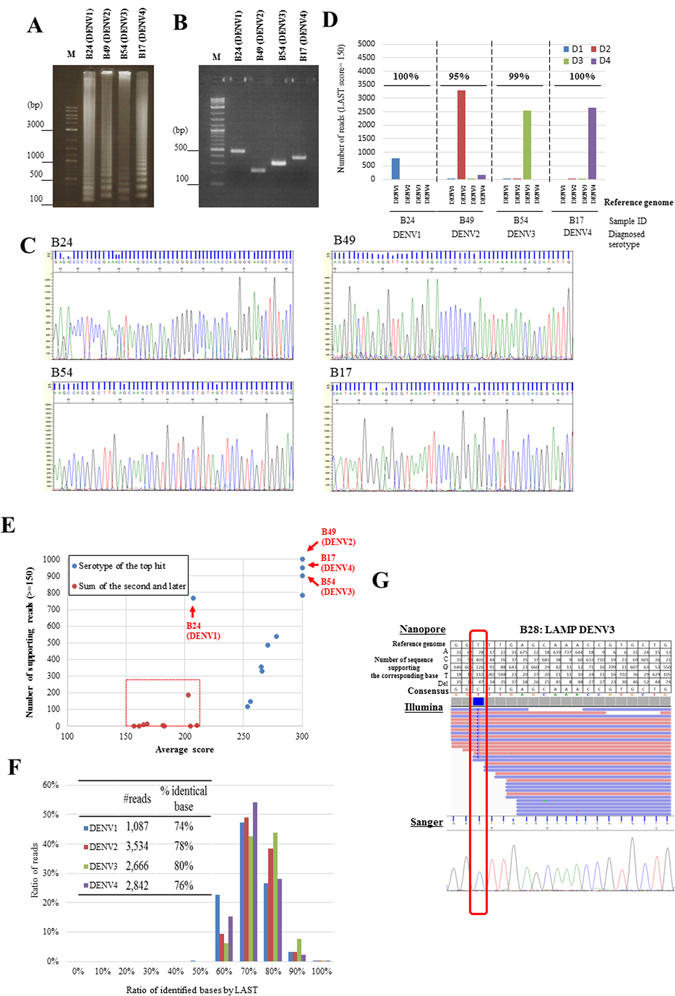
The recent development of a nanopore-type portable DNA sequencer has changed the way we think about DNA sequencing. We can perform sequencing directly in the field, where we collect the samples. Here, we report the development of a novel method to detect and genotype tropical disease pathogens, using dengue fever as a model. By combining the sequencer with isothermal amplification that only requires a water bath, we were able to amplify and sequence target viral genomes with ease. Starting from a serum sample, the entire procedure could be finished in a single day. The analysis of blood samples collected from 141 Indonesian patients demonstrated that this method enables the clinical identification and serotyping of the dengue virus with high sensitivity and specificity. The overall successful detection rate was 79%, and a total of 58 SNVs were detected. Similar analyses were conducted on 80 Vietnamese and 12 Thai samples with similar performance. Based on the obtained sequence information, we demonstrated that this approach is able to produce indispensable information for etiologically analyzing annual or regional diversifications of the pathogens.
一种纳米孔式便携式 DNA 测序仪的最新发展改变了我们对 DNA 测序的看法。我们可以直接在采集样本的现场进行测序。在这里,我们报告了一种新方法的开发,以检测和基因分型热带病病原体,以登革热为模型。通过将测序仪与仅需水浴的等温扩增相结合,我们能够轻松地扩增和测序目标病毒基因组。从血清样本开始,整个过程可以在一天内完成。对来自 141 名印度尼西亚患者的血液样本的分析表明,该方法能够以高灵敏度和特异性进行临床鉴定和登革热病毒分型。总的检测成功率为 79%,共检测到 58 个 SNV。对 80 份越南和 12 份泰国样本进行了类似的分析,表现相似。基于获得的序列信息,我们证明该方法能够提供对病原体年度或区域多样化进行病因分析所必需的信息。