Department of Medical Microbiology and Parasitology, Faculty of Medicine and Health Sciences, Universiti Putra Malaysia, Selangor, Malaysia.
Virology Unit, Infectious Disease Research Centre, Institute for Medical Research, Kuala Lumpur, Malaysia.
PLoS Negl Trop Dis. 2018 Sep 18;12(9):e0006817. doi: 10.1371/journal.pntd.0006817. eCollection 2018 Sep.
Malaysia experienced an unprecedented dengue outbreak from the year 2014 to 2016 that resulted in an enormous increase in the number of cases and mortality as compared to previous years. The causes that attribute to a dengue outbreak can be multifactorial. Viral factors, such as dengue serotype and genotype, are the components of interest in this study. Although only a small number of studies investigated the association between the serotype of dengue virus and clinical manifestations, none of these studies included analyses on dengue genotypes. The present study aims to investigate dengue serotype and genotype-specific clinical characteristics among dengue fever and severe dengue cases from two Malaysian tertiary hospitals between 2014 and mid-2017.
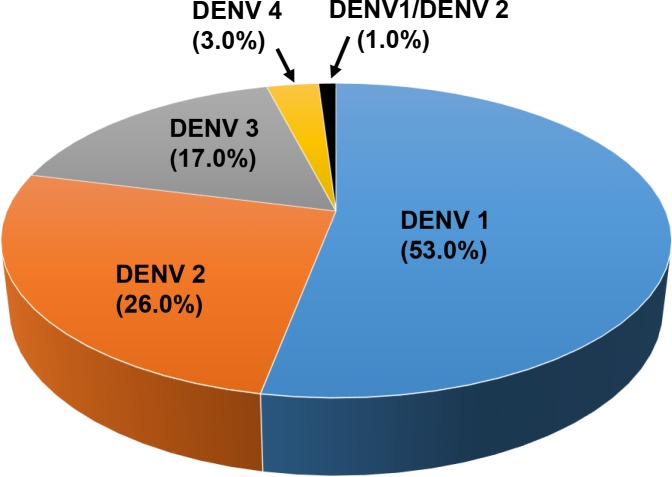
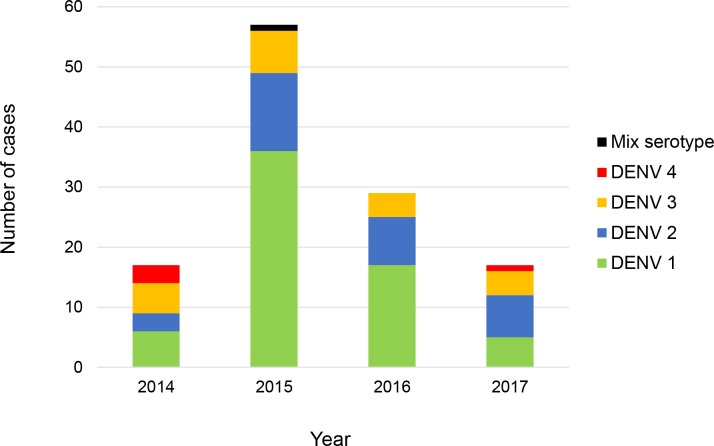
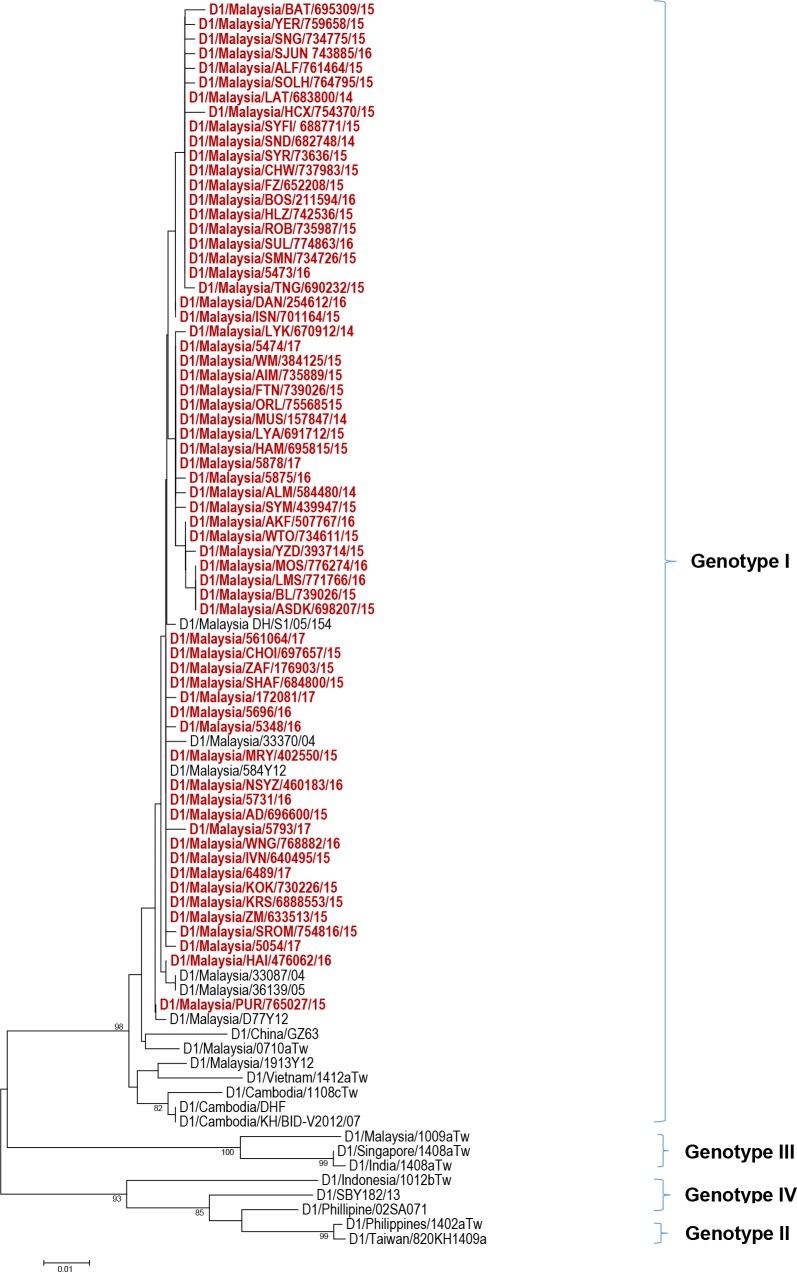
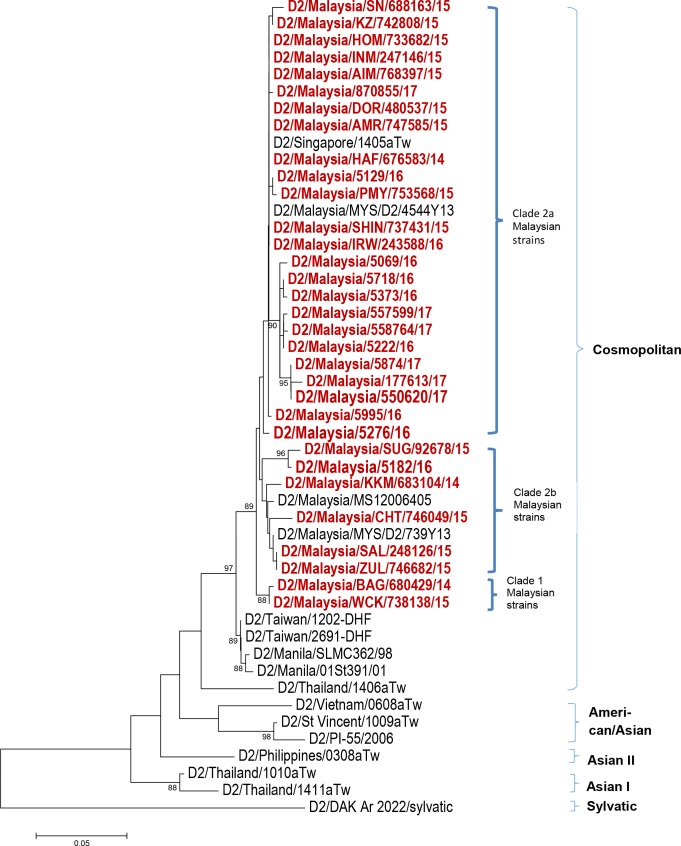
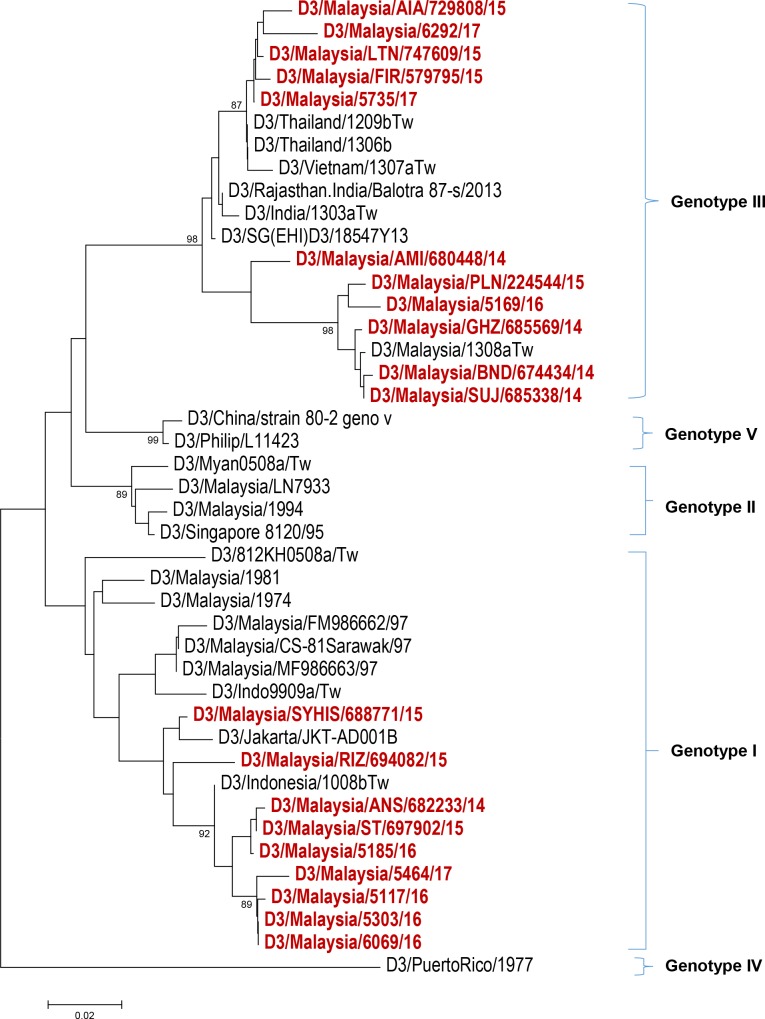
A total of 120 retrospective dengue serum specimens were subjected to serotyping and genotyping by Taqman Real-Time RT-PCR, sequencing and phylogenetic analysis. Subsequently, the dengue serotype and genotype data were statistically analyzed for 101 of 120 corresponding patients' clinical manifestations to generate a descriptive relation between the genetic components and clinical outcomes of dengue infected patients. During the study period, predominant dengue serotype and genotype were found to be DENV 1 genotype I. Additionally, non-severe clinical manifestations were commonly observed in patients infected with DENV 1 and DENV 3. Meanwhile, patients with DENV 2 infection showed significant warning signs and developed severe dengue (p = 0.007). Cases infected with DENV 2 were also commonly presented with persistent vomiting (p = 0.010), epigastric pain (p = 0.018), plasma leakage (p = 0.004) and shock (p = 0.038). Moreover, myalgia and arthralgia were highly prevalent among DENV 3 infection (p = 0.015; p = 0.014). The comparison of genotype-specific clinical manifestations showed that DENV 2 Cosmopolitan was significantly common among severe dengue patients. An association was also found between genotype I of DENV 3 and myalgia. In a similar vein, genotype III of DENV 3 was significantly common among patients with arthralgia.
The current data contended that different dengue serotype and genotype had caused distinct clinical characteristics in infected patients.
2014 年至 2016 年,马来西亚经历了一场前所未有的登革热疫情,与往年相比,病例数和死亡率大幅上升。导致登革热疫情的原因可能是多方面的。病毒因素,如登革热血清型和基因型,是本研究关注的组成部分。尽管只有少数研究调查了登革热病毒血清型与临床表现之间的关系,但这些研究都没有包括对登革热基因型的分析。本研究旨在调查 2014 年至 2017 年中期期间,两家马来西亚三级医院的登革热和重症登革热病例中登革热血清型和基因型的特异性临床特征。
共对 120 例回顾性登革热血清标本进行 Taqman 实时 RT-PCR、测序和系统发育分析,以进行血清分型和基因分型。随后,对 120 例相应患者的 101 例临床症状的登革热血清型和基因型数据进行统计学分析,以生成感染登革热患者遗传成分与临床结局之间的描述性关系。在研究期间,主要的登革热血清型和基因型是 DENV 1 基因型 I。此外,DENV 1 和 DENV 3 感染患者常出现非严重临床表现。同时,DENV 2 感染患者表现出明显的警告信号,并发展为重症登革热(p = 0.007)。感染 DENV 2 的病例也常伴有持续性呕吐(p = 0.010)、上腹痛(p = 0.018)、血浆渗漏(p = 0.004)和休克(p = 0.038)。此外,DENV 3 感染患者中肌痛和关节痛非常普遍(p = 0.015;p = 0.014)。基因型特异性临床表现的比较表明,DENV 2 Cosmopolitan 在重症登革热患者中非常常见。还发现 DENV 3 基因型 I 与肌痛之间存在关联。同样,DENV 3 的基因型 III 在关节痛患者中也很常见。
目前的数据表明,不同的登革热血清型和基因型在感染患者中引起了不同的临床特征。