Beijing Key Laboratory of Molecular Pharmaceutics and New Drug System, State Key Laboratory of Natural and Biomimetic Drugs, and School of Pharmaceutical Sciences, Peking University, Beijing, China.
Department of Pharmaceutical Engineering, Beijing Institute of Petrochemical Technology, Beijing, China.
Sci Rep. 2017 Jun 14;7(1):3487. doi: 10.1038/s41598-017-03805-7.
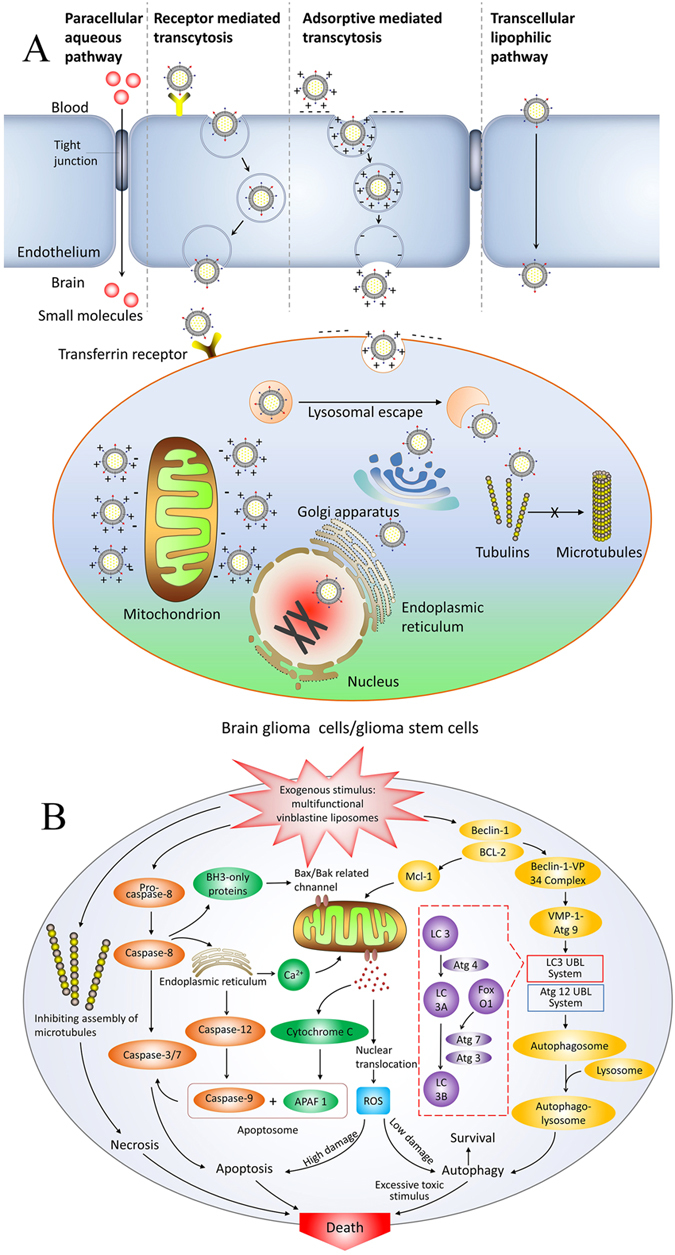
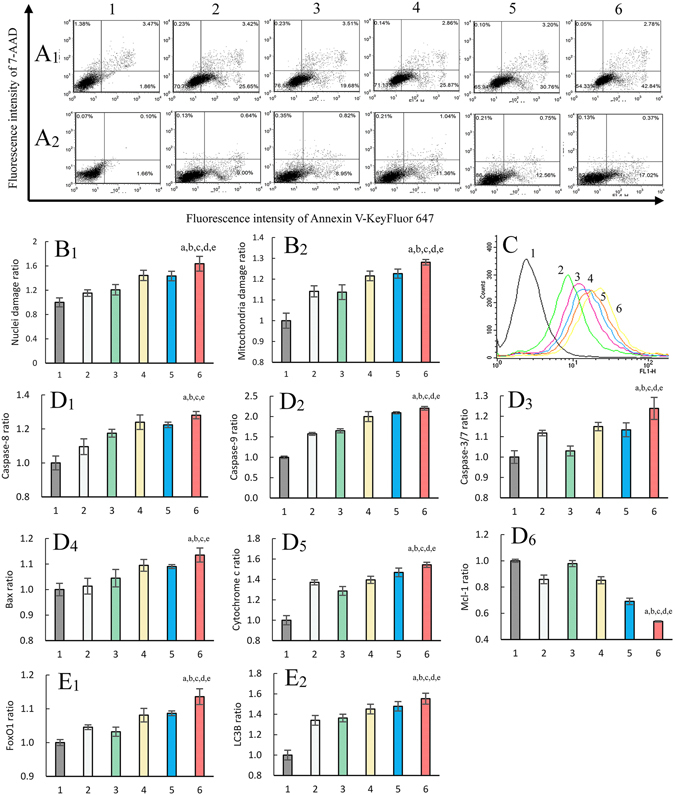
Surgery and radiotherapy cannot fully remove brain glioma; thus, chemotherapy continues to play an important role in treatment of this illness. However, because of the restriction of the blood-brain barrier (BBB) and the regeneration of glioma stem cells, post-chemotherapy relapse usually occurs. Here, we report a potential solution to these issues that involves a type of novel multifunctional vinblastine liposomes equipped with transferrin receptor binding peptide TfR-T and octa-arginine conjugate stearyl-R. Studies were performed on brain glioma and glioma stem cells in vitro and were verified in brain glioma-bearing mice. The liposomes were transported across the BBB, killing brain glioma and glioma stem cells via the induction of necrosis, apoptosis and autophagy. Furthermore, we reveal the molecular mechanisms for treating brain glioma and glioma stem cells via functionalized drug lipid vesicles.
手术和放疗不能完全切除脑胶质瘤;因此,化疗在该病的治疗中继续发挥重要作用。然而,由于血脑屏障 (BBB) 的限制和胶质瘤干细胞的再生,化疗后复发通常会发生。在这里,我们报告了一种潜在的解决方案,涉及一种新型多功能长春新碱脂质体,该脂质体带有转铁蛋白受体结合肽 TfR-T 和八聚精氨酸偶联硬脂酰-R。在体外对脑胶质瘤和神经胶质瘤干细胞进行了研究,并在脑胶质瘤荷瘤小鼠中进行了验证。这些脂质体能够穿过血脑屏障,通过诱导坏死、凋亡和自噬来杀死脑胶质瘤和神经胶质瘤干细胞。此外,我们通过功能化药物脂质体揭示了治疗脑胶质瘤和神经胶质瘤干细胞的分子机制。