
活性抗癌剂二乙基二硫代氨基甲酸铜注射剂的研发与优化
Development and optimization of an injectable formulation of copper diethyldithiocarbamate, an active anticancer agent.
作者信息
Wehbe Mohamed, Anantha Malathi, Shi Minghan, Leung Ada Wai-Yin, Dragowska Wieslawa H, Sanche Léon, Bally Marcel B
机构信息
Experimental Therapeutics, British Columbia Cancer Agency.
Faculty of Pharmaceutical Sciences, University of British Columbia, Vancouver, BC.
出版信息
Int J Nanomedicine. 2017 May 31;12:4129-4146. doi: 10.2147/IJN.S137347. eCollection 2017.
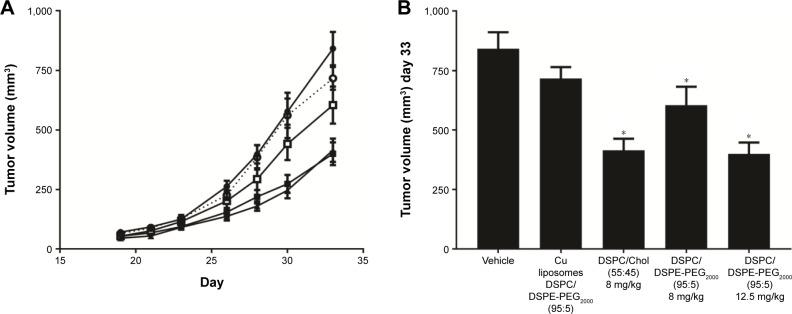
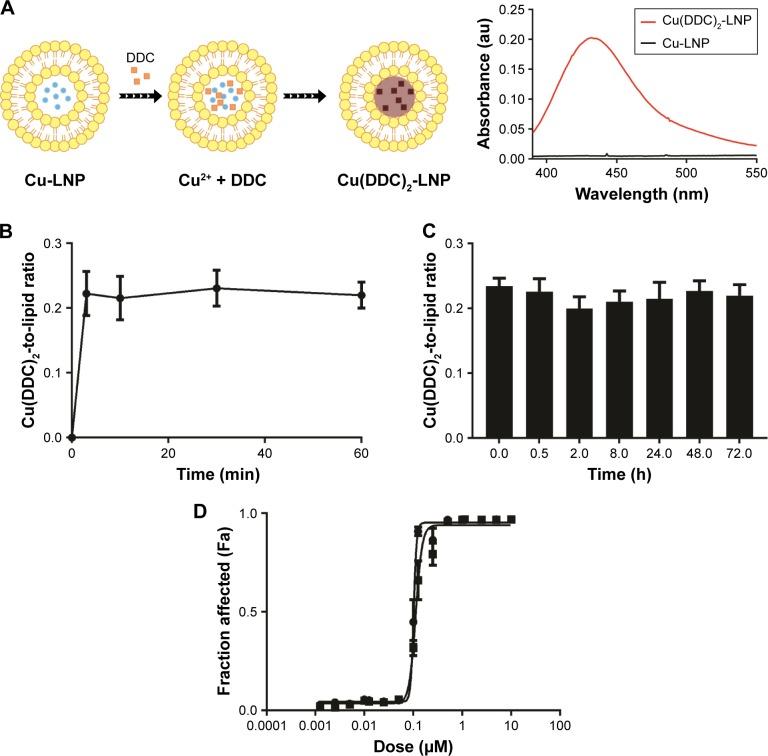
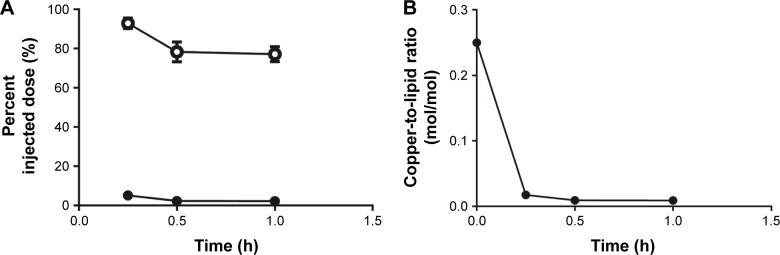
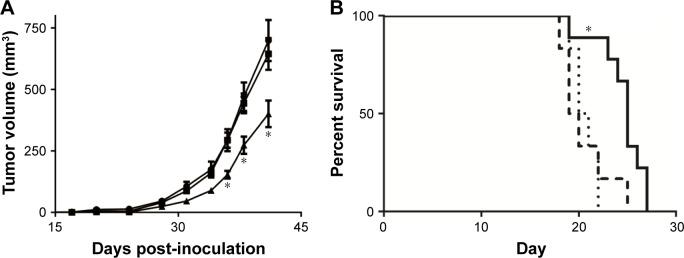
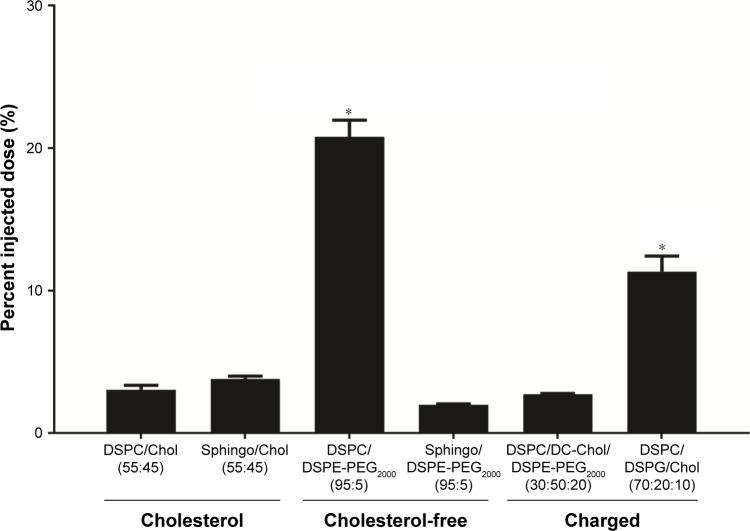
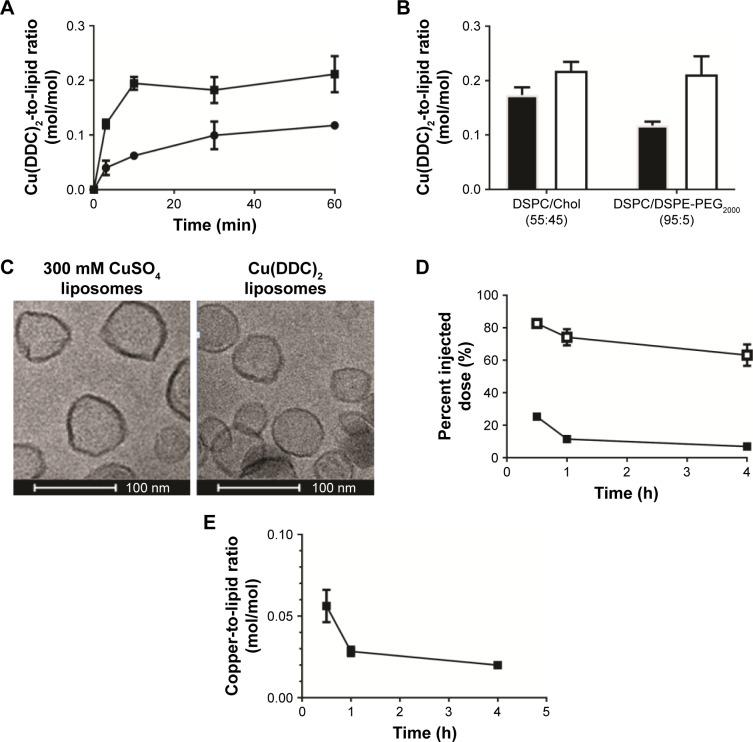
Copper diethyldithiocarbamate (Cu(DDC)) is the active anticancer agent generated when disulfiram (DSF) is provided in the presence of copper. To date, research directed toward repurposing DSF as an anticancer drug has focused on administration of DSF and copper in combination, efforts that have proven unsuccessful in clinical trials. This is likely due to the inability to form Cu(DDC) at relevant concentrations in regions of tumor growth. Little effort has been directed toward the development of Cu(DDC) because of the inherent aqueous insolubility of the complex. Here, we describe an injectable Cu(DDC) formulation prepared through a method that involves synthesis of Cu(DDC) inside the aqueous core of liposomes. Convection-enhanced delivery of a Cu(DDC) formulation prepared using 1,2-distearoyl-sn-glycero-3-phosphocholine (DSPC)/cholesterol liposomes into a rat model of F98 glioma engendered a 25% increase in median survival time relative to vehicle-treated animals. In a murine subcutaneous MV-4-11 model, treatment resulted in a 45% reduction in tumor burden when compared to controls. Pharmacokinetic studies indicated that the Cu(DDC) was rapidly eliminated after intravenous administration while the liposomes remained in circulation. To test whether liposomal lipid composition could increase Cu(DDC) circulation lifetime, a number of different formulations were evaluated. Studies demonstrated that liposomes composed of DSPC and 1,2-distearoyl-sn-glycero-3-phosphoethanolamine-n-(carboxy[polyethylene glycol]-2000) (95:5) enhanced Cu(DDC) concentrations in the circulation as reflected by a 4.2-fold increase in plasma AUC relative to the DSPC/cholesterol formulation. The anticancer activity of this Cu(DDC) formulation was subsequently evaluated in the MV-4-11 model. At its maximum tolerated dose, this formulation exhibited comparable activity to the DSPC/cholesterol formulation. This is the first report demonstrating the therapeutic effects of an injectable Cu(DDC) formulation in vivo.
二乙基二硫代氨基甲酸盐铜(Cu(DDC))是在有铜存在的情况下给予双硫仑(DSF)时产生的活性抗癌剂。迄今为止,将DSF重新用作抗癌药物的研究主要集中在联合给予DSF和铜,而这些努力在临床试验中已被证明是不成功的。这可能是由于在肿瘤生长区域无法在相关浓度下形成Cu(DDC)。由于该配合物固有的水不溶性,针对Cu(DDC)的开发工作很少。在此,我们描述了一种通过在脂质体水核内合成Cu(DDC)的方法制备的可注射Cu(DDC)制剂。将使用1,2-二硬脂酰-sn-甘油-3-磷酸胆碱(DSPC)/胆固醇脂质体制备的Cu(DDC)制剂通过对流增强递送注入F98胶质瘤大鼠模型中,相对于载体处理的动物,中位生存时间增加了25%。在小鼠皮下MV-4-11模型中,与对照组相比,治疗使肿瘤负担降低了45%。药代动力学研究表明,静脉注射后Cu(DDC)迅速消除,而脂质体仍在循环中。为了测试脂质体脂质组成是否可以增加Cu(DDC)的循环寿命,评估了许多不同的制剂。研究表明,由DSPC和1,2-二硬脂酰-sn-甘油-3-磷酸乙醇胺-N-(羧基[聚乙二醇]-2000)(95:5)组成的脂质体提高了循环中的Cu(DDC)浓度,相对于DSPC/胆固醇制剂,血浆AUC增加了4.2倍。随后在MV-4-11模型中评估了该Cu(DDC)制剂的抗癌活性。在其最大耐受剂量下,该制剂表现出与DSPC/胆固醇制剂相当的活性。这是第一份证明可注射Cu(DDC)制剂体内治疗效果的报告。
 Zotero 插件