Shultz Robert B, Zhong Yinghui
School of Biomedical Engineering, Science and Health Systems, Drexel University, Philadelphia, PA, USA.
Neural Regen Res. 2017 May;12(5):702-713. doi: 10.4103/1673-5374.206633.
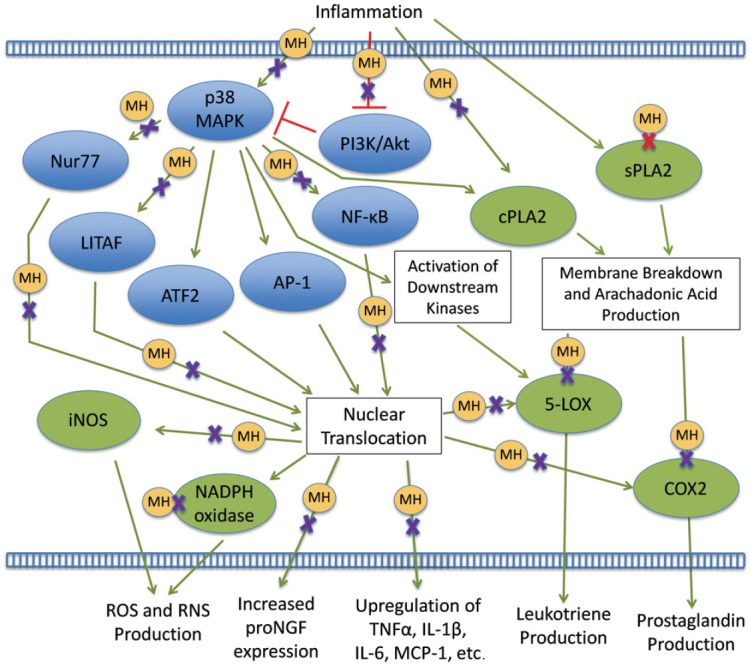
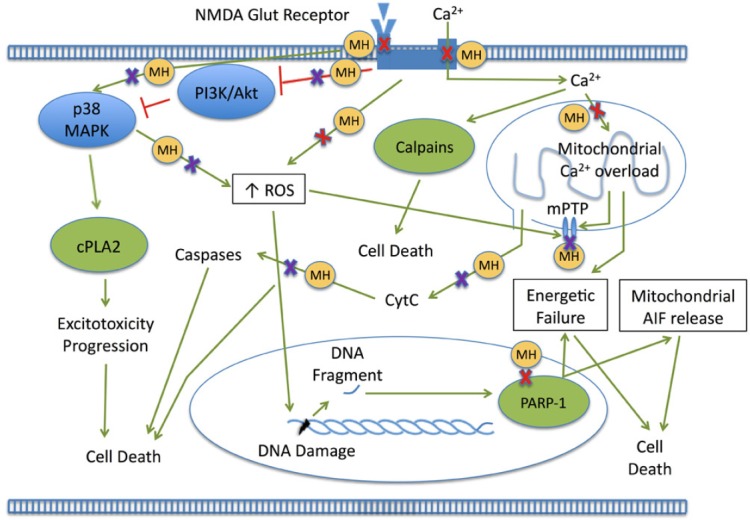
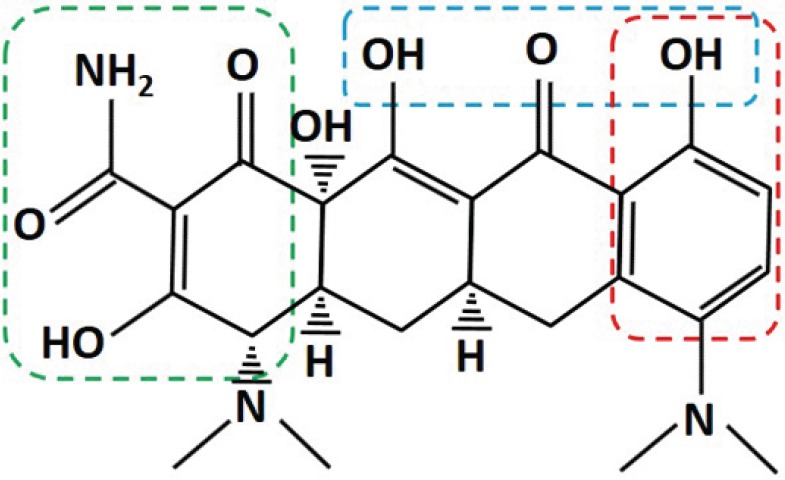
Minocycline hydrochloride (MH), a semi-synthetic tetracycline derivative, is a clinically available antibiotic and anti-inflammatory drug that also exhibits potent neuroprotective activities. It has been shown to target multiple secondary injury mechanisms in spinal cord injury, its anti-inflammatory, anti-oxidant, and anti-apoptotic properties. The secondary injury mechanisms that MH can potentially target include inflammation, free radicals and oxidative stress, glutamate excitotoxicity, calcium influx, mitochondrial dysfunction, ischemia, hemorrhage, and edema. This review discusses the potential mechanisms of the multifaceted actions of MH. Its anti-inflammatory and neuroprotective effects are partially achieved through conserved mechanisms such as modulation of p38 mitogen-activated protein kinase (MAPK) and phosphoinositide 3-kinase (PI3K)/Akt signaling pathways as well as inhibition of matrix metalloproteinases (MMPs). Additionally, MH can directly inhibit calcium influx through the N-methyl-D-aspartate (NMDA) receptors, mitochondrial calcium uptake, poly(ADP-ribose) polymerase-1 (PARP-1) enzymatic activity, and iron toxicity. It can also directly scavenge free radicals. Because it can target many secondary injury mechanisms, MH treatment holds great promise for reducing tissue damage and promoting functional recovery following spinal cord injury.
盐酸米诺环素(MH)是一种半合成四环素衍生物,是一种临床可用的抗生素和抗炎药,也具有强大的神经保护活性。已证明它可针对脊髓损伤中的多种继发性损伤机制,及其抗炎、抗氧化和抗凋亡特性。MH可能针对的继发性损伤机制包括炎症、自由基和氧化应激、谷氨酸兴奋性毒性、钙内流、线粒体功能障碍、缺血、出血和水肿。本综述讨论了MH多方面作用的潜在机制。其抗炎和神经保护作用部分是通过保守机制实现的,如调节p38丝裂原活化蛋白激酶(MAPK)和磷酸肌醇3激酶(PI3K)/Akt信号通路以及抑制基质金属蛋白酶(MMP)。此外,MH可通过N-甲基-D-天冬氨酸(NMDA)受体直接抑制钙内流、线粒体钙摄取、聚(ADP-核糖)聚合酶-1(PARP-1)酶活性和铁毒性。它还可以直接清除自由基。由于它可以针对许多继发性损伤机制,MH治疗在减少脊髓损伤后的组织损伤和促进功能恢复方面具有很大的前景。