Benocci Tiziano, Aguilar-Pontes Maria Victoria, Zhou Miaomiao, Seiboth Bernhard, de Vries Ronald P
Fungal Physiology, Westerdijk Fungal Biodiversity Institute & Fungal Molecular Physiology, Utrecht University, Uppsalalaan 8, 3584 CT Utrecht, The Netherlands.
Research Area Biochemical Technology, Institute of Chemical and Biological Engineering, TU Wien, 1060 Vienna, Austria.
Biotechnol Biofuels. 2017 Jun 12;10:152. doi: 10.1186/s13068-017-0841-x. eCollection 2017.
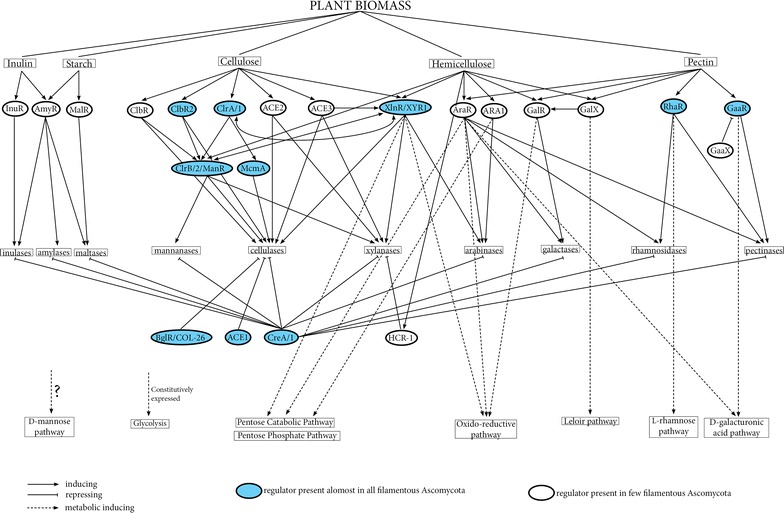
Fungi play a major role in the global carbon cycle because of their ability to utilize plant biomass (polysaccharides, proteins, and lignin) as carbon source. Due to the complexity and heterogenic composition of plant biomass, fungi need to produce a broad range of degrading enzymes, matching the composition of (part of) the prevalent substrate. This process is dependent on a network of regulators that not only control the extracellular enzymes that degrade the biomass, but also the metabolic pathways needed to metabolize the resulting monomers. This review will summarize the current knowledge on regulation of plant biomass utilization in fungi and compare the differences between fungal species, focusing in particular on the presence or absence of the regulators involved in this process.
真菌在全球碳循环中发挥着重要作用,因为它们能够利用植物生物质(多糖、蛋白质和木质素)作为碳源。由于植物生物质的复杂性和异质组成,真菌需要产生广泛的降解酶,以匹配(部分)普遍存在的底物的组成。这个过程依赖于一个调控网络,该网络不仅控制降解生物质的细胞外酶,还控制代谢产生的单体所需的代谢途径。本综述将总结目前关于真菌中植物生物质利用调控的知识,并比较真菌物种之间的差异,特别关注参与这一过程的调控因子的存在与否。