Morokuma Junji, Durant Fallon, Williams Katherine B, Finkelstein Joshua M, Blackiston Douglas J, Clements Twyman, Reed David W, Roberts Michael, Jain Mahendra, Kimel Kris, Trauger Sunia A, Wolfe Benjamin E, Levin Michael
Allen Discovery Center at Tufts University Biology Department Tufts University 200 Boston Ave., Suite 4600 Medford MA 02155-4243 USA.
Kentucky Space LLC, 200 West Vine St., Suite 420 Lexington KY 40507 USA.
Regeneration (Oxf). 2017 Jun 13;4(2):85-102. doi: 10.1002/reg2.79. eCollection 2017 Apr.
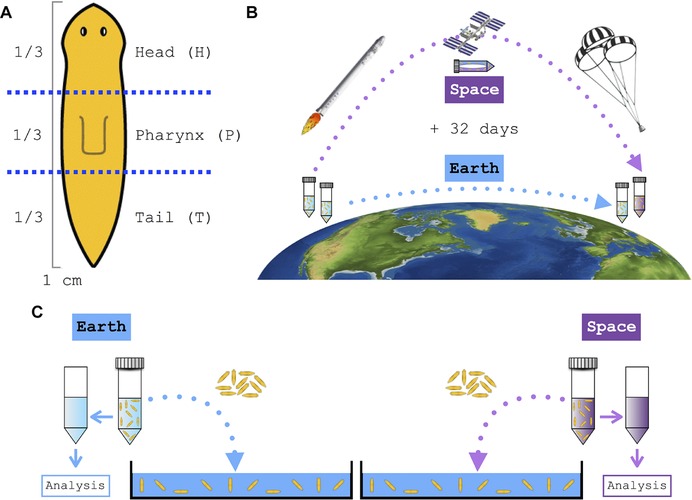
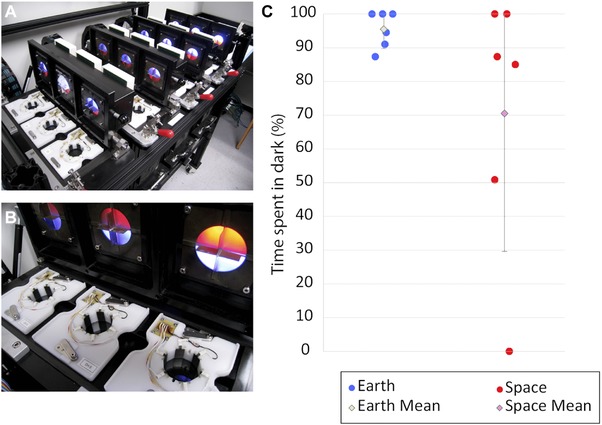
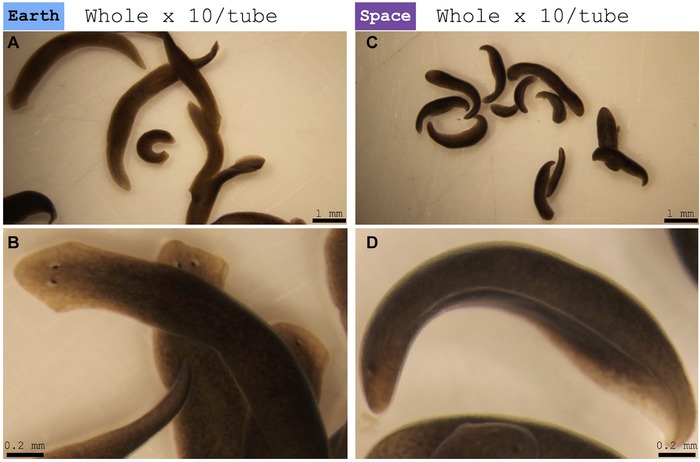
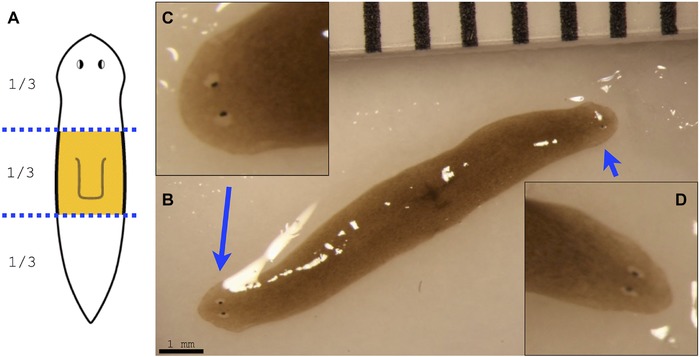
Regeneration is regulated not only by chemical signals but also by physical processes, such as bioelectric gradients. How these may change in the absence of the normal gravitational and geomagnetic fields is largely unknown. Planarian flatworms were moved to the International Space Station for 5 weeks, immediately after removing their heads and tails. A control group in spring water remained on Earth. No manipulation of the planaria occurred while they were in orbit, and space-exposed worms were returned to our laboratory for analysis. One animal out of 15 regenerated into a double-headed phenotype-normally an extremely rare event. Remarkably, amputating this double-headed worm again, in plain water, resulted again in the double-headed phenotype. Moreover, even when tested 20 months after return to Earth, the space-exposed worms displayed significant quantitative differences in behavior and microbiome composition. These observations may have implications for human and animal space travelers, but could also elucidate how microgravity and hypomagnetic environments could be used to trigger desired morphological, neurological, physiological, and bacteriomic changes for various regenerative and bioengineering applications.
再生不仅受化学信号调控,还受物理过程调控,如生物电梯度。在缺乏正常重力和地磁场的情况下,这些过程会如何变化在很大程度上尚不清楚。涡虫在切除头部和尾部后,立即被送往国际空间站5周。一组置于泉水中的对照组留在地球上。涡虫在轨道运行期间未受到任何操作,暴露于太空的涡虫被带回我们的实验室进行分析。15只涡虫中有1只再生出双头表型——这通常是极为罕见的事件。值得注意的是,在清水中再次切断这只双头涡虫,结果又出现了双头表型。此外,即使在返回地球20个月后进行测试,暴露于太空的涡虫在行为和微生物组组成上仍表现出显著的数量差异。这些观察结果可能对人类和动物太空旅行者有影响,但也可能阐明微重力和低磁场环境如何用于引发各种再生和生物工程应用所需的形态、神经、生理和细菌学变化。