Emmons-Bell Maya, Durant Fallon, Hammelman Jennifer, Bessonov Nicholas, Volpert Vitaly, Morokuma Junji, Pinet Kaylinnette, Adams Dany S, Pietak Alexis, Lobo Daniel, Levin Michael
Center for Regenerative and Developmental Biology and Department of Biology, Tufts University, 200 Boston Avenue, Suite 4600, Medford, MA 02155, USA.
Institute of Problems of Mechanical Engineering, Russian Academy of Sciences, Saint Petersburg 199178, Russia.
Int J Mol Sci. 2015 Nov 24;16(11):27865-96. doi: 10.3390/ijms161126065.
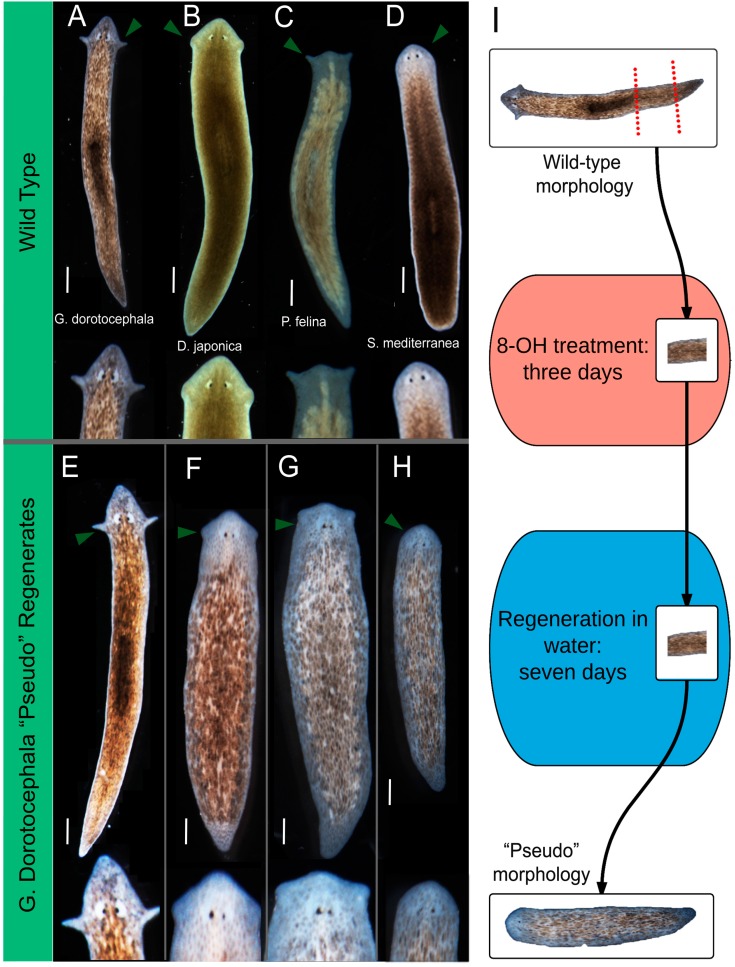
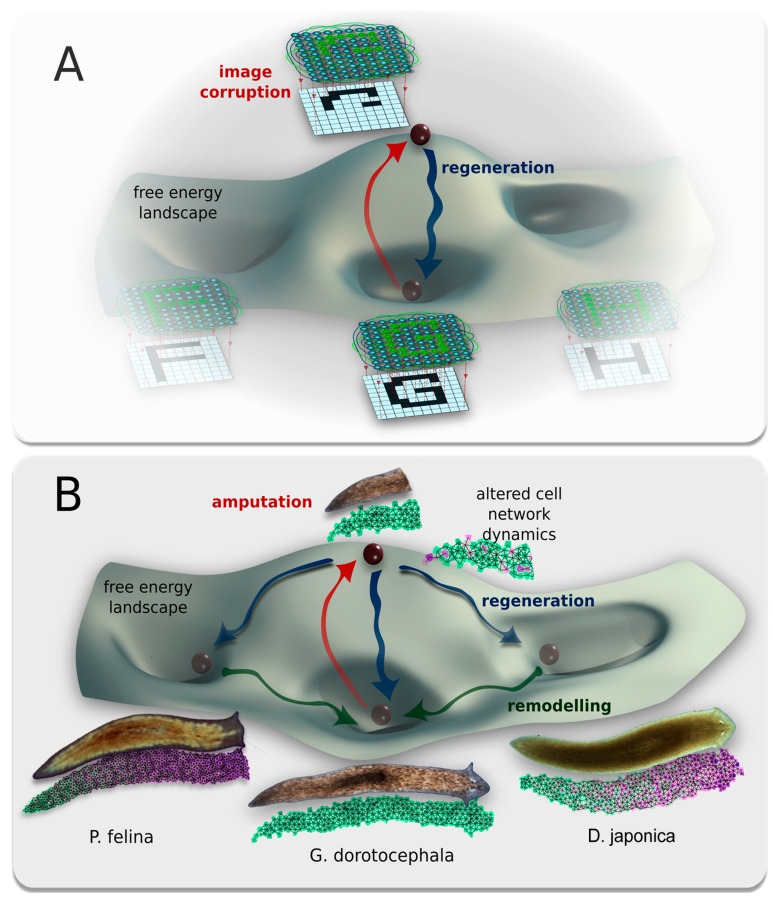
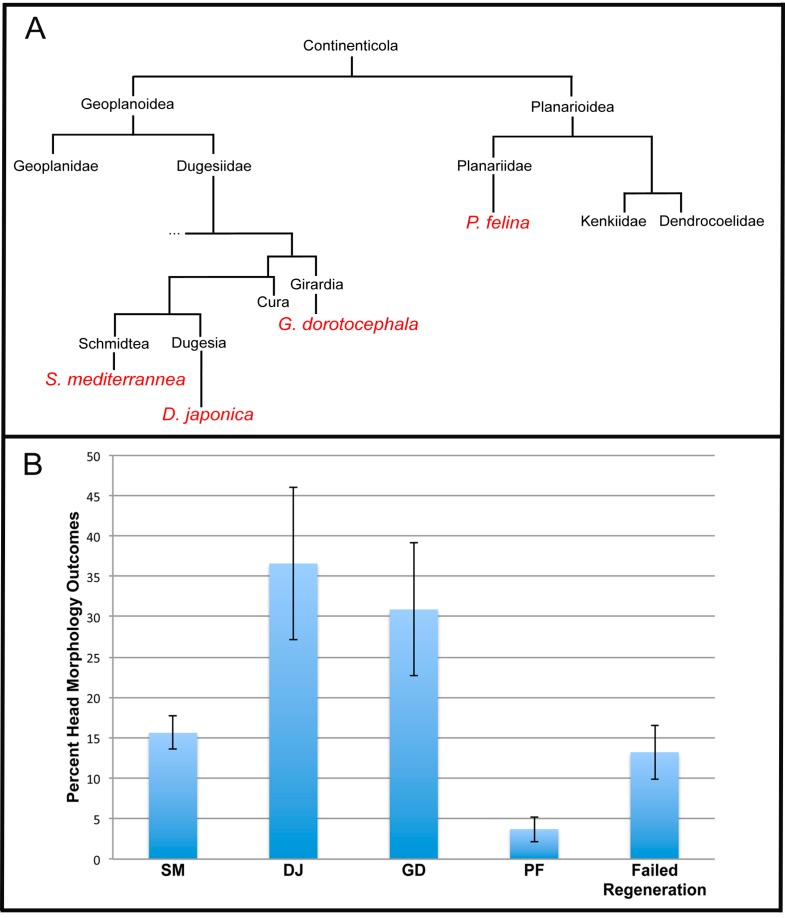
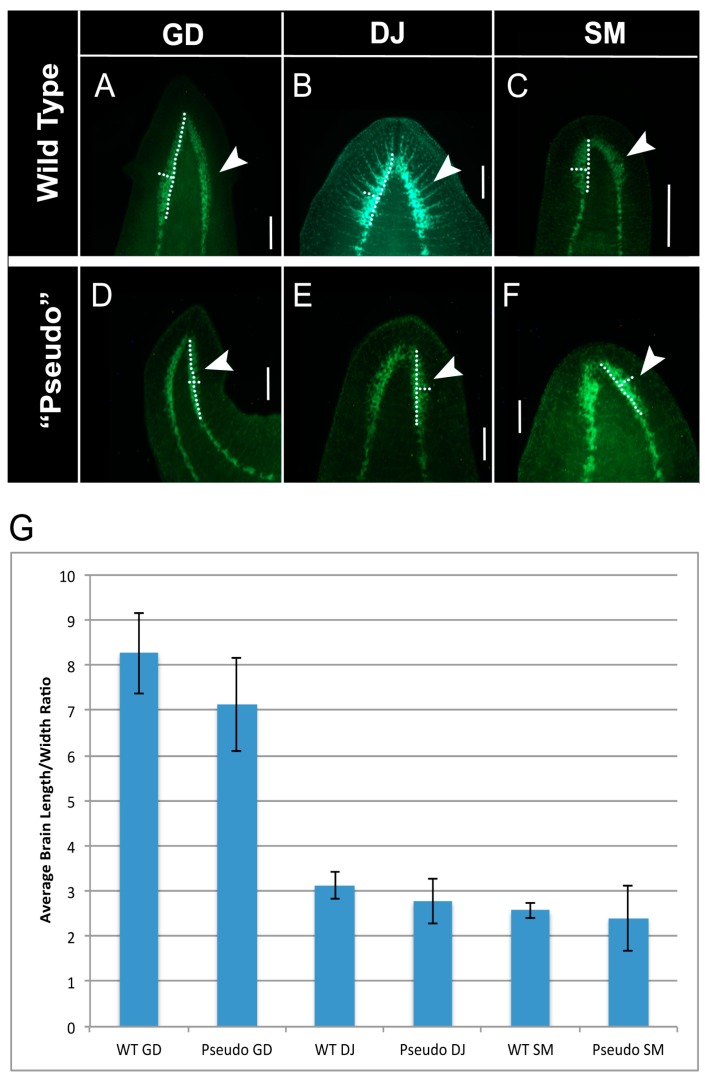
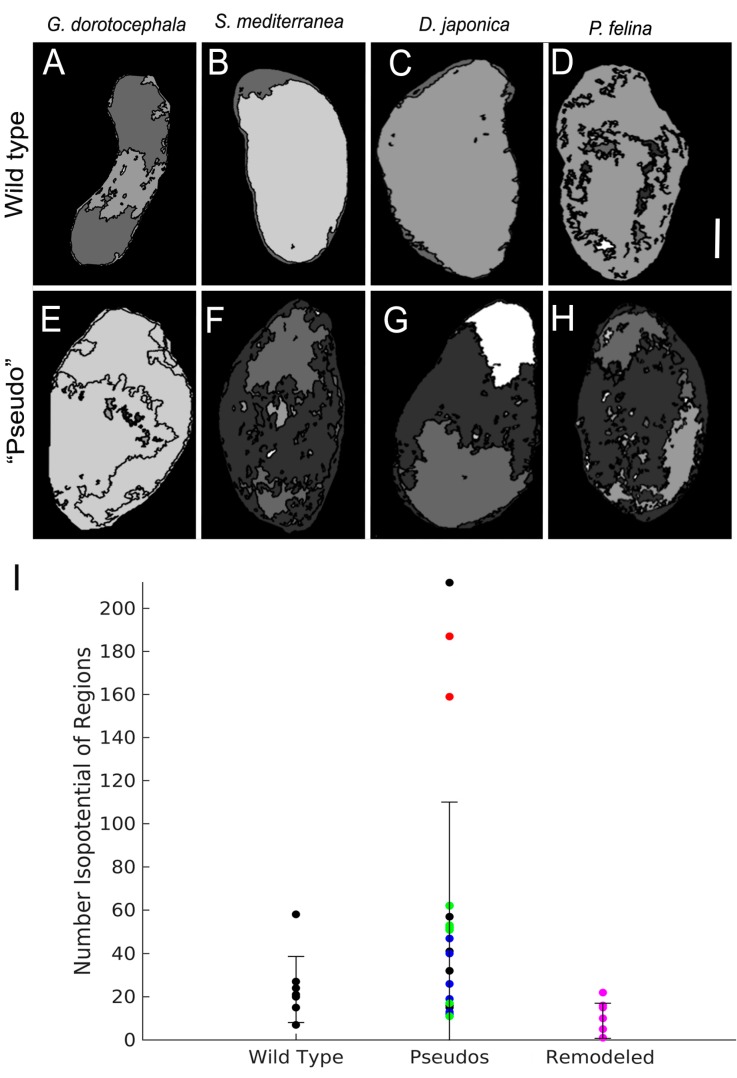
The shape of an animal body plan is constructed from protein components encoded by the genome. However, bioelectric networks composed of many cell types have their own intrinsic dynamics, and can drive distinct morphological outcomes during embryogenesis and regeneration. Planarian flatworms are a popular system for exploring body plan patterning due to their regenerative capacity, but despite considerable molecular information regarding stem cell differentiation and basic axial patterning, very little is known about how distinct head shapes are produced. Here, we show that after decapitation in G. dorotocephala, a transient perturbation of physiological connectivity among cells (using the gap junction blocker octanol) can result in regenerated heads with quite different shapes, stochastically matching other known species of planaria (S. mediterranea, D. japonica, and P. felina). We use morphometric analysis to quantify the ability of physiological network perturbations to induce different species-specific head shapes from the same genome. Moreover, we present a computational agent-based model of cell and physical dynamics during regeneration that quantitatively reproduces the observed shape changes. Morphological alterations induced in a genomically wild-type G. dorotocephala during regeneration include not only the shape of the head but also the morphology of the brain, the characteristic distribution of adult stem cells (neoblasts), and the bioelectric gradients of resting potential within the anterior tissues. Interestingly, the shape change is not permanent; after regeneration is complete, intact animals remodel back to G. dorotocephala-appropriate head shape within several weeks in a secondary phase of remodeling following initial complete regeneration. We present a conceptual model to guide future work to delineate the molecular mechanisms by which bioelectric networks stochastically select among a small set of discrete head morphologies. Taken together, these data and analyses shed light on important physiological modifiers of morphological information in dictating species-specific shape, and reveal them to be a novel instructive input into head patterning in regenerating planaria.
动物身体结构的形状是由基因组编码的蛋白质成分构建而成的。然而,由多种细胞类型组成的生物电网络具有其自身的内在动力学,并且能够在胚胎发育和再生过程中驱动不同的形态学结果。涡虫因其再生能力成为探索身体结构模式形成的热门研究系统,但尽管已有大量关于干细胞分化和基本轴向模式形成的分子信息,对于不同头部形状是如何产生的却知之甚少。在此,我们表明,在多目涡虫断头后,细胞间生理连接的短暂扰动(使用缝隙连接阻滞剂辛醇)会导致再生出形状差异很大的头部,这些形状随机匹配其他已知的涡虫物种(地中海涡虫、日本三角涡虫和费氏平角涡虫)。我们使用形态计量分析来量化生理网络扰动从同一基因组诱导出不同物种特异性头部形状的能力。此外,我们提出了一个基于计算代理的再生过程中细胞和物理动力学模型,该模型定量再现了观察到的形状变化。在基因组野生型多目涡虫再生过程中诱导的形态改变不仅包括头部形状,还包括大脑形态、成体干细胞(新生细胞)的特征分布以及前部组织内静息电位的生物电梯度。有趣的是,这种形状变化并非永久性的;再生完成后,完整的动物在初始完全再生后的二次重塑阶段会在几周内重新塑造回适合多目涡虫的头部形状。我们提出了一个概念模型,以指导未来的工作来阐明生物电网络在一小部分离散头部形态中进行随机选择的分子机制。综上所述,这些数据和分析揭示了形态信息的重要生理调节因子在决定物种特异性形状方面的作用,并表明它们是再生涡虫头部模式形成中的一种新型指导性输入。