Gotra Akshat, Sivakumaran Lojan, Chartrand Gabriel, Vu Kim-Nhien, Vandenbroucke-Menu Franck, Kauffmann Claude, Kadoury Samuel, Gallix Benoît, de Guise Jacques A, Tang An
Department of Radiology, Radio-oncology and Nuclear Medicine, University of Montreal, Saint-Luc Hospital, 1058 rue Saint-Denis, Montreal, QC, H2X 3J4, Canada.
Department of Radiology, McGill University, Montreal General Hospital, 1650 Cedar Avenue, Montreal, QC, H3G 1A4, Canada.
Insights Imaging. 2017 Aug;8(4):377-392. doi: 10.1007/s13244-017-0558-1. Epub 2017 Jun 14.
Liver volumetry has emerged as an important tool in clinical practice. Liver volume is assessed primarily via organ segmentation of computed tomography (CT) and magnetic resonance imaging (MRI) images. The goal of this paper is to provide an accessible overview of liver segmentation targeted at radiologists and other healthcare professionals.
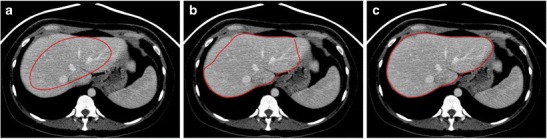
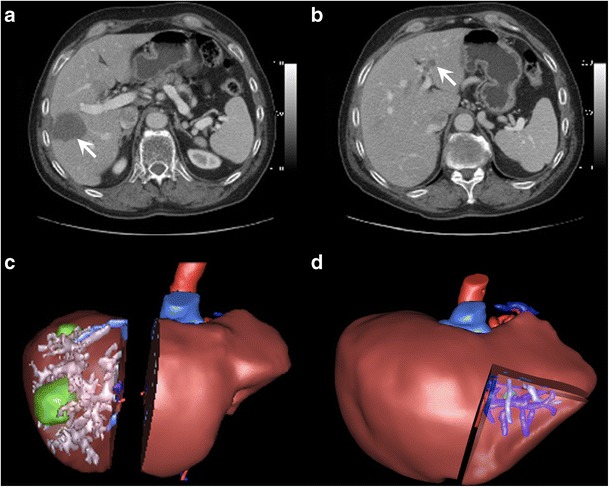
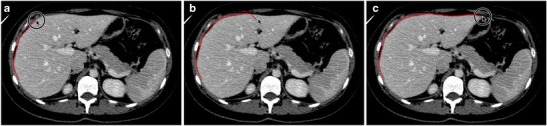
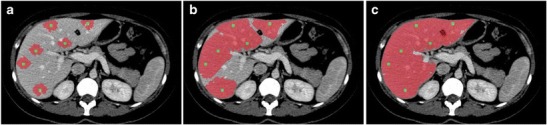
Using images from CT and MRI, this paper reviews the indications for liver segmentation, technical approaches used in segmentation software and the developing roles of liver segmentation in clinical practice.
Liver segmentation for volumetric assessment is indicated prior to major hepatectomy, portal vein embolisation, associating liver partition and portal vein ligation for staged hepatectomy (ALPPS) and transplant. Segmentation software can be categorised according to amount of user input involved: manual, semi-automated and fully automated. Manual segmentation is considered the "gold standard" in clinical practice and research, but is tedious and time-consuming. Increasingly automated segmentation approaches are more robust, but may suffer from certain segmentation pitfalls. Emerging applications of segmentation include surgical planning and integration with MRI-based biomarkers.
Liver segmentation has multiple clinical applications and is expanding in scope. Clinicians can employ semi-automated or fully automated segmentation options to more efficiently integrate volumetry into clinical practice.
• Liver volume is assessed via organ segmentation on CT and MRI examinations. • Liver segmentation is used for volume assessment prior to major hepatic procedures. • Segmentation approaches may be categorised according to the amount of user input involved. • Emerging applications include surgical planning and integration with MRI-based biomarkers.
肝脏容积测量已成为临床实践中的一项重要工具。肝脏体积主要通过计算机断层扫描(CT)和磁共振成像(MRI)图像的器官分割来评估。本文的目的是为放射科医生和其他医疗专业人员提供一份易于理解的肝脏分割概述。
本文利用CT和MRI图像,回顾了肝脏分割的适应症、分割软件中使用的技术方法以及肝脏分割在临床实践中的发展作用。
在进行大型肝切除术、门静脉栓塞、联合肝脏分隔和门静脉结扎分期肝切除术(ALPPS)以及肝移植之前,需要进行肝脏分割以进行容积评估。分割软件可根据用户输入量分为:手动、半自动和全自动。手动分割在临床实践和研究中被视为“金标准”,但繁琐且耗时。越来越自动化的分割方法更加强大,但可能存在某些分割缺陷。分割的新兴应用包括手术规划以及与基于MRI的生物标志物的整合。
肝脏分割有多种临床应用且范围正在扩大。临床医生可以采用半自动或全自动分割选项,以便更有效地将容积测量纳入临床实践。
• 通过CT和MRI检查的器官分割来评估肝脏体积。• 在进行大型肝脏手术之前,使用肝脏分割进行体积评估。• 分割方法可根据用户输入量进行分类。• 新兴应用包括手术规划以及与基于MRI的生物标志物的整合。