• 文献检索
  • 文档翻译
  • 深度研究
  • 学术资讯
  • Suppr Zotero 插件Zotero 插件
  • 邀请有礼
  • 套餐&价格
  • 历史记录
应用&插件
Suppr Zotero 插件Zotero 插件浏览器插件Mac 客户端Windows 客户端微信小程序
定价
高级版会员购买积分包购买API积分包
服务
文献检索文档翻译深度研究API 文档MCP 服务
关于我们
关于 Suppr公司介绍联系我们用户协议隐私条款
关注我们

Suppr 超能文献

核心技术专利:CN118964589B侵权必究
粤ICP备2023148730 号-1Suppr @ 2026

文献检索

告别复杂PubMed语法,用中文像聊天一样搜索,搜遍4000万医学文献。AI智能推荐,让科研检索更轻松。

立即免费搜索

文件翻译

保留排版,准确专业,支持PDF/Word/PPT等文件格式,支持 12+语言互译。

免费翻译文档

深度研究

AI帮你快速写综述,25分钟生成高质量综述,智能提取关键信息,辅助科研写作。

立即免费体验

基于人类代谢物相似性的酶调节剂药物重新定位。

Drug repositioning for enzyme modulator based on human metabolite-likeness.

作者信息

Lee Yoon Hyeok, Choi Hojae, Park Seongyong, Lee Boah, Yi Gwan-Su

机构信息

Department of Bio and Brain Engineering, Korea Advanced Institute of Science and Technology (KAIST), 291 Daehak-ro, Yuseong-gu, Daejeon, 34141, South Korea.

出版信息

BMC Bioinformatics. 2017 May 31;18(Suppl 7):226. doi: 10.1186/s12859-017-1637-5.

DOI:10.1186/s12859-017-1637-5
PMID:28617219
原文链接:https://pmc.ncbi.nlm.nih.gov/articles/PMC5471945/
Abstract

BACKGROUND

Recently, the metabolite-likeness of the drug space has emerged and has opened a new possibility for exploring human metabolite-like candidates in drug discovery. However, the applicability of metabolite-likeness in drug discovery has been largely unexplored. Moreover, there are no reports on its applications for the repositioning of drugs to possible enzyme modulators, although enzyme-drug relations could be directly inferred from the similarity relationships between enzyme's metabolites and drugs.

METHODS

We constructed a drug-metabolite structural similarity matrix, which contains 1,861 FDA-approved drugs and 1,110 human intermediary metabolites scored with the Tanimoto similarity. To verify the metabolite-likeness measure for drug repositioning, we analyzed 17 known antimetabolite drugs that resemble the innate metabolites of their eleven target enzymes as the gold standard positives. Highly scored drugs were selected as possible modulators of enzymes for their corresponding metabolites. Then, we assessed the performance of metabolite-likeness with a receiver operating characteristic analysis and compared it with other drug-target prediction methods. We set the similarity threshold for drug repositioning candidates of new enzyme modulators based on maximization of the Youden's index. We also carried out literature surveys for supporting the drug repositioning results based on the metabolite-likeness.

RESULTS

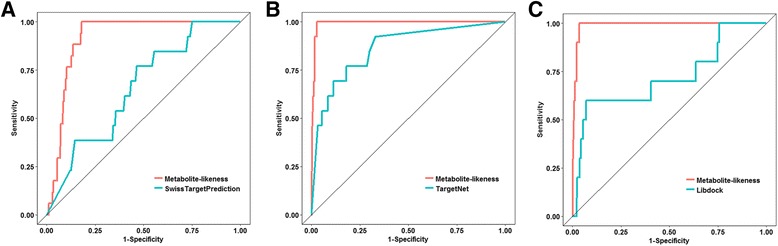
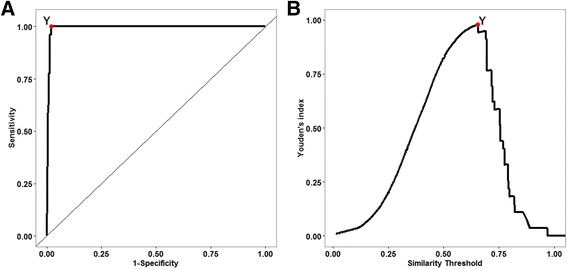
In this paper, we applied metabolite-likeness to repurpose FDA-approved drugs to disease-associated enzyme modulators that resemble human innate metabolites. All antimetabolite drugs were mapped with their known 11 target enzymes with statistically significant similarity values to the corresponding metabolites. The comparison with other drug-target prediction methods showed the higher performance of metabolite-likeness for predicting enzyme modulators. After that, the drugs scored higher than similarity score of 0.654 were selected as possible modulators of enzymes for their corresponding metabolites. In addition, we showed that drug repositioning results of 10 enzymes were concordant with the literature evidence.

CONCLUSIONS

This study introduced a method to predict the repositioning of known drugs to possible modulators of disease associated enzymes using human metabolite-likeness. We demonstrated that this approach works correctly with known antimetabolite drugs and showed that the proposed method has better performance compared to other drug target prediction methods in terms of enzyme modulators prediction. This study as a proof-of-concept showed how to apply metabolite-likeness to drug repositioning as well as potential in further expansion as we acquire more disease associated metabolite-target protein relations.
https://cdn.ncbi.nlm.nih.gov/pmc/blobs/7c24/5471945/4a1d302de118/12859_2017_1637_Fig4_HTML.jpg
https://cdn.ncbi.nlm.nih.gov/pmc/blobs/7c24/5471945/c8f6e48de8fe/12859_2017_1637_Fig1_HTML.jpg
https://cdn.ncbi.nlm.nih.gov/pmc/blobs/7c24/5471945/90273ff54c8c/12859_2017_1637_Fig2_HTML.jpg
https://cdn.ncbi.nlm.nih.gov/pmc/blobs/7c24/5471945/542f8b97effb/12859_2017_1637_Fig3_HTML.jpg
https://cdn.ncbi.nlm.nih.gov/pmc/blobs/7c24/5471945/4a1d302de118/12859_2017_1637_Fig4_HTML.jpg
https://cdn.ncbi.nlm.nih.gov/pmc/blobs/7c24/5471945/c8f6e48de8fe/12859_2017_1637_Fig1_HTML.jpg
https://cdn.ncbi.nlm.nih.gov/pmc/blobs/7c24/5471945/90273ff54c8c/12859_2017_1637_Fig2_HTML.jpg
https://cdn.ncbi.nlm.nih.gov/pmc/blobs/7c24/5471945/542f8b97effb/12859_2017_1637_Fig3_HTML.jpg
https://cdn.ncbi.nlm.nih.gov/pmc/blobs/7c24/5471945/4a1d302de118/12859_2017_1637_Fig4_HTML.jpg
摘要

背景

最近,药物空间的代谢物相似性已出现,并为在药物发现中探索类人类代谢物候选物开辟了新的可能性。然而,代谢物相似性在药物发现中的适用性在很大程度上尚未得到探索。此外,尽管可以从酶的代谢物与药物之间的相似关系直接推断酶 - 药物关系,但尚无关于其在将药物重新定位为可能的酶调节剂方面应用的报道。

方法

我们构建了一个药物 - 代谢物结构相似性矩阵,其中包含1861种FDA批准的药物和1110种人类中间代谢物,并使用Tanimoto相似性进行评分。为了验证用于药物重新定位的代谢物相似性度量,我们分析了17种已知的抗代谢药物,这些药物与其11种靶酶的天然代谢物相似,作为金标准阳性对照。得分高的药物因其相应的代谢物而被选为可能的酶调节剂。然后,我们通过接受者操作特征分析评估了代谢物相似性的性能,并将其与其他药物 - 靶标预测方法进行了比较。我们基于约登指数的最大化设定了新酶调节剂的药物重新定位候选物的相似性阈值。我们还进行了文献调查,以支持基于代谢物相似性的药物重新定位结果。

结果

在本文中,我们应用代谢物相似性将FDA批准的药物重新定位为类似于人类天然代谢物的疾病相关酶调节剂。所有抗代谢药物都与其已知的11种靶酶进行了映射,与相应代谢物具有统计学上显著的相似性值。与其他药物 - 靶标预测方法的比较表明,代谢物相似性在预测酶调节剂方面具有更高的性能。之后,得分高于相似性分数0.654的药物因其相应的代谢物而被选为可能的酶调节剂。此外,我们表明10种酶的药物重新定位结果与文献证据一致。

结论

本研究介绍了一种使用人类代谢物相似性将已知药物重新定位为疾病相关酶可能调节剂的方法。我们证明了这种方法对已知抗代谢药物有效,并且表明所提出的方法在酶调节剂预测方面比其他药物靶标预测方法具有更好的性能。本研究作为概念验证,展示了如何将代谢物相似性应用于药物重新定位,以及随着我们获得更多疾病相关代谢物 - 靶标蛋白关系在进一步扩展方面的潜力。

相似文献

1
Drug repositioning for enzyme modulator based on human metabolite-likeness.基于人类代谢物相似性的酶调节剂药物重新定位。
BMC Bioinformatics. 2017 May 31;18(Suppl 7):226. doi: 10.1186/s12859-017-1637-5.
2
Drug Repositioning by Integrating Known Disease-Gene and Drug-Target Associations in a Semi-supervised Learning Model.通过在半监督学习模型中整合已知疾病-基因和药物-靶点关联进行药物重新定位
Acta Biotheor. 2018 Dec;66(4):315-331. doi: 10.1007/s10441-018-9325-z. Epub 2018 Apr 26.
3
DMAP: a connectivity map database to enable identification of novel drug repositioning candidates.DMAP:一个用于识别新型药物重新定位候选药物的连接性图谱数据库。
BMC Bioinformatics. 2015;16 Suppl 13(Suppl 13):S4. doi: 10.1186/1471-2105-16-S13-S4. Epub 2015 Sep 25.
4
Prediction of polypharmacological profiles of drugs by the integration of chemical, side effect, and therapeutic space.通过整合化学、副作用和治疗空间来预测药物的多药效特性。
J Chem Inf Model. 2013 Apr 22;53(4):753-62. doi: 10.1021/ci400010x. Epub 2013 Apr 8.
5
'Metabolite-likeness' as a criterion in the design and selection of pharmaceutical drug libraries.“代谢物相似性”作为药物文库设计与筛选的一项标准。
Drug Discov Today. 2009 Jan;14(1-2):31-40. doi: 10.1016/j.drudis.2008.10.011. Epub 2008 Dec 26.
6
Old drug repositioning and new drug discovery through similarity learning from drug-target joint feature spaces.通过从药物-靶点联合特征空间进行相似性学习实现老药重定位和新药发现。
BMC Bioinformatics. 2019 Dec 27;20(Suppl 23):605. doi: 10.1186/s12859-019-3238-y.
7
DDAPRED: a computational method for predicting drug repositioning using regularized logistic matrix factorization.DDAPRED:一种使用正则化逻辑斯谛矩阵分解预测药物重定位的计算方法。
J Mol Model. 2020 Feb 15;26(3):60. doi: 10.1007/s00894-020-4315-x.
8
iDrug: Integration of drug repositioning and drug-target prediction via cross-network embedding.iDrug:通过跨网络嵌入实现药物重定位和药物靶点预测的整合。
PLoS Comput Biol. 2020 Jul 15;16(7):e1008040. doi: 10.1371/journal.pcbi.1008040. eCollection 2020 Jul.
9
Improved anticancer drug response prediction in cell lines using matrix factorization with similarity regularization.使用具有相似性正则化的矩阵分解改进细胞系中抗癌药物反应预测。
BMC Cancer. 2017 Aug 2;17(1):513. doi: 10.1186/s12885-017-3500-5.
10
SDTNBI: an integrated network and chemoinformatics tool for systematic prediction of drug-target interactions and drug repositioning.SDTNBI:一个集成的网络和化学生信工具,用于系统预测药物-靶标相互作用和药物重定位。
Brief Bioinform. 2017 Mar 1;18(2):333-347. doi: 10.1093/bib/bbw012.

引用本文的文献

1
Myofibrillogenesis Regulator-1 Regulates the Ubiquitin Lysosomal Pathway of Notch3 Intracellular Domain Through E3 Ubiquitin-Protein Ligase Itchy Homolog in the Metastasis of Non-Small Cell Lung Cancer.肌原纤维生成调节因子 1 通过 E3 泛素-蛋白连接酶 Itchy 同源物调节非小细胞肺癌转移中的 Notch3 细胞内结构域的泛素溶酶体途径。
Adv Sci (Weinh). 2024 Apr;11(15):e2306472. doi: 10.1002/advs.202306472. Epub 2024 Feb 11.
2
Repurposing drugs to treat cardiovascular disease in the era of precision medicine.精准医学时代的药物再利用:治疗心血管疾病。
Nat Rev Cardiol. 2022 Nov;19(11):751-764. doi: 10.1038/s41569-022-00717-6. Epub 2022 May 23.
3

本文引用的文献

1
Inosine-5'-monophosphate dehydrogenase (IMPDH) inhibitors: a patent and scientific literature review (2002-2016).肌苷-5'-单磷酸脱氢酶(IMPDH)抑制剂:专利与科学文献综述(2002 - 2016年)
Expert Opin Ther Pat. 2017 Jun;27(6):677-690. doi: 10.1080/13543776.2017.1280463. Epub 2017 Jan 27.
2
Folic Acid-Metabolizing Enzymes Regulate the Antitumor Effect of 5-Fluoro-2'-Deoxyuridine in Colorectal Cancer Cell Lines.叶酸代谢酶调节5-氟-2'-脱氧尿苷在结直肠癌细胞系中的抗肿瘤作用。
PLoS One. 2016 Sep 29;11(9):e0163961. doi: 10.1371/journal.pone.0163961. eCollection 2016.
3
Thiazolo[3,2-a]benzimidazol-3(2H)-one derivatives: Structure-activity relationships of selective nucleotide pyrophosphatase/phosphodiesterase1 (NPP1) inhibitors.
Natural product drug discovery in the artificial intelligence era.
人工智能时代的天然产物药物发现
Chem Sci. 2021 Dec 13;13(6):1526-1546. doi: 10.1039/d1sc04471k. eCollection 2022 Feb 9.
4
The novel ER stress inducer Sec C triggers apoptosis by sulfating ER cysteine residues and degrading YAP ER stress in pancreatic cancer cells.新型内质网应激诱导剂Sec C通过硫酸化内质网半胱氨酸残基并降解胰腺癌细胞中的YAP内质网应激来触发细胞凋亡。
Acta Pharm Sin B. 2022 Jan;12(1):210-227. doi: 10.1016/j.apsb.2021.07.004. Epub 2021 Jul 11.
5
Classification of Widely and Rarely Expressed Genes with Recurrent Neural Network.基于递归神经网络的广泛表达和稀有表达基因分类
Comput Struct Biotechnol J. 2018 Dec 14;17:49-60. doi: 10.1016/j.csbj.2018.12.002. eCollection 2019.
噻唑并[3,2-a]苯并咪唑-3(2H)-酮衍生物:选择性核苷酸焦磷酸酶/磷酸二酯酶1(NPP1)抑制剂的构效关系
Bioorg Med Chem. 2016 Jul 15;24(14):3157-65. doi: 10.1016/j.bmc.2016.05.046. Epub 2016 May 21.
4
TargetNet: a web service for predicting potential drug-target interaction profiling via multi-target SAR models.TargetNet:一种通过多靶点SAR模型预测潜在药物-靶点相互作用图谱的网络服务。
J Comput Aided Mol Des. 2016 May;30(5):413-24. doi: 10.1007/s10822-016-9915-2. Epub 2016 May 11.
5
Implications of endogenous roles of transporters for drug discovery: hitchhiking and metabolite-likeness.转运蛋白内源性作用对药物发现的影响:搭便车与代谢物相似性。
Nat Rev Drug Discov. 2016 Feb;15(2):143. doi: 10.1038/nrd.2015.44.
6
PubChem Substance and Compound databases.美国国立医学图书馆化学物质数据库和化合物数据库。
Nucleic Acids Res. 2016 Jan 4;44(D1):D1202-13. doi: 10.1093/nar/gkv951. Epub 2015 Sep 22.
7
Drug repositioning can accelerate discovery of pharmacological chaperones.药物重新定位可加速药理伴侣分子的发现。
Orphanet J Rare Dis. 2015 May 7;10:55. doi: 10.1186/s13023-015-0273-2.
8
Enzyme replacement and substrate reduction therapy for Gaucher disease.戈谢病的酶替代疗法和底物减少疗法。
Cochrane Database Syst Rev. 2015 Mar 27;2015(3):CD010324. doi: 10.1002/14651858.CD010324.pub2.
9
A 'rule of 0.5' for the metabolite-likeness of approved pharmaceutical drugs.已批准药物的代谢物相似性的“0.5规则”
Metabolomics. 2015;11(2):323-339. doi: 10.1007/s11306-014-0733-z. Epub 2014 Sep 19.
10
The efficacy of the ribonucleotide reductase inhibitor Didox in preclinical models of AML.核糖核苷酸还原酶抑制剂Didox在急性髓系白血病临床前模型中的疗效。
PLoS One. 2014 Nov 17;9(11):e112619. doi: 10.1371/journal.pone.0112619. eCollection 2014.