Hwang Geelsu, Liu Yuan, Kim Dongyeop, Li Yong, Krysan Damian J, Koo Hyun
Biofilm Research Labs, Levy Center for Oral Health, Department of Orthodontics, School of Dental Medicine, University of Pennsylvania, Philadelphia, PA, United States of America.
Department of Pediatrics, Infectious Diseases and Microbiology & Immunology, University of Rochester Medical Center, Rochester, NY, United States of America.
PLoS Pathog. 2017 Jun 15;13(6):e1006407. doi: 10.1371/journal.ppat.1006407. eCollection 2017 Jun.
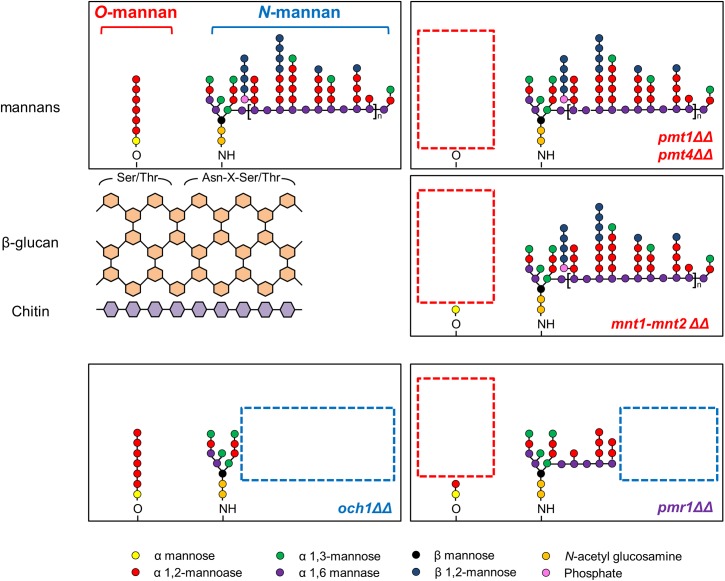
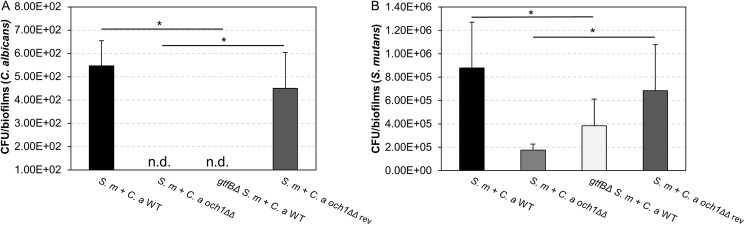
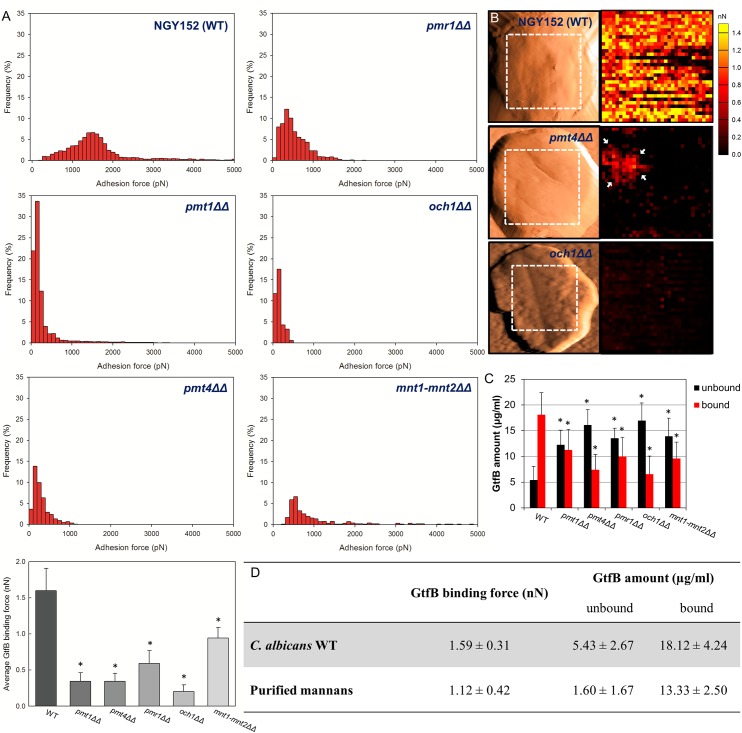
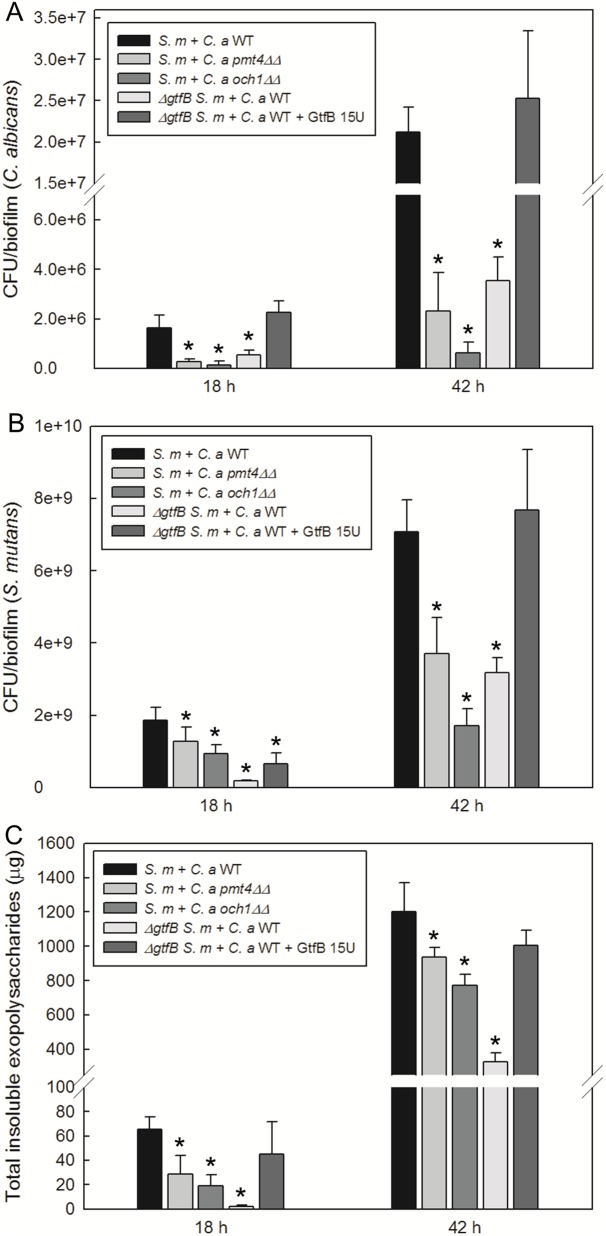
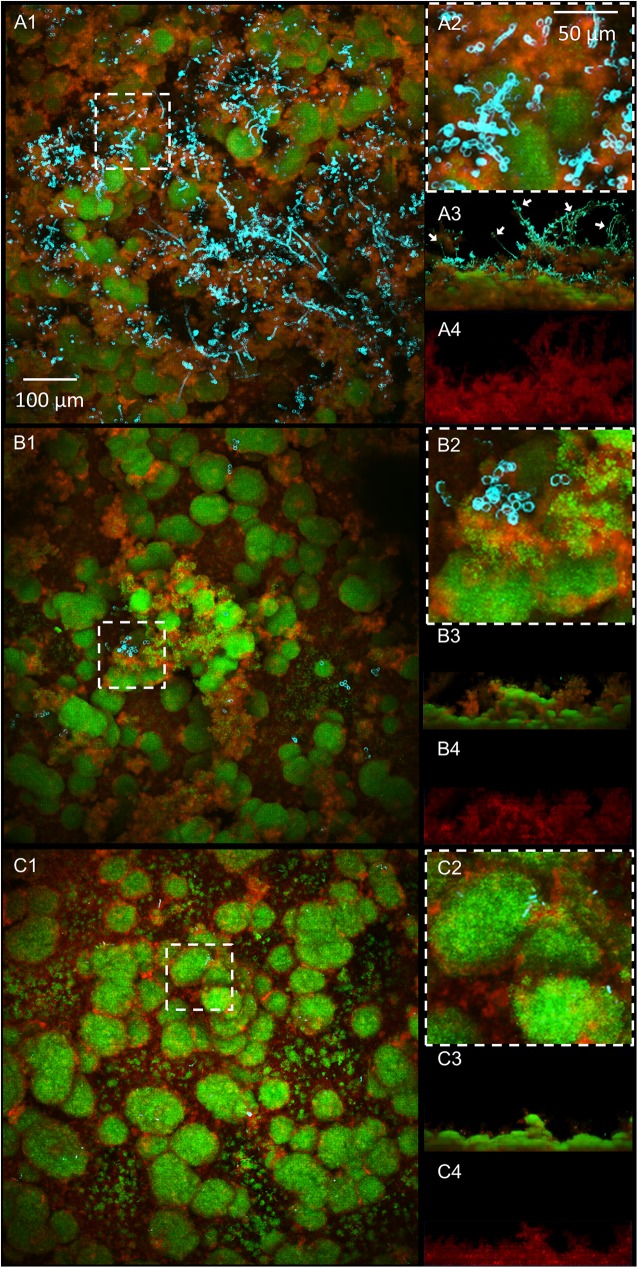
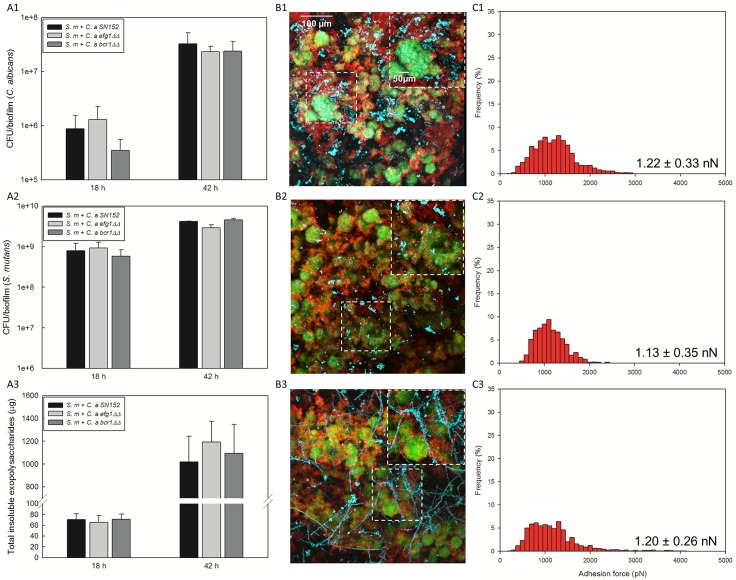
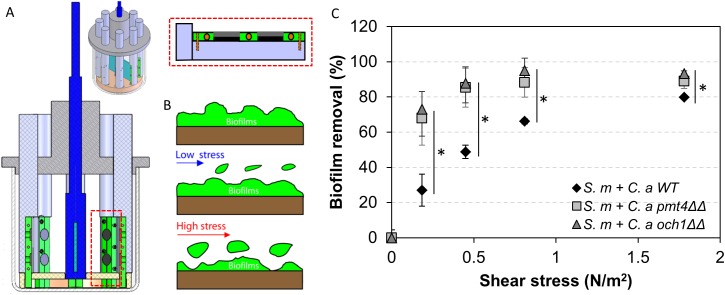
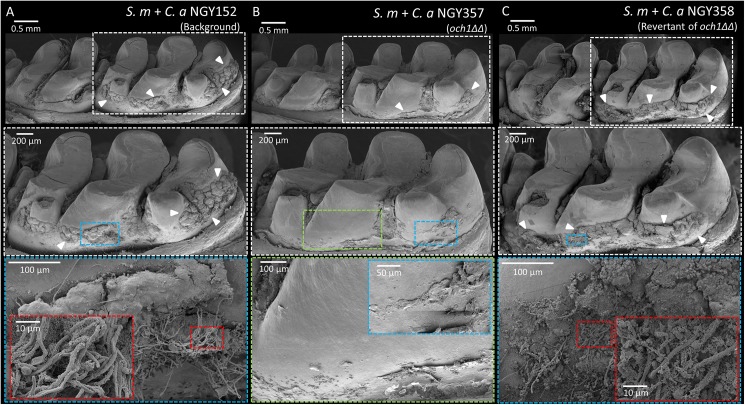
Candida albicans is frequently detected with heavy infection by Streptococcus mutans in plaque-biofilms from children with early-childhood caries (ECC). This cross-kingdom biofilm contains an extensive matrix of extracellular α-glucans that is produced by an exoenzyme (GtfB) secreted by S. mutans. Here, we report that mannans located on the outer surface of C. albicans cell-wall mediates GtfB binding, enhancing glucan-matrix production and modulating bacterial-fungal association within biofilms formed in vivo. Using single-molecule atomic force microscopy, we determined that GtfB binds with remarkable affinity to mannans and to the C. albicans surface, forming a highly stable and strong bond (1-2 nN). However, GtfB binding properties to C. albicans was compromised in strains defective in O-mannan (pmt4ΔΔ) or N-mannan outer chain (och1ΔΔ). In particular, the binding strength of GtfB on och1ΔΔ strain was severely disrupted (>3-fold reduction vs. parental strain). In turn, the GtfB amount on the fungal surface was significantly reduced, and the ability of C. albicans mutant strains to develop mixed-species biofilms with S. mutans was impaired. This phenotype was independent of hyphae or established fungal-biofilm regulators (EFG1, BCR1). Notably, the mechanical stability of the defective biofilms was weakened, resulting in near complete biomass removal by shear forces. In addition, these in vitro findings were confirmed in vivo using a rodent biofilm model. Specifically, we observed that C. albicans och1ΔΔ was unable to form cross-kingdom biofilms on the tooth surface of rats co-infected with S. mutans. Likewise, co-infection with S. mutans defective in GtfB was also incapable of forming mixed-species biofilms. Taken together, the data support a mechanism whereby S. mutans-secreted GtfB binds to the mannan layer of C. albicans to promote extracellular matrix formation and their co-existence within biofilms. Enhanced understanding of GtfB-Candida interactions may provide new perspectives for devising effective therapies to disrupt this cross-kingdom relationship associated with an important childhood oral disease.
在患有幼儿龋(ECC)的儿童牙菌斑生物膜中,白色念珠菌经常与变形链球菌的严重感染一起被检测到。这种跨界生物膜含有由变形链球菌分泌的一种外切酶(GtfB)产生的广泛的细胞外α-葡聚糖基质。在此,我们报告称,位于白色念珠菌细胞壁外表面的甘露聚糖介导GtfB结合,增强葡聚糖基质的产生,并调节体内形成的生物膜内的细菌 - 真菌关联。使用单分子原子力显微镜,我们确定GtfB以显著的亲和力与甘露聚糖和白色念珠菌表面结合,形成高度稳定且强大的键(1 - 2 nN)。然而,在O-甘露聚糖缺陷(pmt4ΔΔ)或N-甘露聚糖外链(och1ΔΔ)的菌株中,GtfB与白色念珠菌的结合特性受到损害。特别是,GtfB在och1ΔΔ菌株上的结合强度严重破坏(与亲本菌株相比降低超过3倍)。反过来,真菌表面的GtfB量显著减少,白色念珠菌突变菌株与变形链球菌形成混合物种生物膜的能力受损。这种表型独立于菌丝或已建立的真菌生物膜调节因子(EFG1,BCR1)。值得注意的是,有缺陷的生物膜的机械稳定性减弱,导致剪切力几乎完全去除生物量。此外,这些体外研究结果在使用啮齿动物生物膜模型的体内实验中得到证实。具体而言,我们观察到白色念珠菌och1ΔΔ在与变形链球菌共同感染的大鼠牙齿表面无法形成跨界生物膜。同样,与GtfB缺陷的变形链球菌共同感染也无法形成混合物种生物膜。综上所述,数据支持一种机制,即变形链球菌分泌的GtfB与白色念珠菌的甘露聚糖层结合,以促进细胞外基质形成及其在生物膜内的共存。对GtfB - 念珠菌相互作用的深入理解可能为设计有效的治疗方法以破坏这种与一种重要儿童口腔疾病相关的跨界关系提供新的视角。