Tian Xiaochao, He Weiliang, Yang Rong, Liu Yingping
Department of Cardiology, The Second Hospital of Hebei Medical University, Shijiazhuang, Hebei, 050000, People's Republic of China.
Department of Neurology, Hebei General Hospital, Shijiazhuang, Hebei, 050000, China.
J Biomed Sci. 2017 Jun 15;24(1):38. doi: 10.1186/s12929-017-0345-9.
Myocardial infarction (MI) is an acute and fatal condition that threatens human health. Dl-3-n-butylphthalide (NBP) has been used for the treatment of acute ischemic stroke. Mitochondria may play a protective role in MI injury. However, there are few reports on the cardioprotective effect of NBP or the potential mitochondrial mechanism for the NBP-induced protection against cardiac ischemia injury. We investigated the therapeutic effects of NBP in an in vivo MI model and an in vitro oxidative stress model, as well as the potential mitochondrial mechanism.
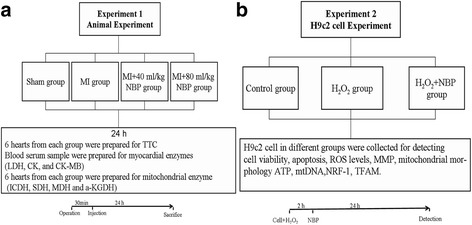
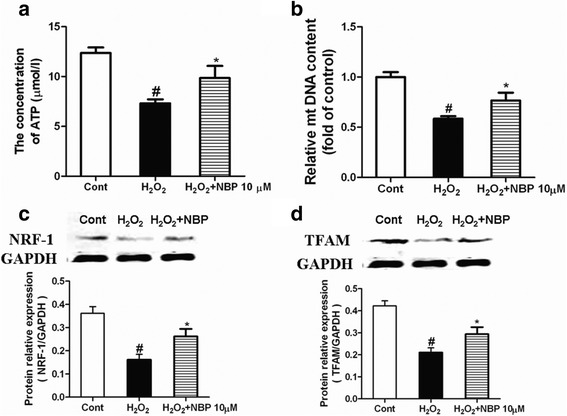
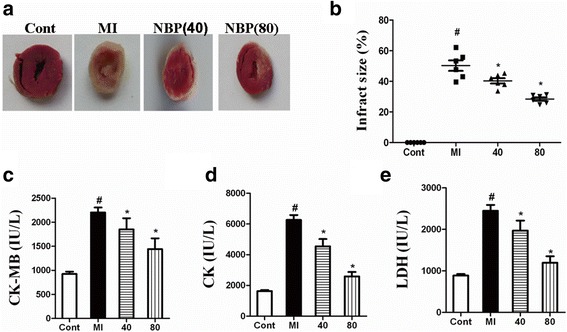
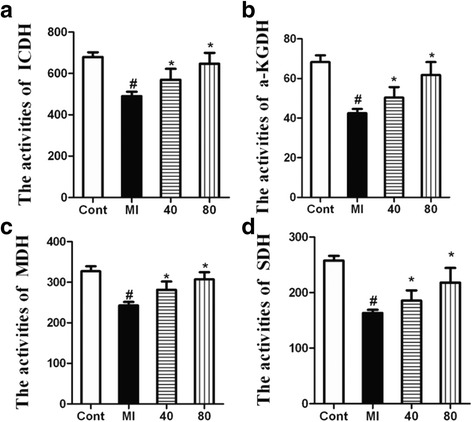
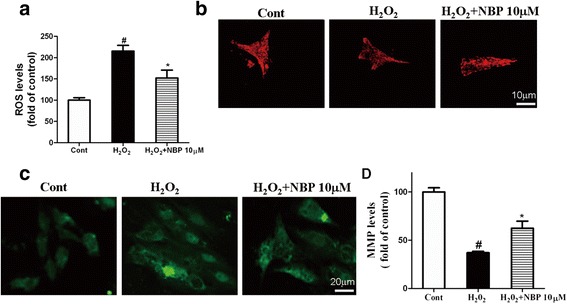
This study comprised two different experiments. The aim of experiment 1 was to determine the protective effects of NBP on MI and the underlying mechanisms in vivo. In part 1, myocardial infarct size was measured by staining with 2,3,5-triphenyltetrazoliumchloride (TTC). Myocardial enzymes and mitochondrial enzymes were assayed. The aim of experiment 2 was to investigate the role of NBP in HO-induced myocardial ischemic injury in H9c2 cells and to determine the potential mechanism. In part 2, H9c2 cell viability was evaluated. ROS levels, mitochondrial morphology, and mitochondrial membrane potential of H9c2 cells were measured. ATP levels were evaluated using an assay kit; mitochondrial DNA (mtDNA), the expressions of NRF-1 and TFAM, and mitochondrial biogenesis factors were determined.
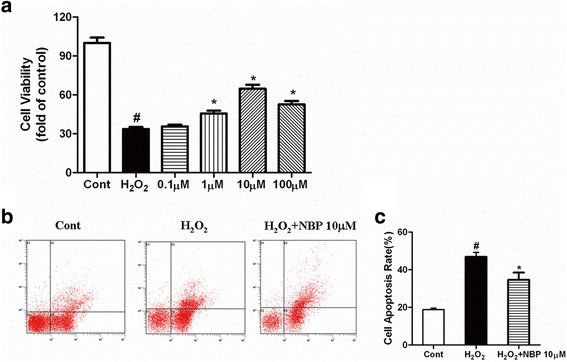
NBP treatment significantly reduced the infarct ratio, as observed by TTC staining, decreased serum myocardial enzymes in MI, and restored heart mitochondrial enzymes (isocitrate dehydrogenase (ICDH), succinate dehydrogenase (SDH), malate dehydrogenase (MDH), and a-ketoglutarate dehydrogenase (a-KGDH) activities after MI. Moreover, in in vitro studies, NBP significantly increased the viability of H9c2 cells in a dose-dependent manner, reduced cell apoptosis, protected mitochondrial functions, elevated the cellular ATP levels, and promoted HO-induced mitochondrial biogenesis in H9c2 cardiomyoblasts.
Collectively, the results from both the in vivo and in vitro experiments suggested that NBP exerted a cardioprotective effect on cardiac ischemic injury via the regulation of mitochondrial function and biogenesis.
心肌梗死(MI)是一种威胁人类健康的急性致命疾病。丁苯酞(NBP)已被用于治疗急性缺血性中风。线粒体可能在心肌梗死损伤中发挥保护作用。然而,关于NBP的心脏保护作用或NBP诱导的心脏缺血损伤保护的潜在线粒体机制的报道很少。我们研究了NBP在体内心肌梗死模型和体外氧化应激模型中的治疗作用以及潜在的线粒体机制。
本研究包括两个不同的实验。实验1的目的是确定NBP对心肌梗死的保护作用及其体内潜在机制。在第1部分中,通过用2,3,5-三苯基氯化四氮唑(TTC)染色测量心肌梗死面积。检测心肌酶和线粒体酶。实验2的目的是研究NBP在H9c2细胞中对过氧化氢(HO)诱导的心肌缺血损伤的作用并确定潜在机制。在第2部分中,评估H9c2细胞活力。测量H9c2细胞的活性氧(ROS)水平、线粒体形态和线粒体膜电位。使用检测试剂盒评估三磷酸腺苷(ATP)水平;测定线粒体DNA(mtDNA)、核呼吸因子-1(NRF-1)和线粒体转录因子A(TFAM)的表达以及线粒体生物发生因子。
TTC染色观察到,NBP治疗显著降低了梗死率,降低了心肌梗死患者血清心肌酶水平,并恢复了心脏线粒体酶(异柠檬酸脱氢酶(ICDH)、琥珀酸脱氢酶(SDH)、苹果酸脱氢酶(MDH)和α-酮戊二酸脱氢酶(α-KGDH))活性。此外,在体外研究中,NBP以剂量依赖性方式显著提高H9c2细胞活力,减少细胞凋亡,保护线粒体功能,提高细胞ATP水平,并促进HO诱导的H9c2心肌成纤维细胞线粒体生物发生。
总体而言,体内和体外实验结果均表明,NBP通过调节线粒体功能和生物发生对心脏缺血损伤发挥心脏保护作用。