Department of Neurology, Hematology, Metabolism, Endocrinology and Diabetology, Yamagata University Faculty of Medicine, 2-2-2 Iida-nishi, Yamagata, 990-9585, Japan.
Present address: Department of Internal Medicine IV, Osaka Medical College, 2-7 Daigaku-machi, Takatsuki, Osaka, 569-8686, Japan.
Acta Neuropathol Commun. 2017 Jun 15;5(1):48. doi: 10.1186/s40478-017-0452-6.
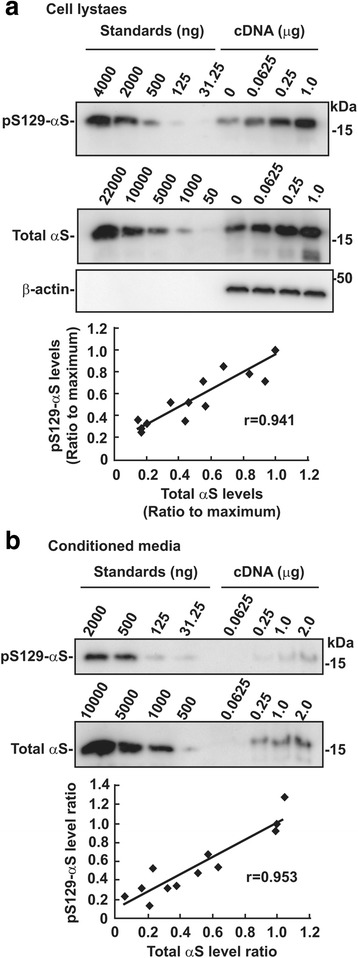
Parkinson's disease (PD) is characterized neuropathologically by intracellular aggregates of fibrillar α-synuclein, termed Lewy bodies (LBs). Approximately 90% of α-synuclein deposited as LBs is phosphorylated at Ser129 in brains with PD. In contrast, only 4% of total α-synuclein is phosphorylated at Ser129 in brains with normal individuals. It is unclear why extensive phosphorylation occurs in the pathological process of PD. To address this issue, we investigated a mechanism and role of Ser129-phosphorylation in regulating accumulation of α-synuclein. In CHO cells, the levels of Ser129-phosphorylated soluble α-synuclein were maintained constantly to those of total α-synuclein in intracellular and extracellular spaces. In SH-SY5Y cells and rat primary cortical neurons, mitochondrial impairment by rotenone or MPP enhanced Ser129-phosphorylation through increased influx of extracellular Ca. This elevation was suppressively controlled by targeting Ser129-phosphorylated α-synuclein to the proteasome pathway. Rotenone-induced insoluble α-synuclein was also targeted by Ser129-phosphoryation to the proteasome pathway. Experiments with epoxomicin and chloroquine showed that proteasomal targeting of insoluble Ser129-phosphorylated α-synuclein was enhanced under lysosome inhibition and it reduced accumulation of insoluble total α-synuclein. However, in a rat AAV-mediated α-synuclein overexpression model, there was no difference in the number of total α-synuclein aggregates between A53T mutant and A53T plus S129A double mutant α-synuclein, although Ser129-phosphorylated α-synuclein-positive aggregates were increased in rats expressing A53T α-synuclein. These findings suggest that Ser129-phosphorylation occurs against stress conditions, which increases influx of extracellular Ca, and it prevents accumulation of insoluble α-synuclein by evoking proteasomal clearance complementary to lysosomal one. However, Ser129-phosphorylation may provide an ineffective signal for degradation-resistant aggregates, causing extensive phosphorylation in aggregates.
帕金森病(PD)的神经病理学特征是细胞内纤维状α-突触核蛋白聚集,称为路易体(LB)。在 PD 患者的大脑中,约 90%的 LB 中沉积的α-突触核蛋白在 Ser129 处磷酸化。相比之下,在正常个体的大脑中,只有 4%的总α-突触核蛋白在 Ser129 处磷酸化。目前尚不清楚为什么在 PD 的病理过程中会发生广泛的磷酸化。为了解决这个问题,我们研究了 Ser129 磷酸化在调节α-突触核蛋白积累中的机制和作用。在 CHO 细胞中,Ser129 磷酸化的可溶性α-突触核蛋白的水平在细胞内和细胞外空间中与总α-突触核蛋白保持恒定。在 SH-SY5Y 细胞和大鼠原代皮质神经元中,鱼藤酮或 MPP 引起的线粒体损伤通过增加细胞外 Ca2+的内流增强了 Ser129 磷酸化。这种升高受将 Ser129 磷酸化的α-突触核蛋白靶向蛋白酶体途径的抑制性控制。鱼藤酮诱导的不溶性α-突触核蛋白也通过 Ser129 磷酸化靶向蛋白酶体途径。用环氧酶素和氯喹进行的实验表明,在溶酶体抑制下,不溶性 Ser129 磷酸化的α-突触核蛋白向蛋白酶体的靶向作用增强,从而减少了不溶性总α-突触核蛋白的积累。然而,在大鼠 AAV 介导的α-突触核蛋白过表达模型中,在 A53T 突变体和 A53T 加 S129A 双突变体α-突触核蛋白之间,总α-突触核蛋白聚集体的数量没有差异,尽管在表达 A53Tα-突触核蛋白的大鼠中,Ser129 磷酸化的α-突触核蛋白阳性聚集体增加。这些发现表明,Ser129 磷酸化是在应激条件下发生的,这种应激条件增加了细胞外 Ca2+的内流,并通过引发与溶酶体互补的蛋白酶体清除来防止不溶性α-突触核蛋白的积累。然而,Ser129 磷酸化可能为降解抗性聚集体提供了无效信号,导致聚集体中广泛的磷酸化。