Hassan Mohammad Mahmudul, Hoque Md Ahasanul, Debnath Nitish Chandra, Yamage Mat, Klaassen Marcel
Centre for Integrative Ecology, School of Life and Environmental Sciences, Deakin University, Geelong, Australia.
Faculty of Veterinary Medicine, Chittagong Veterinary and Animal Sciences University, Chittagong, Bangladesh.
Ecohealth. 2017 Sep;14(3):490-500. doi: 10.1007/s10393-017-1257-6. Epub 2017 Jun 15.
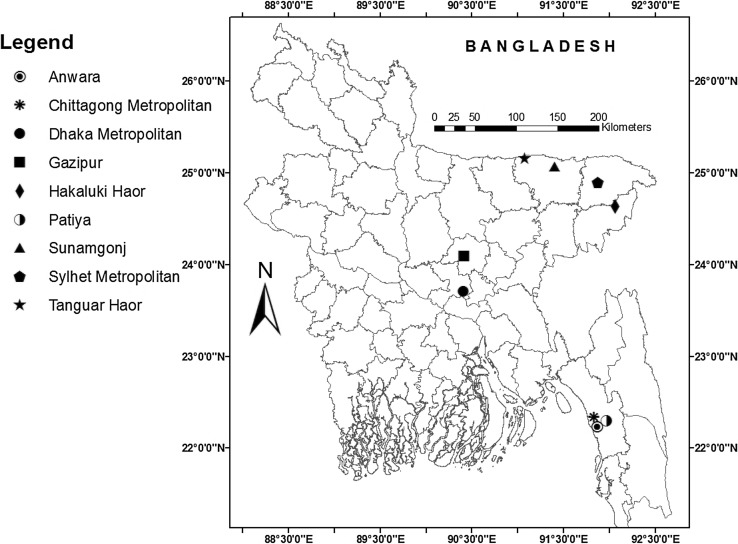
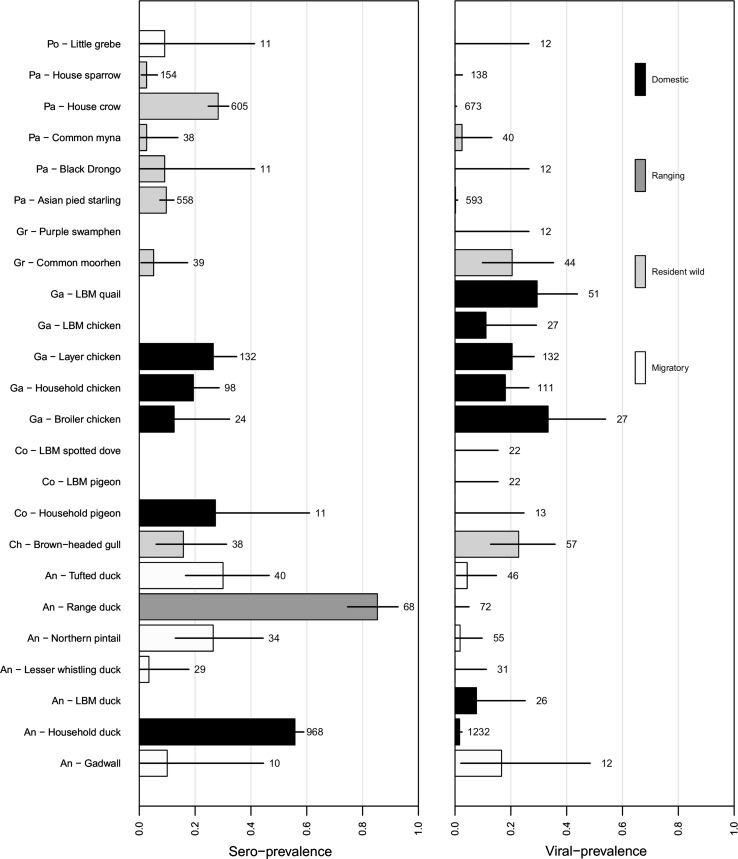
Avian influenza viruses (AIV) are of great socioeconomic and health concern, notably in Southeast Asia where highly pathogenic strains, such as highly pathogenic avian influenza (HPAI) H5N1 and other H5 and H7 AIVs, continue to occur. Wild bird migrants are often implicated in the maintenance and spread of AIV. However, little systematic surveillance of wild birds has been conducted in Southeast Asia to evaluate whether the prevalence of AIV in wild birds is higher than in other parts of the world where HPAI outbreaks occur less frequently. Across Bangladesh, we randomly sampled a total of 3585 wild and domestic birds to assess the prevalence of AIV and antibodies against AIV and compared these with prevalence levels found in other endemic and non-endemic countries. Our study showed that both resident and migratory wild birds in Bangladesh do not have a particularly elevated AIV prevalence and AIV sero-prevalence compared to wild birds from regions in the world where H5N1 is not endemic and fewer AIV outbreaks in poultry occur. Like elsewhere, notably wild birds of the orders Anseriformes were identified as the main wild bird reservoir, although we found exceptionally high sero-prevalence in one representative of the order Passeriformes, the house crow (Corvus splendens), importantly living on offal from live bird markets. This finding, together with high sero- and viral prevalence levels of AIV in domestic birds, suggests that wild birds are not at the base of the perpetuation of AIV problems in the local poultry sector, but may easily become victim to AIV spill back from poultry into some species of wild birds, potentially assisting in further spread of the virus.
禽流感病毒(AIV)引发了巨大的社会经济和健康问题,在东南亚地区尤为显著,该地区持续出现高致病性毒株,如高致病性禽流感(HPAI)H5N1以及其他H5和H7亚型禽流感病毒。野生鸟类迁徙者常常与禽流感病毒的维持和传播有关。然而,东南亚地区对野生鸟类的系统监测很少,以评估野生鸟类中禽流感病毒的流行率是否高于世界上其他HPAI疫情发生频率较低的地区。在孟加拉国各地,我们共随机采样了3585只野生和家养鸟类,以评估禽流感病毒的流行率以及针对禽流感病毒的抗体,并将这些数据与其他地方病流行和非地方病流行国家的流行水平进行比较。我们的研究表明,与世界上H5N1并非地方病且家禽中禽流感病毒疫情较少的地区的野生鸟类相比,孟加拉国的留鸟和候鸟的禽流感病毒流行率和血清流行率并没有特别高。与其他地方一样,雁形目野生鸟类被确定为主要的野生鸟类宿主,尽管我们在雀形目一种具有代表性的鸟类——家鸦(Corvus splendens)中发现了异常高的血清流行率,重要的是,家鸦以活禽市场的内脏为食。这一发现,再加上家禽中禽流感病毒的高血清流行率和病毒流行率,表明野生鸟类并非当地家禽业禽流感病毒问题持续存在的根源,但可能很容易成为禽流感病毒从家禽反向传播到某些野生鸟类物种的受害者,这可能会助长病毒的进一步传播。