van der Wal Erik, Bergsma Atze J, van Gestel Tom J M, In 't Groen Stijn L M, Zaehres Holm, Araúzo-Bravo Marcos J, Schöler Hans R, van der Ploeg Ans T, Pijnappel W W M Pim
Molecular Stem Cell Biology, Department of Clinical Genetics, Erasmus Medical Center, 3015 CN Rotterdam, the Netherlands; Department of Pediatrics, Erasmus Medical Center, 3015 CN Rotterdam, the Netherlands; Center for Lysosomal and Metabolic Diseases, Erasmus Medical Center, 3015 GE Rotterdam, the Netherlands.
Department of Cell and Developmental Biology, Max Planck Institute for Molecular Biomedicine, 48149 Münster, Germany.
Mol Ther Nucleic Acids. 2017 Jun 16;7:101-115. doi: 10.1016/j.omtn.2017.03.002. Epub 2017 Mar 14.
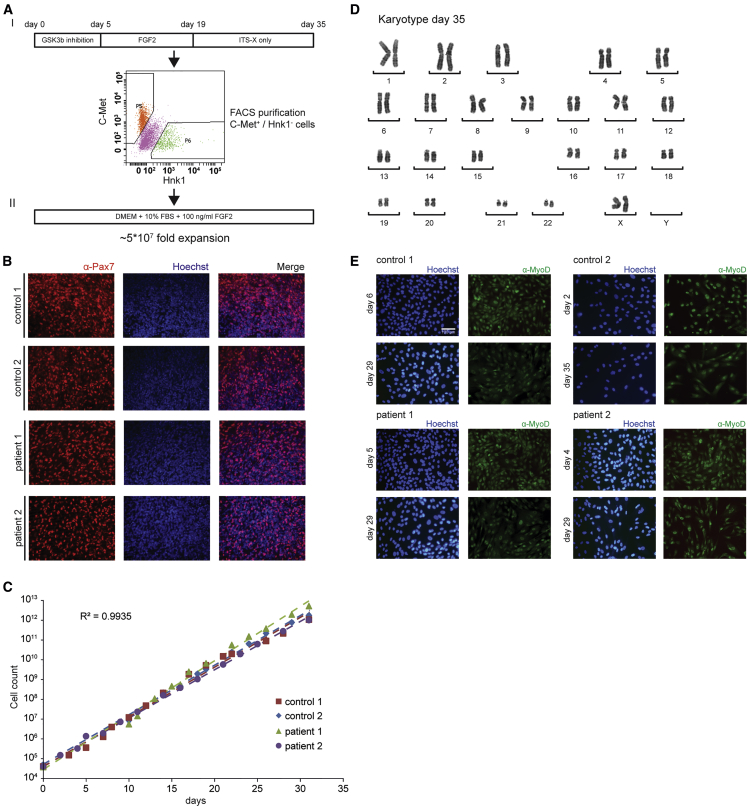
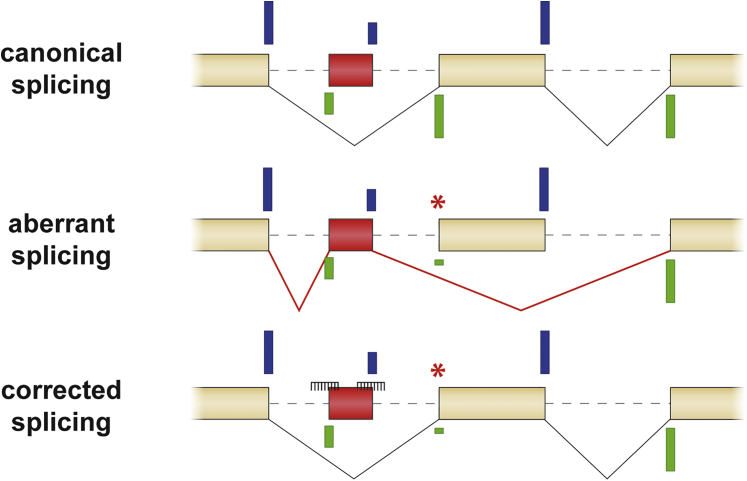
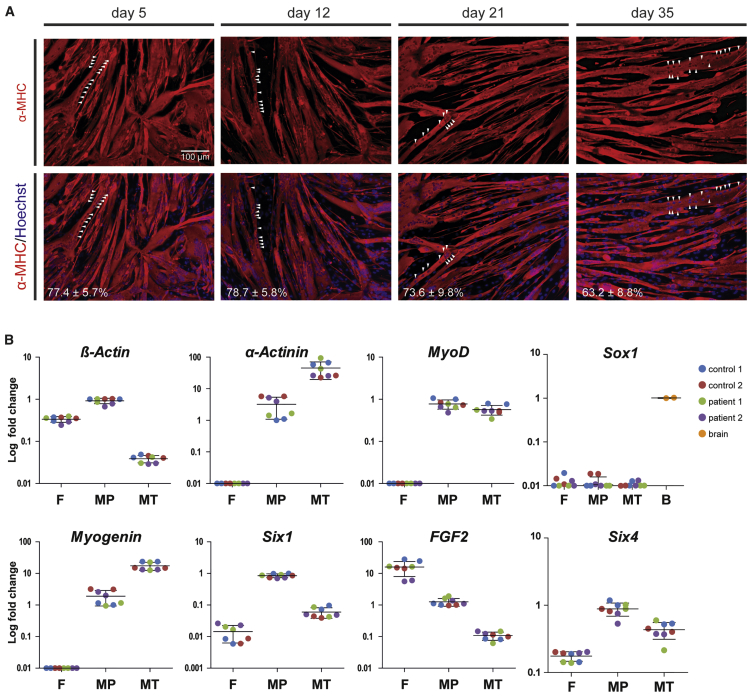
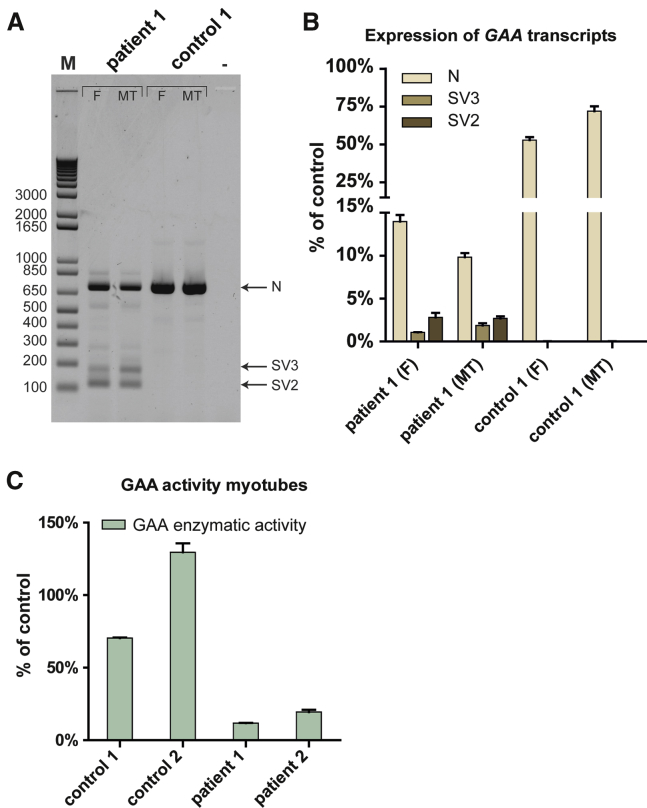
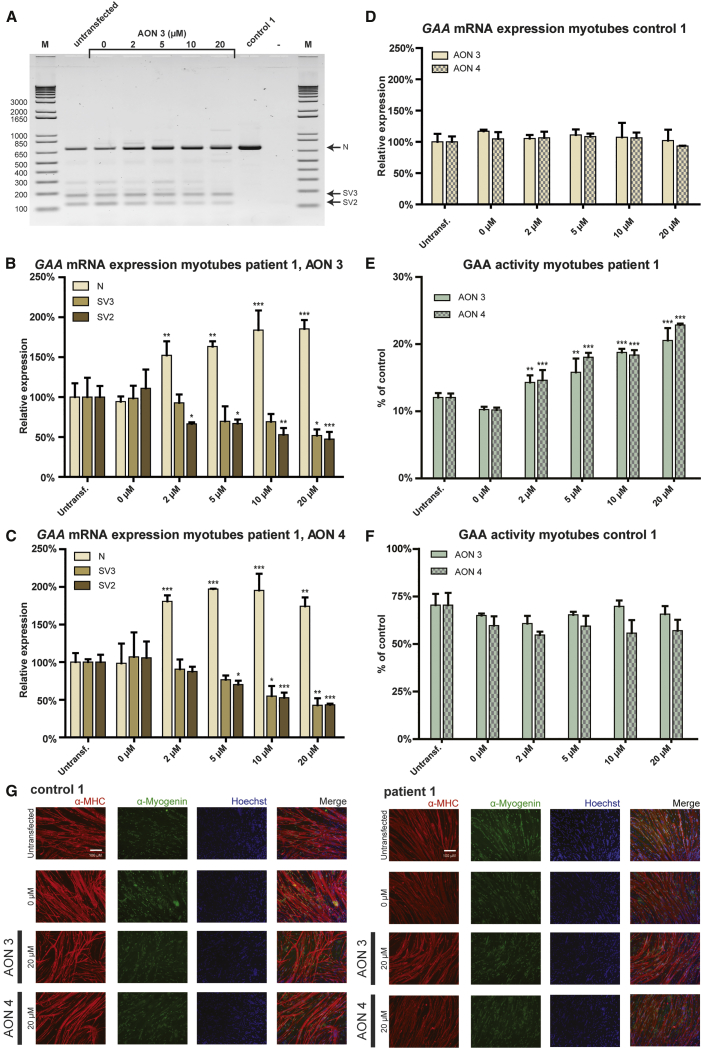
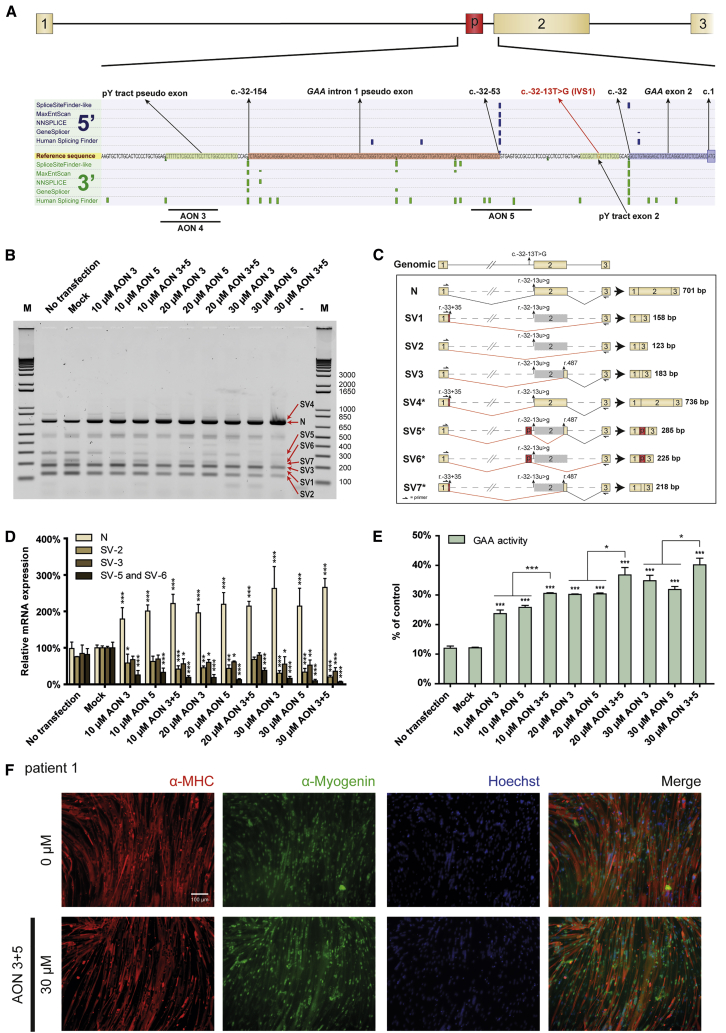
Pompe disease is a metabolic myopathy caused by deficiency of the acid α-glucosidase (GAA) enzyme and results in progressive wasting of skeletal muscle cells. The c.-32-13T>G (IVS1) GAA variant promotes exon 2 skipping during pre-mRNA splicing and is the most common variant for the childhood/adult disease form. We previously identified antisense oligonucleotides (AONs) that promoted GAA exon 2 inclusion in patient-derived fibroblasts. It was unknown how these AONs would affect GAA splicing in skeletal muscle cells. To test this, we expanded induced pluripotent stem cell (iPSC)-derived myogenic progenitors and differentiated these to multinucleated myotubes. AONs restored splicing in myotubes to a similar extent as in fibroblasts, suggesting that they act by modulating the action of shared splicing regulators. AONs targeted the putative polypyrimidine tract of a cryptic splice acceptor site that was part of a pseudo exon in GAA intron 1. Blocking of the cryptic splice donor of the pseudo exon with AONs likewise promoted GAA exon 2 inclusion. The simultaneous blocking of the cryptic acceptor and cryptic donor sites restored the majority of canonical splicing and alleviated GAA enzyme deficiency. These results highlight the relevance of cryptic splicing in human disease and its potential as therapeutic target for splicing modulation using AONs.
庞贝病是一种由酸性α-葡萄糖苷酶(GAA)缺乏引起的代谢性肌病,会导致骨骼肌细胞进行性萎缩。c.-32-13T>G(IVS1)GAA变体在mRNA前体剪接过程中促进外显子2跳跃,是儿童/成人疾病形式中最常见的变体。我们之前鉴定出了能促进GAA外显子2包含在患者来源成纤维细胞中的反义寡核苷酸(AON)。这些AON如何影响骨骼肌细胞中的GAA剪接尚不清楚。为了对此进行测试,我们扩增了诱导多能干细胞(iPSC)来源的肌源性祖细胞,并将其分化为多核肌管。AON在肌管中恢复剪接的程度与在成纤维细胞中相似,这表明它们通过调节共享剪接调节因子的作用来发挥作用。AON靶向GAA内含子1中一个假外显子的隐蔽剪接受体位点的假定多嘧啶序列。用AON阻断假外显子的隐蔽剪接供体同样促进了GAA外显子2的包含。同时阻断隐蔽受体和隐蔽供体位点可恢复大部分正常剪接并减轻GAA酶缺乏。这些结果突出了隐蔽剪接在人类疾病中的相关性及其作为使用AON进行剪接调节治疗靶点的潜力。