Konno Takuya, Ross Owen A, Teive Hélio A G, Sławek Jarosław, Dickson Dennis W, Wszolek Zbigniew K
Department of Neurology, Mayo Clinic, 4500 San Pablo Road, Jacksonville, FL, 32224, USA.
Department of Neuroscience, Mayo Clinic, 4500 San Pablo Road, Jacksonville, FL, 32224, USA.
Parkinsonism Relat Disord. 2017 Aug;41:14-24. doi: 10.1016/j.parkreldis.2017.06.004. Epub 2017 Jun 12.
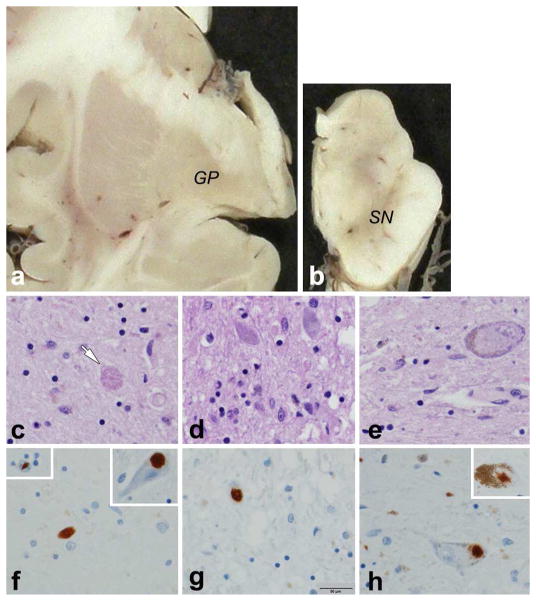
Perry syndrome (PS) is a rare hereditary neurodegenerative disease characterized by autosomal dominant parkinsonism, psychiatric symptoms, weight loss, central hypoventilation, and distinct TDP-43 pathology. The mutated causative gene for PS is DCTN1, which encodes the dynactin subunit p150. Dynactin is a motor protein involved in axonal transport; the p150 subunit has a critical role in the overall function. Since the discovery of DCTN1 in PS, it has been increasingly recognized that DCTN1 mutations can exhibit more diverse phenotypes than previously thought. Progressive supranuclear palsy- and/or frontotemporal dementia-like phenotypes have been associated with the PS phenotypes. In addition, DCTN1 mutations were identified in a family with motor-neuron disease before the discovery in PS. In this review, we analyze the clinical and genetic aspects of DCTN1-related neurodegeneration and discuss its pathogenesis. We also describe three families with PS, Canadian, Polish, and Brazilian. DCTN1 mutation was newly identified in two of them, the Canadian and Polish families. The Canadian family was first described in late 1970's but was never genetically tested. We recently had the opportunity to evaluate this family and to test the gene status of an affected family member. The Polish family is newly identified and is the first PS family in Poland. Although still rare, DCTN1-related neurodegeneration needs to be considered in a differential diagnosis of parkinsonian disorders, frontotemporal dementia, and motor-neuron diseases, especially if there is family history.
佩里综合征(PS)是一种罕见的遗传性神经退行性疾病,其特征为常染色体显性帕金森症、精神症状、体重减轻、中枢性通气不足以及独特的TDP - 43病理学改变。PS的致病基因突变是DCTN1,它编码动力蛋白激活蛋白亚基p150。动力蛋白激活蛋白是一种参与轴突运输的运动蛋白;p150亚基在整体功能中起关键作用。自PS中发现DCTN1以来,人们越来越认识到DCTN1突变可表现出比之前认为的更多样化的表型。进行性核上性麻痹和/或额颞叶痴呆样表型与PS表型相关。此外,在PS被发现之前,在一个患有运动神经元病的家族中鉴定出了DCTN1突变。在本综述中,我们分析了与DCTN1相关的神经退行性变的临床和遗传方面,并讨论了其发病机制。我们还描述了三个患有PS的家族,分别是加拿大、波兰和巴西的家族。其中两个家族,即加拿大和波兰家族,新发现了DCTN1突变。加拿大家族在20世纪70年代末首次被描述,但从未进行基因检测。我们最近有机会评估这个家族,并检测一名受影响家庭成员的基因状况。波兰家族是新发现的,是波兰的首个PS家族。尽管仍然罕见,但在帕金森病、额颞叶痴呆和运动神经元病的鉴别诊断中,尤其是存在家族史时,需要考虑与DCTN1相关的神经退行性变。