Gordhan Ajeet, Lockhart Catherine
Department of Neuro-Endovascular Radiology, Advocate BroMenn Medical Center, St. Joseph Medical Center, Bloomington, Indiana, USA.
Case Rep Neurol. 2017 May 17;9(2):137-142. doi: 10.1159/000476031. eCollection 2017 May-Aug.
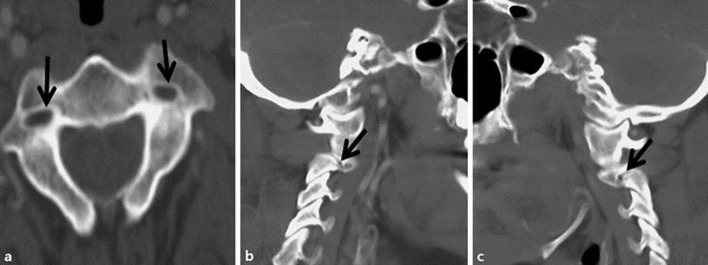
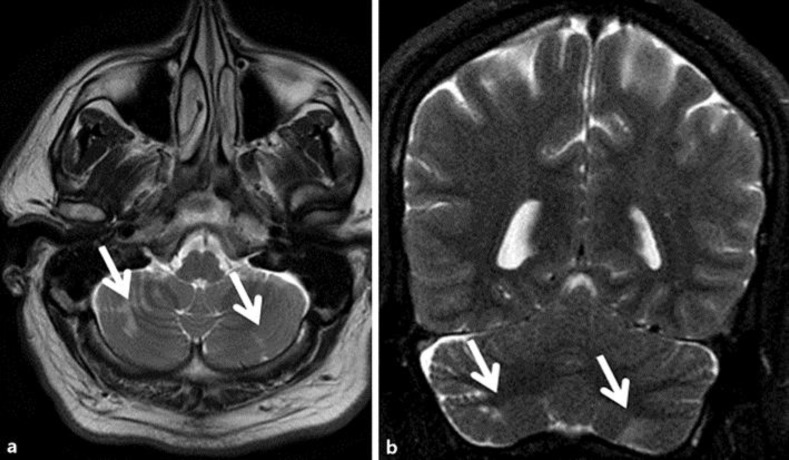
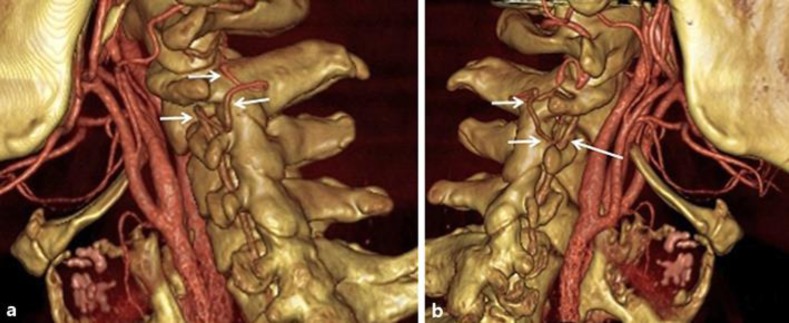
Vertebrobasilar insufficiency leading to posterior circulation infarcts caused by congenital hypoplasia of the bilateral transverse foramina at the C2 level, affecting the caliber and flow of the bilateral distal cervical vertebral arteries in an adult, has not been previously reported. A 41-year-old male presented with episodic dizziness for a period of 1 year prior to consultation. Computed tomography angiography of the head and neck demonstrated congenital hypoplasia of the bilateral C2 transverse foramina, with absence of the vertebral arteries in each of the foramina and collateral reconstitution of diminutive intracranial vertebral artery segments. Brain MRI showed postinfarction encephalomalacia in the bilateral cerebellar hemispheres. The patient was considered not a surgical or endovascular candidate and was managed conservatively with antiplatelet therapy. Congenital anomalies of the bilateral cervical transverse foramina may present with vertebrobasilar insufficiency and infarction in adulthood.
由C2水平双侧横突孔先天性发育不全导致椎基底动脉供血不足,进而引起成人双侧颈段椎动脉远端管径和血流改变,并导致后循环梗死,此前未见报道。一名41岁男性在就诊前1年出现发作性头晕。头颈部计算机断层血管造影显示双侧C2横突孔先天性发育不全,每个横突孔内椎动脉缺如,颅内椎动脉节段细小且有侧支重建。脑部磁共振成像显示双侧小脑半球脑梗死后软化灶。该患者被认为不适合手术或血管内治疗,采用抗血小板治疗进行保守处理。双侧颈椎横突孔先天性异常在成年期可能表现为椎基底动脉供血不足和梗死。