Fraser Jordie D, Bonnett Tiffany R, Keeling Christopher I, Huber Dezene P W
Ecosystem Science and Management Program, University of Northern British Columbia, Prince George, British Columbia, Canada.
Department of Biological Sciences, Simon Fraser University, Burnaby, British Columbia, Canada.
PeerJ. 2017 Jun 13;5:e3284. doi: 10.7717/peerj.3284. eCollection 2017.
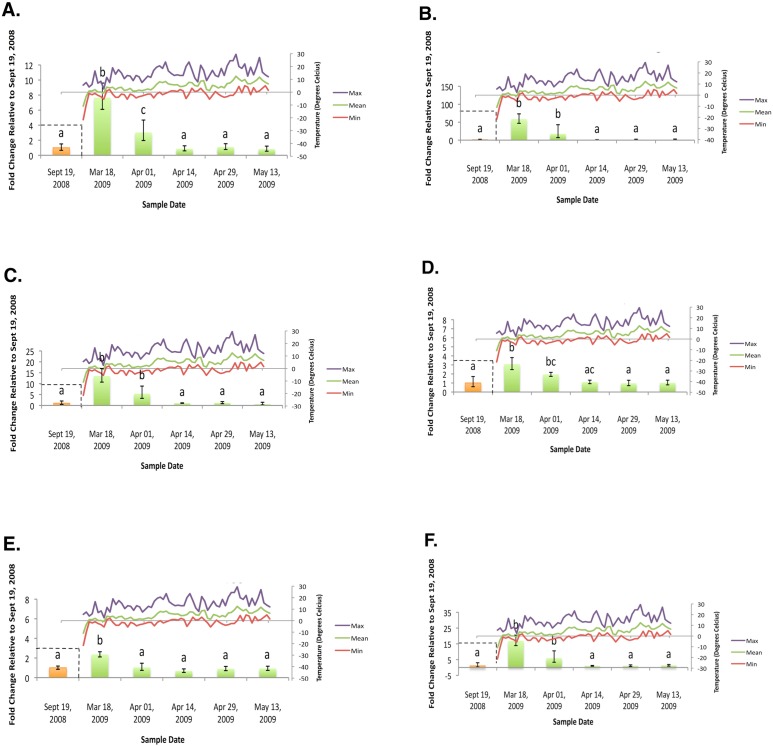
Winter mortality is a major factor regulating population size of the mountain pine beetle, Hopkins (Coleoptera: Curculionidae). Glycerol is the major cryoprotectant in this freeze intolerant insect. We report findings from a gene expression study on an overwintering mountain pine beetle population over the course of 35 weeks. mRNA transcript levels suggest glycerol production in the mountain pine beetle occurs through glycogenolytic, gluconeogenic and potentially glyceroneogenic pathways, but not from metabolism of lipids. A two-week lag period between fall glycogen phosphorylase transcript and phosphoenolpyruvate carboxykinase transcript up-regulation suggests that gluconeogenesis serves as a secondary glycerol-production process, subsequent to exhaustion of the primary glycogenolytic source. These results provide a first look at the details of seasonal gene expression related to the production of glycerol in the mountain pine beetle.
冬季死亡率是调节山地松甲虫(霍普金斯,鞘翅目:象甲科)种群数量的主要因素。甘油是这种不耐冻昆虫的主要抗冻剂。我们报告了一项对越冬山地松甲虫种群进行的为期35周的基因表达研究结果。mRNA转录水平表明,山地松甲虫体内甘油的产生通过糖原分解、糖异生以及可能的甘油生成途径,但并非来自脂质代谢。秋季糖原磷酸化酶转录本和磷酸烯醇式丙酮酸羧激酶转录本上调之间有两周的滞后期,这表明糖异生是在主要糖原分解来源耗尽后作为次要的甘油生成过程。这些结果首次揭示了与山地松甲虫甘油产生相关的季节性基因表达细节。