Tempia Stefano, Walaza Sibongile, Moyes Jocelyn, Cohen Adam L, von Mollendorf Claire, McMorrow Meredith L, Treurnicht Florette K, Venter Marietjie, Pretorius Marthi, Hellferscee Orienka, Wolter Nicole, von Gottberg Anne, Nguweneza Athermon, McAnerney Johanna M, Dawood Halima, Variava Ebrahim, Madhi Shabir A, Cohen Cheryl
Emerg Infect Dis. 2017 Jul;23(7):1124-1132. doi: 10.3201/eid2307.161959.
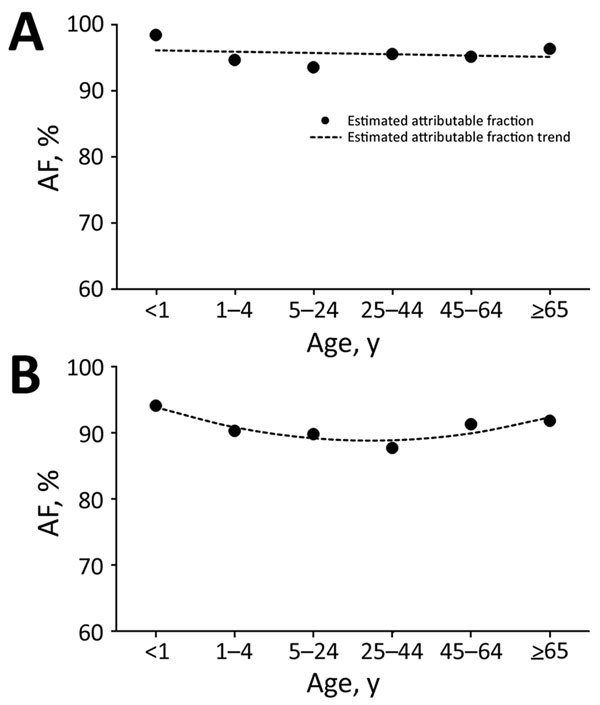
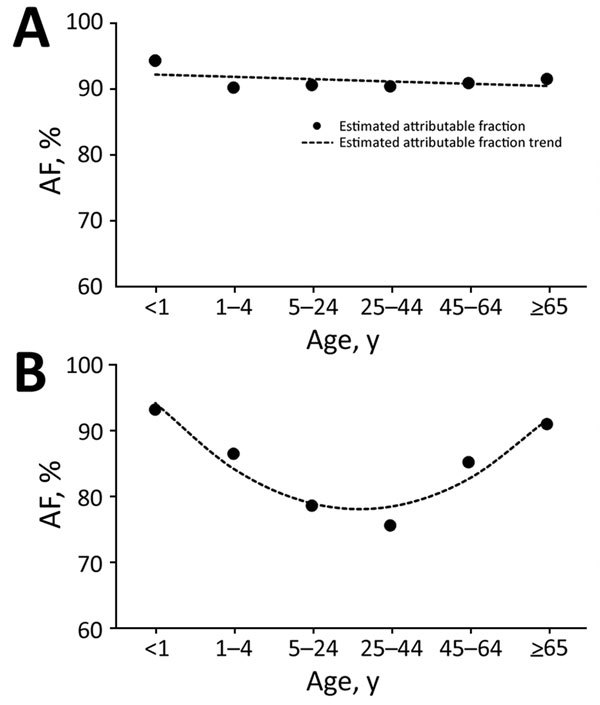
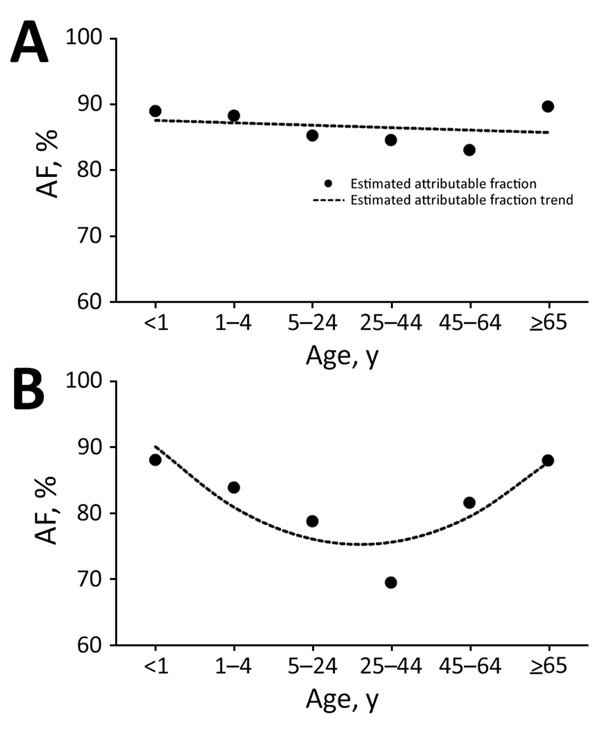
The attributable fraction (AF) of influenza virus detection to illness has not been described for patients in different age groups or with different HIV infection statuses. We compared the age group-specific prevalence of influenza virus infection among patients with influenza-like illness (ILI) or severe acute or chronic respiratory illness (SARI and SCRI, respectively) with that among controls, stratified by HIV serostatus. The overall AF for influenza virus detection to illness was 92.6% for ILI, 87.4% for SARI, and 86.2% for SCRI. Among HIV-uninfected patients, the AF for all syndromes was highest among persons <1 and >65 years of age and lowest among persons 25-44 years of age; this trend was not observed among HIV-infected patients. Overall, influenza viruses when detected in patients with ILI, SARI, or SCRI are likely attributable to illness. This finding is particularly likely among children and the elderly irrespective of HIV serostatus and among HIV-infected persons irrespective of age.
流感病毒检测与疾病之间的归因分数(AF)尚未针对不同年龄组或不同HIV感染状态的患者进行描述。我们比较了流感样疾病(ILI)患者、严重急性或慢性呼吸道疾病(分别为SARI和SCRI)患者以及对照人群中按HIV血清学状态分层的各年龄组流感病毒感染的患病率。ILI中流感病毒检测与疾病之间的总体AF为92.6%,SARI为87.4%,SCRI为86.2%。在未感染HIV的患者中,所有综合征的AF在<1岁和>65岁人群中最高,在25 - 44岁人群中最低;在感染HIV的患者中未观察到这种趋势。总体而言,在ILI、SARI或SCRI患者中检测到的流感病毒很可能归因于疾病。这一发现尤其可能出现在儿童和老年人中,无论其HIV血清学状态如何,以及在感染HIV的人群中,无论年龄大小。