Veach Ruth Ann, Liu Yan, Zienkiewicz Jozef, Wylezinski Lukasz S, Boyd Kelli L, Wynn James L, Hawiger Jacek
Immunotherapy Program at Vanderbilt University School of Medicine, Nashville, Tennessee, United States of America.
Department of Medicine, Division of Allergy, Pulmonary and Critical Care Medicine, Vanderbilt University School of Medicine, Nashville, Tennessee, United States of America.
PLoS One. 2017 Jun 19;12(6):e0179468. doi: 10.1371/journal.pone.0179468. eCollection 2017.
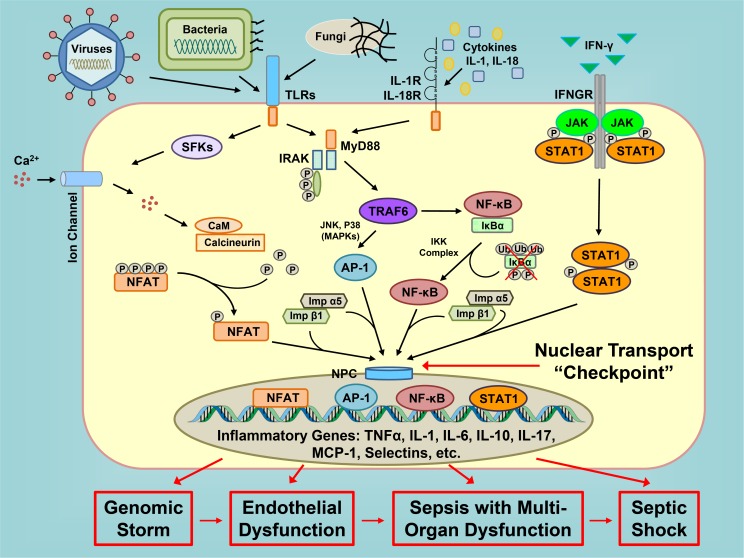
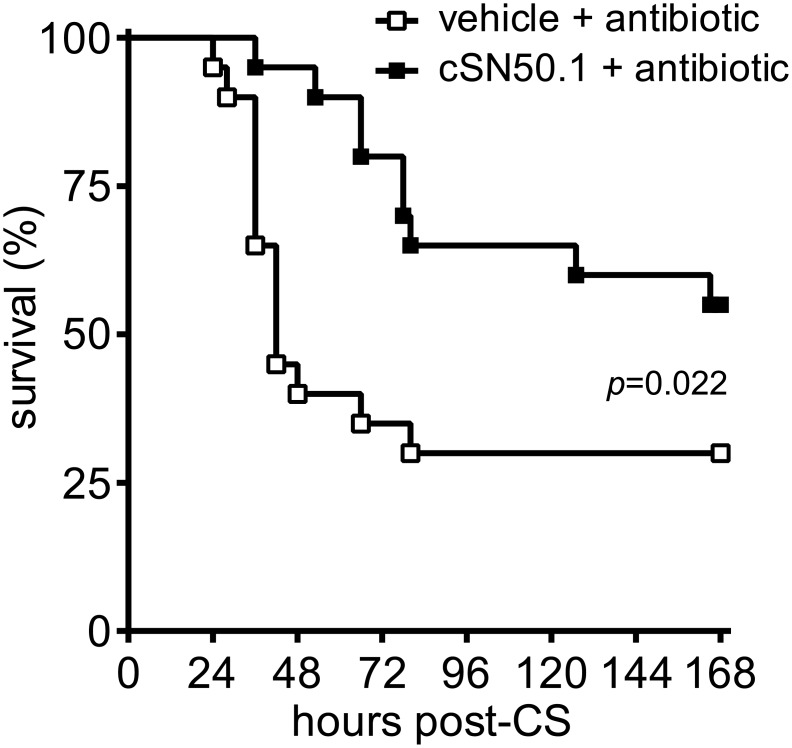
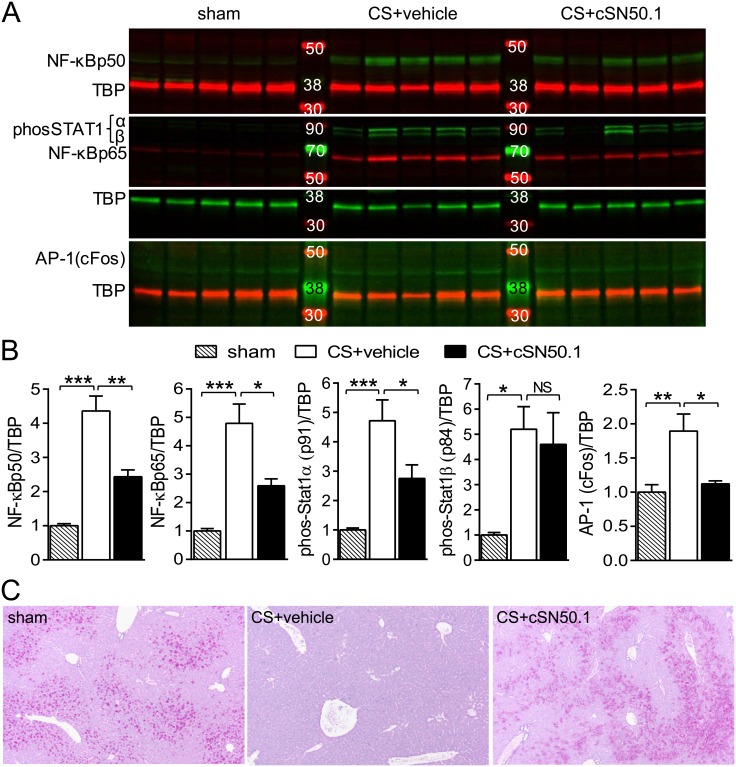
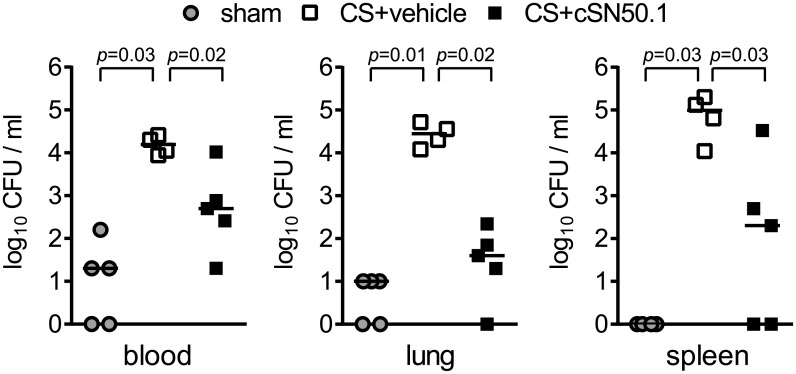
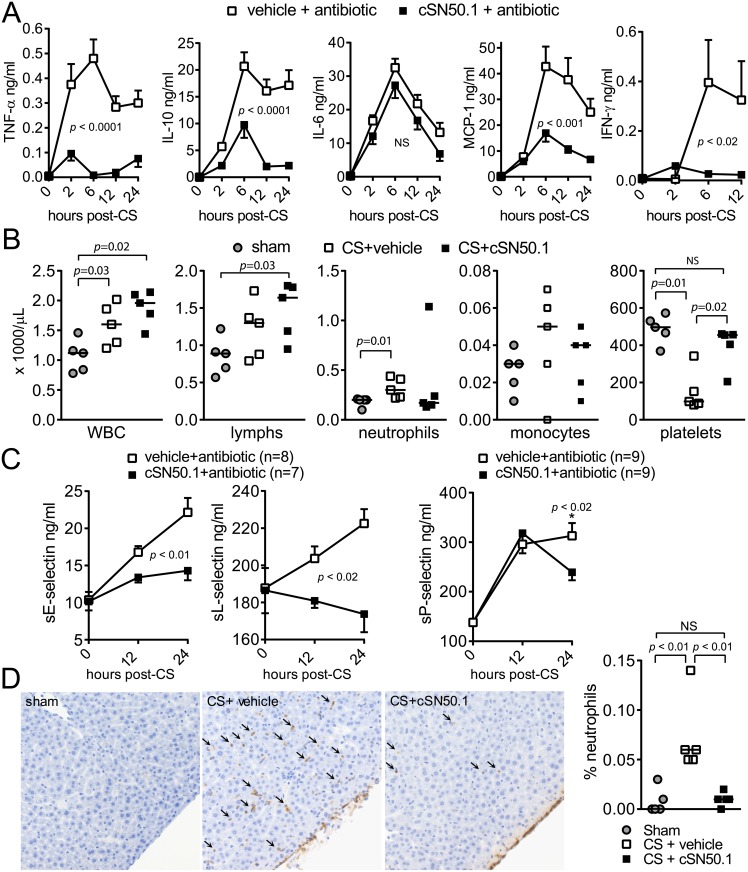
The rising tide of sepsis, a leading cause of death in the US and globally, is not adequately controlled by current antimicrobial therapies and supportive measures, thereby requiring new adjunctive treatments. Severe microvascular injury and multiple organ failure in sepsis are attributed to a "genomic storm" resulting from changes in microbial and host genomes encoding virulence factors and endogenous inflammatory mediators, respectively. This storm is mediated by stress-responsive transcription factors that are ferried to the nucleus by nuclear transport shuttles importins/karyopherins. We studied the impact of simultaneously targeting two of these shuttles, importin alpha 5 (Imp α5) and importin beta 1 (Imp β1), with a cell-penetrating Nuclear Transport Modifier (NTM) in a mouse model of polymicrobial sepsis. NTM reduced nuclear import of stress-responsive transcription factors nuclear factor kappa B, signal transducer and activator of transcription 1 alpha, and activator protein 1 in liver, which was also protected from sepsis-associated metabolic changes. Strikingly, NTM without antimicrobial therapy improved bacterial clearance in blood, spleen, and lungs, wherein a 700-fold reduction in bacterial burden was achieved while production of proinflammatory cytokines and chemokines in blood plasma was suppressed. Furthermore, NTM significantly improved thrombocytopenia, a prominent sign of microvascular injury in sepsis, inhibited neutrophil infiltration in the liver, decreased L-selectin, and normalized plasma levels of E-selectin and P-selectin, indicating reduced microvascular injury. Importantly, NTM combined with antimicrobial therapy extended the median time to death from 42 to 83 hours and increased survival from 30% to 55% (p = 0.022) as compared to antimicrobial therapy alone. This study documents the fundamental role of nuclear signaling mediated by Imp α5 and Imp β1 in the mechanism of polymicrobial sepsis and highlights the potential for targeting nuclear transport as an adjunctive therapy in sepsis management.
脓毒症是美国乃至全球主要的死亡原因之一,其发病率不断上升,目前的抗菌治疗和支持措施对其控制并不充分,因此需要新的辅助治疗方法。脓毒症中的严重微血管损伤和多器官衰竭归因于一种“基因组风暴”,这分别是由编码毒力因子的微生物基因组和编码内源性炎症介质的宿主基因组发生变化所致。这种风暴由应激反应转录因子介导,这些转录因子通过核转运穿梭蛋白输入蛋白/核转运蛋白被转运到细胞核中。我们在多微生物脓毒症小鼠模型中研究了用细胞穿透性核转运调节剂(NTM)同时靶向其中两种穿梭蛋白——输入蛋白α5(Imp α5)和输入蛋白β1(Imp β1)的影响。NTM减少了肝脏中应激反应转录因子核因子κB、信号转导和转录激活因子1α以及激活蛋白1的核输入,肝脏也免受脓毒症相关的代谢变化影响。引人注目的是,未经抗菌治疗的NTM改善了血液、脾脏和肺部的细菌清除,实现了细菌负荷降低700倍,同时抑制了血浆中促炎细胞因子和趋化因子的产生。此外,NTM显著改善了血小板减少症(脓毒症微血管损伤的一个突出迹象),抑制了肝脏中的中性粒细胞浸润,降低了L-选择素,并使E-选择素和P-选择素的血浆水平恢复正常,表明微血管损伤减轻。重要的是,与单独的抗菌治疗相比,NTM联合抗菌治疗将中位死亡时间从42小时延长至83小时,并将生存率从30%提高到55%(p = 0.022)。这项研究证明了由Imp α5和Imp β1介导的核信号在多微生物脓毒症机制中的基本作用,并突出了靶向核转运作为脓毒症管理辅助治疗的潜力。