Goodenough Anne E, Little Natasha, Carpenter William S, Hart Adam G
School of Natural & Social Sciences, Francis Close Hall, University of Gloucestershire, Cheltenham, Gloucestershire, United Kingdom.
Royal Society of Biology, Charles Darwin House, London, United Kingdom.
PLoS One. 2017 Jun 19;12(6):e0179277. doi: 10.1371/journal.pone.0179277. eCollection 2017.
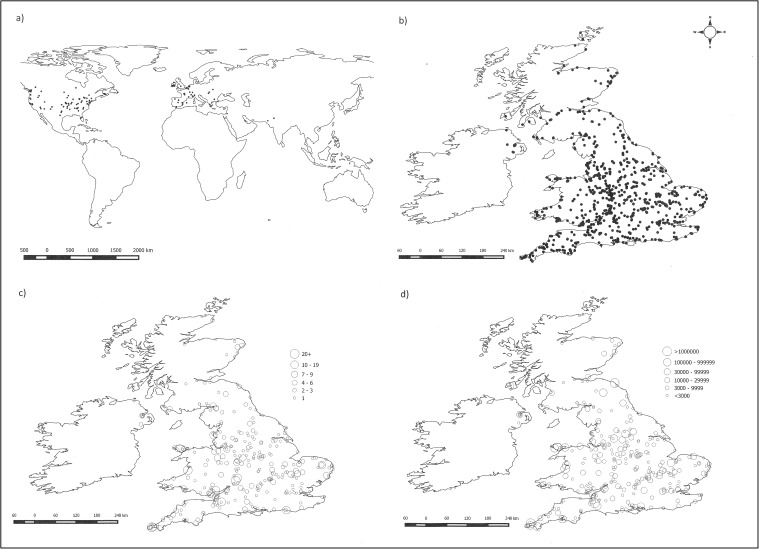
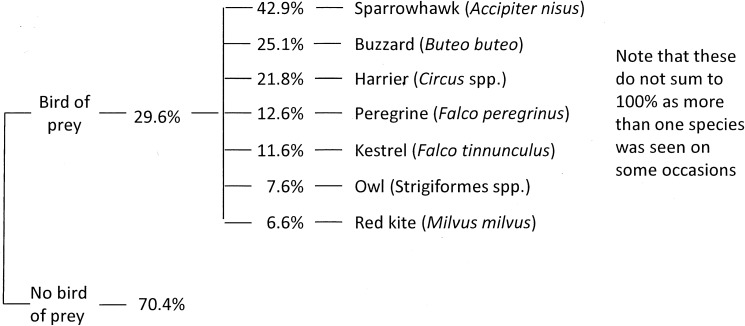
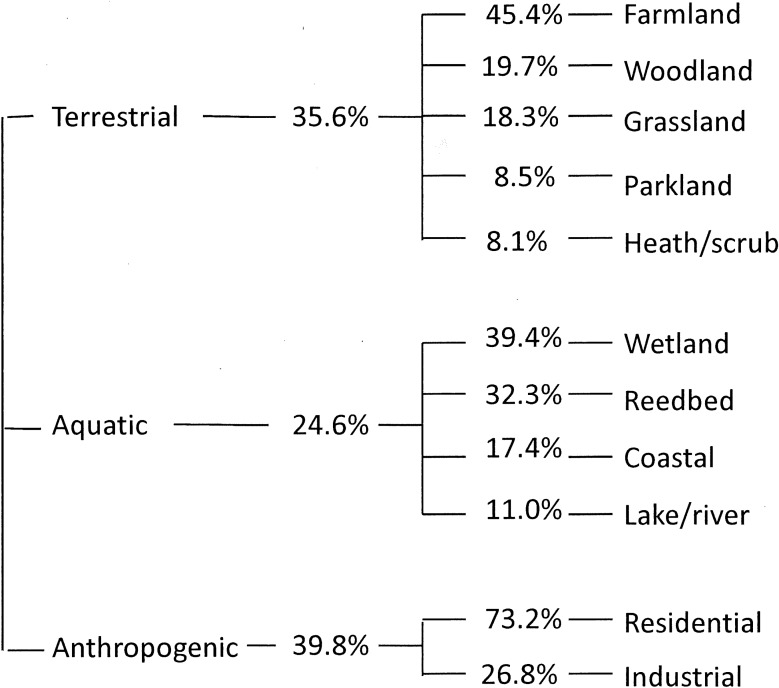
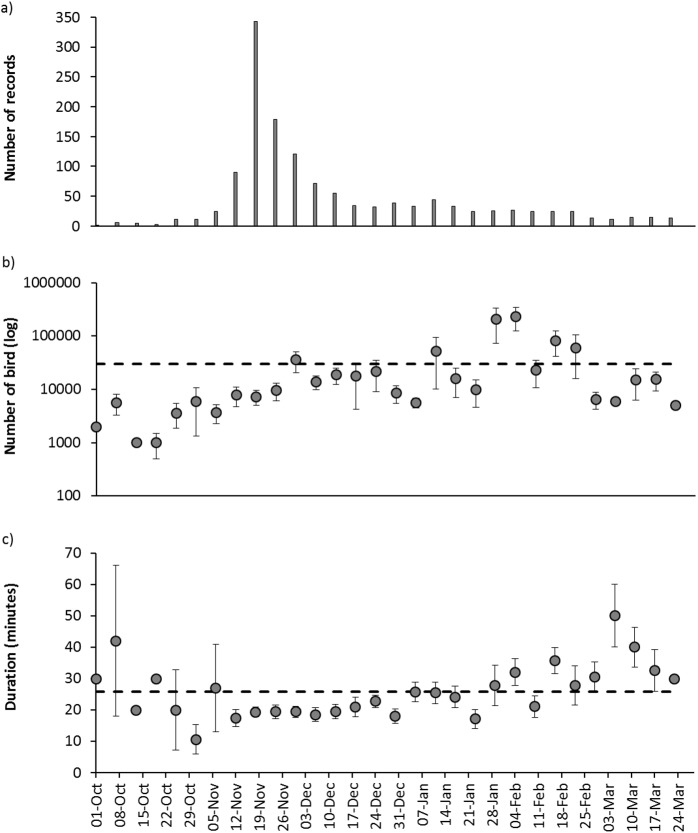
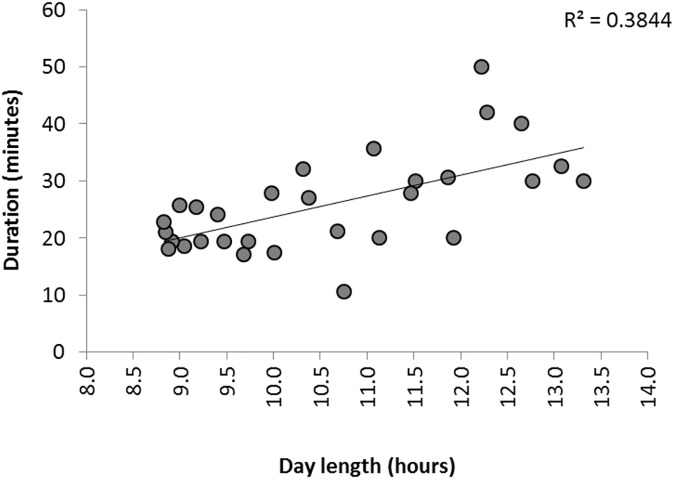
Pre-roost murmuration displays by European starlings Sturnus vulgaris are a spectacular example of collective animal behaviour. To date, empirical research has focussed largely on flock movement and biomechanics whereas research on possible causal mechanisms that affect flock size and murmuration duration has been limited and restricted to a small number of sites. Possible explanations for this behaviour include reducing predation through the dilution, detection or predator confusion effects (the "safer together" hypotheses) or recruiting more birds to create larger (warmer) roosts (the "warmer together" hypothesis). We collected data on size, duration, habitat, temperature and predators from >3,000 murmurations using citizen science. Sightings were submitted from 23 countries but UK records predominated. Murmurations occurred across a range of habitats but there was no association between habitat and size/duration. Size increased significantly from October to early February, followed by a decrease until the end of the season in March (overall mean 30,082 birds; maximum 750,000 birds). Mean duration was 26 minutes (± 44 seconds SEM). Displays were longest at the start/end of the season, probably due to a significant positive relationship with day length. Birds of prey were recorded at 29.6% of murmurations. The presence of predators including harrier Circus, peregrine Falco peregrinus, and sparrowhawk Accipiter nisus was positively correlated with murmuration size (R2 = 0.401) and duration (R2 = 0.258), especially when these species were flying near to, or actively engaging with, starlings. Temperature was negatively correlated with duration but the effect was much weaker than that of day length. When predators were present, murmurations were statistically more likely to end with all birds going down en masse to roost rather than dispersing from the site. Our findings suggest that starling murmurations are primarily an anti-predator adaptation rather than being undertaken to attract larger numbers of individuals to increase roost warmth.
欧洲椋鸟(Sturnus vulgaris)归巢前的集群飞行展示是动物集体行为的一个壮观例子。迄今为止,实证研究主要集中在鸟群运动和生物力学方面,而对影响鸟群规模和集群飞行持续时间的可能因果机制的研究一直有限,且仅限于少数地点。这种行为的可能解释包括通过稀释、探测或迷惑捕食者效应来减少捕食(“一起更安全”假说),或者吸引更多鸟类以形成更大(更温暖)的栖息地(“一起更温暖”假说)。我们通过公民科学收集了来自3000多次集群飞行的规模、持续时间、栖息地、温度和捕食者的数据。目击记录来自23个国家,但英国的记录占主导地位。集群飞行发生在一系列栖息地中,但栖息地与规模/持续时间之间没有关联。规模从10月到2月初显著增加,随后减少直至3月底季节结束(总体平均为30,082只鸟;最多750,000只鸟)。平均持续时间为26分钟(±44秒标准误)。展示在季节开始/结束时最长,可能是由于与白昼长度存在显著的正相关关系。在29.6%的集群飞行中记录到了猛禽。包括鹞(Circus)、游隼(Falco peregrinus)和雀鹰(Accipiter nisus)在内的捕食者的存在与集群飞行的规模(R2 = 0.401)和持续时间(R2 = 0.258)呈正相关,尤其是当这些物种靠近椋鸟飞行或与椋鸟积极互动时。温度与持续时间呈负相关,但影响远弱于白昼长度。当有捕食者存在时,从统计学上看,集群飞行更有可能以所有鸟类集体归巢而不是从该地点分散结束。我们的研究结果表明,椋鸟的集群飞行主要是一种反捕食适应,而不是为了吸引更多个体以增加栖息地的温暖程度。