Chu Songtao, Wang Haipeng, Yu Miao
Department of Forensic Medicine of Basic Medical College, Beihua University, Jilin, 132013, Jilin Province, China.
Gastrointestinal Colorectal and Anal Surgery, China-Japan Union Hospital of Jilin University, Changchun, 130000, Jilin Province, China.
World J Surg Oncol. 2017 Jun 19;15(1):115. doi: 10.1186/s12957-017-1181-9.
This study aimed to identify the potential molecular network associated with colon cancer metastasis.
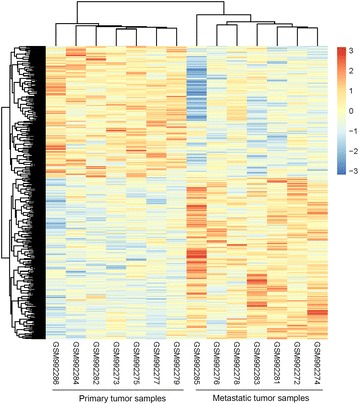
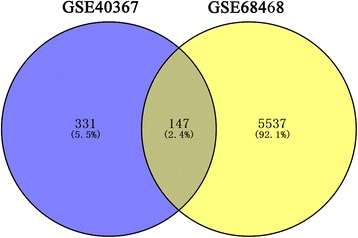
A gene expression profile dataset (GSE40367) downloaded from Gene Expression Omnibus was used to identify and compare differentially expressed genes (DEGs) between primary colon adenocarcinoma tissues and matched tissue samples of liver metastases of colon adenocarcinoma. After the functional analysis of the DEGs, their protein-protein interactions (PPIs) were analyzed, and the transcription factors (TFs) and microRNAs (miRNAs) that regulated these DEGs were predicted. The data were used to construct an integrated network of DEGs, TFs, and miRNAs. Finally, the GSE68468 dataset was used to validate the DEGs associated with liver metastasis of colon adenocarcinoma identified in the GSE40367 dataset.
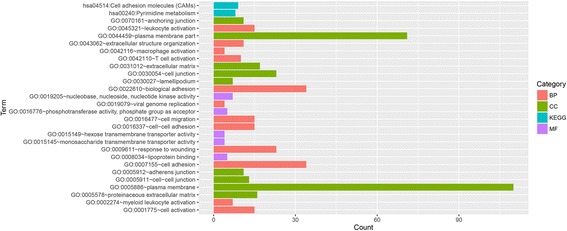
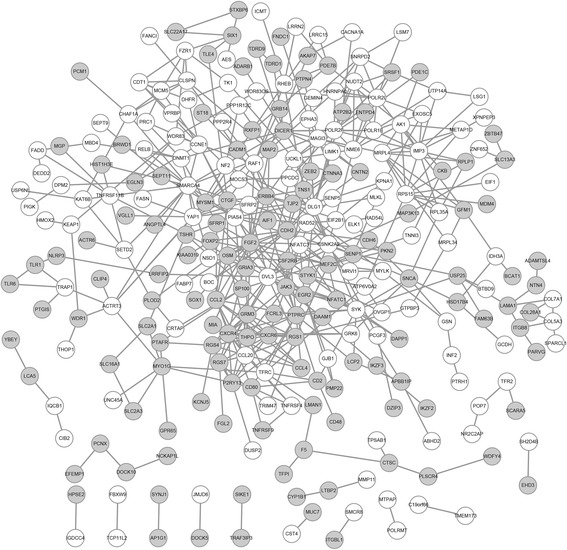
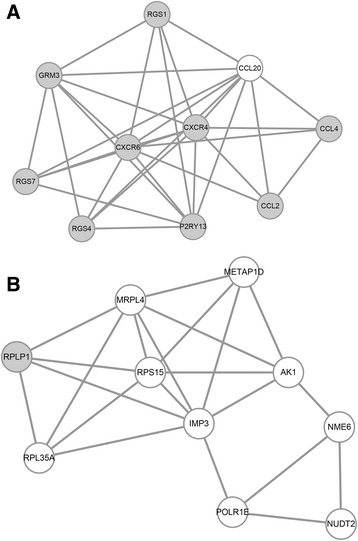
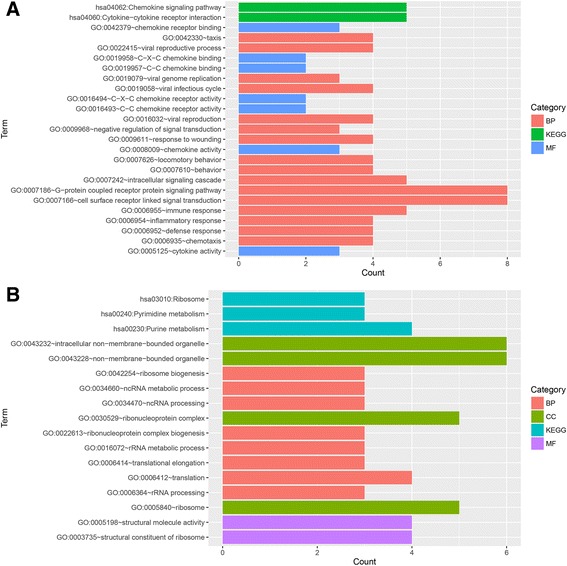
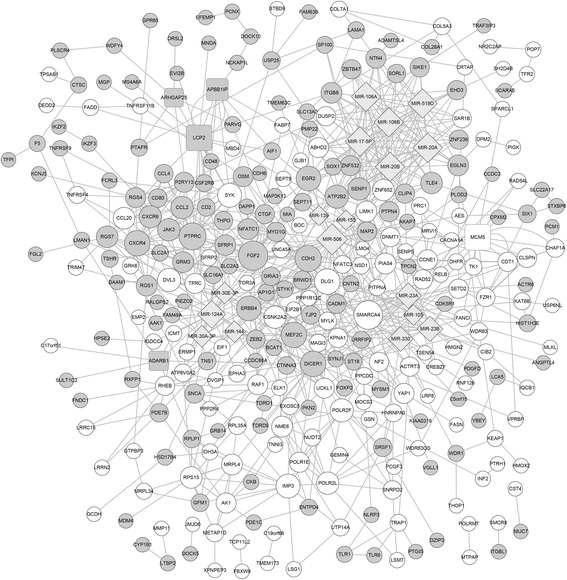
Compared with the primary colon adenocarcinoma sample, 262 DEGs were upregulated and 216 were downregulated in the liver metastasis sample. The DEGs were primarily involved in functions associated with cell junctions and cell adhesion. The DEGs included 17 genes encoding TFs, and 39 miRNAs that regulated DEGs were predicted. Further analysis of the DEGs led to the identification of 490 PPIs. The data were used to construct an integrated network consisting of DEGs, TFs, and miRNAs. DEGs with a high degree of connectivity in the network included FGF2, ERBB4, PTPRC, CXCR4, CCL2, and CCL4. The network also revealed that FGF2 interacted with ERBB4, PTPRC, and CXCR4 and that PTPRC interacted with CXCR4. Furthermore, LCP2 and APBB1IP were predicted to target several other DEGs, including PTPRC, and miR-30a-3p and miR-30e-3p were predicted to regulate ERBB4 and several other DEGs. Notably, FGF2, ERBB4, PTPRC, LCP2, CCL2, and CCL4 were also identified as DEGs in the GSE68468 dataset.
The DEGs, TFs, and miRNAs identified in this study might play key roles in colon cancer metastasis.
本研究旨在识别与结肠癌转移相关的潜在分子网络。
使用从基因表达综合数据库下载的基因表达谱数据集(GSE40367)来识别和比较原发性结肠腺癌组织与结肠腺癌肝转移匹配组织样本之间的差异表达基因(DEG)。对DEG进行功能分析后,分析其蛋白质-蛋白质相互作用(PPI),并预测调控这些DEG的转录因子(TF)和微小RNA(miRNA)。利用这些数据构建DEG、TF和miRNA的整合网络。最后,使用GSE68468数据集验证在GSE40367数据集中鉴定出的与结肠腺癌肝转移相关的DEG。
与原发性结肠腺癌样本相比,肝转移样本中有262个DEG上调,216个DEG下调。这些DEG主要参与与细胞连接和细胞黏附相关的功能。这些DEG包括17个编码TF的基因,并预测有39个调控DEG的miRNA。对DEG的进一步分析导致鉴定出490个PPI。利用这些数据构建了一个由DEG、TF和miRNA组成的整合网络。网络中具有高度连通性的DEG包括FGF2、ERBB4、PTPRC、CXCR4、CCL2和CCL4。该网络还显示FGF2与ERBB4、PTPRC和CXCR4相互作用,且PTPRC与CXCR4相互作用。此外,预测LCP2和APBB1IP靶向其他几个DEG,包括PTPRC,且预测miR-30a-3p和miR-30e-3p调控ERBB4和其他几个DEG。值得注意的是,FGF2、ERBB4、PTPRC、LCP2、CCL2和CCL4在GSE68468数据集中也被鉴定为DEG。
本研究中鉴定出的DEG、TF和miRNA可能在结肠癌转移中起关键作用。