Goo Marisa S, Sancho Laura, Slepak Natalia, Boassa Daniela, Deerinck Thomas J, Ellisman Mark H, Bloodgood Brenda L, Patrick Gentry N
Section of Neurobiology, Division of Biological Sciences, University of California, San Diego, La Jolla, CA.
National Center for Microscopy and Imaging Research and Center for Research on Biological Systems, University of California, San Diego, La Jolla, CA.
J Cell Biol. 2017 Aug 7;216(8):2499-2513. doi: 10.1083/jcb.201704068. Epub 2017 Jun 19.
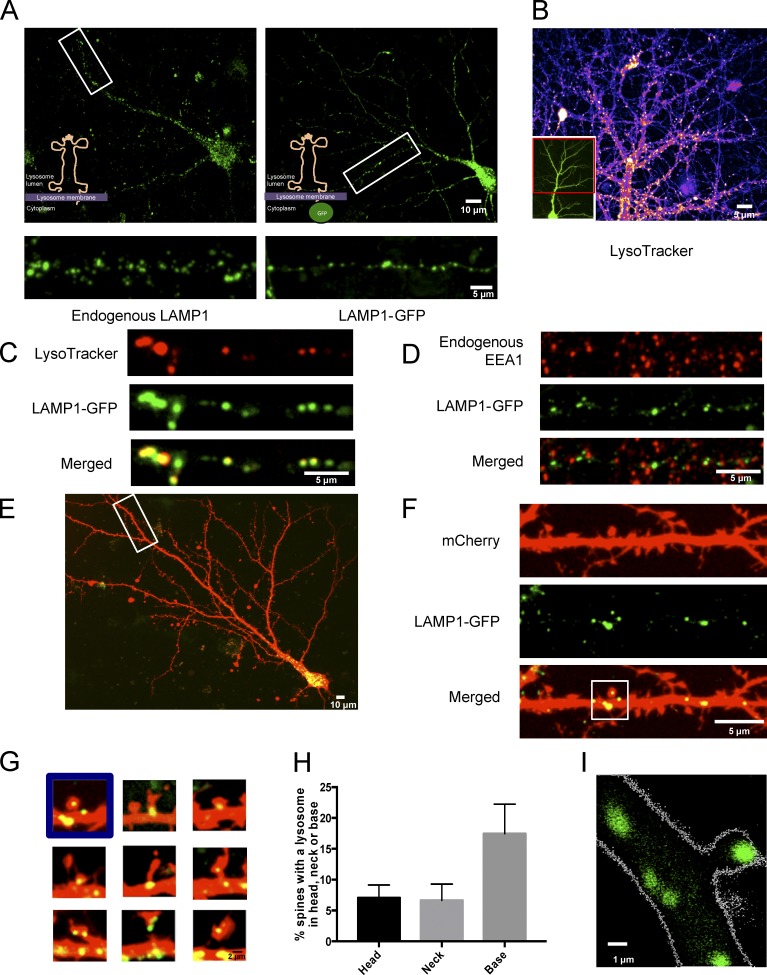
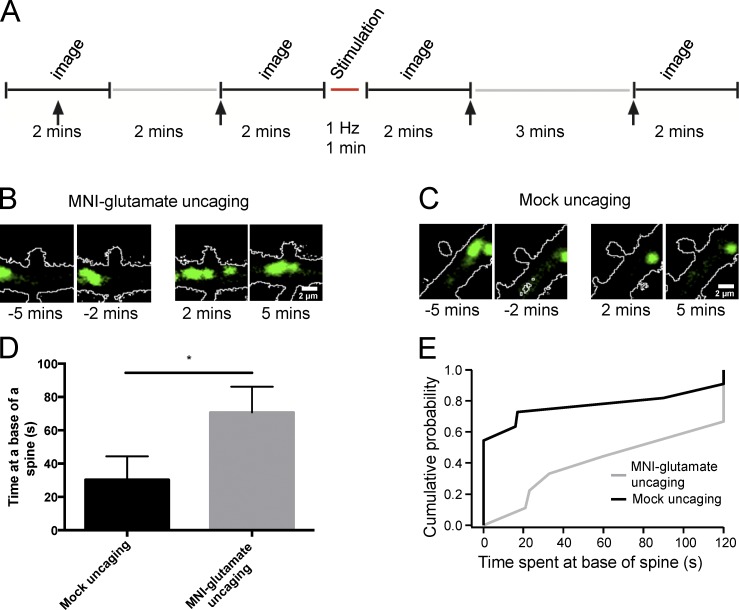
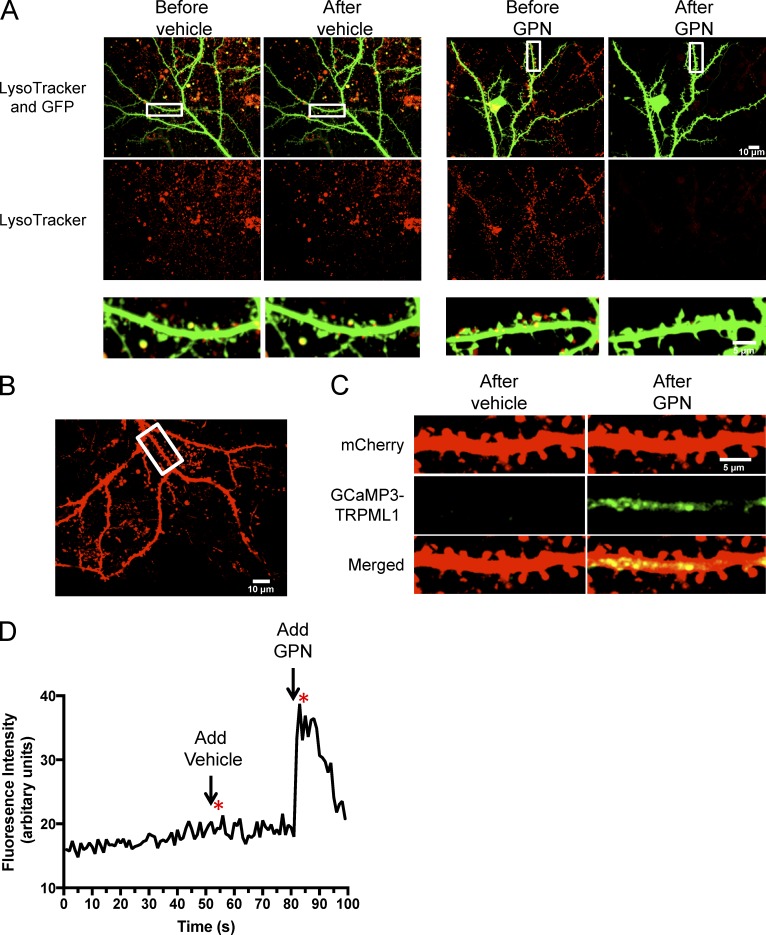
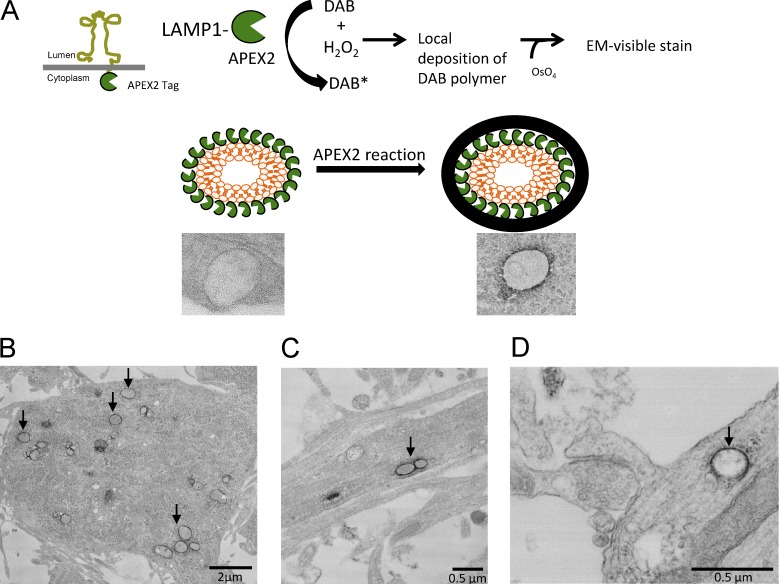
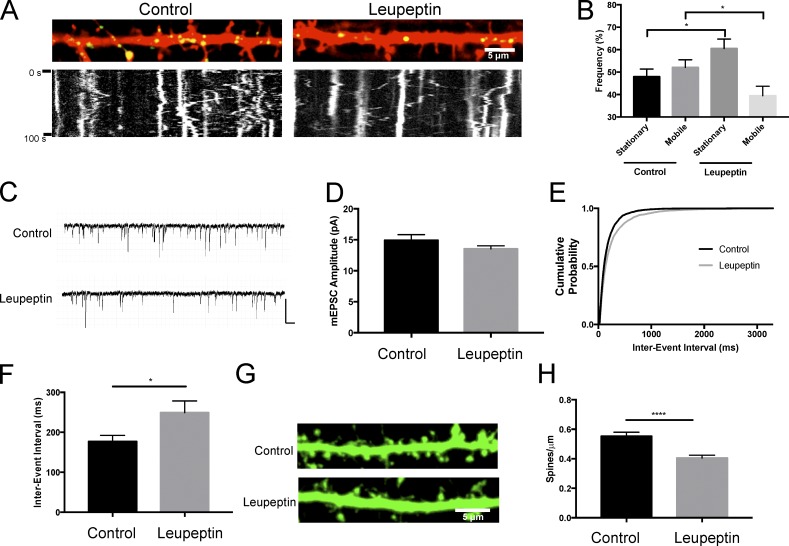
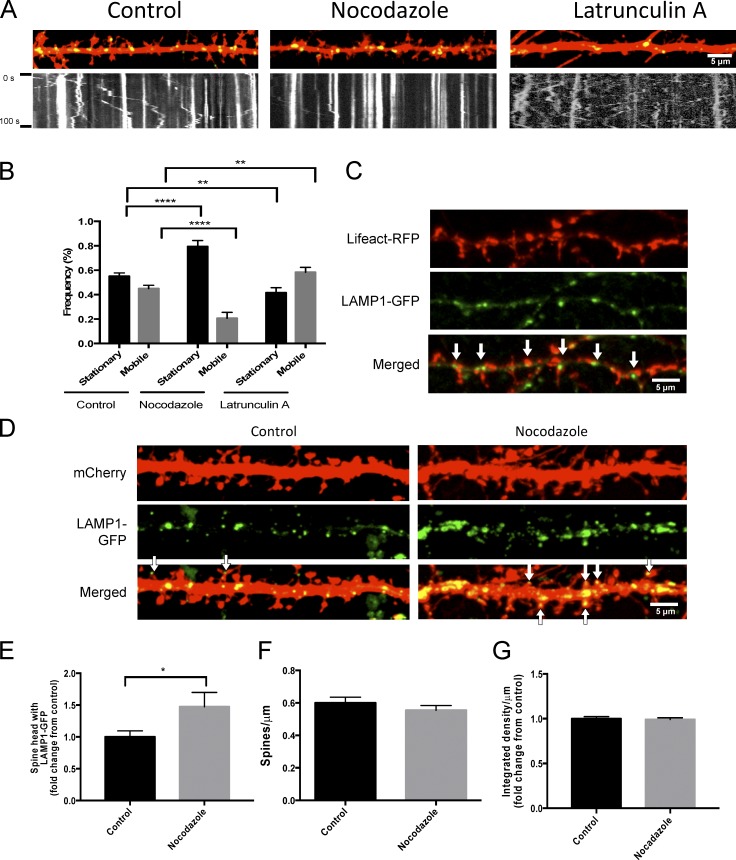
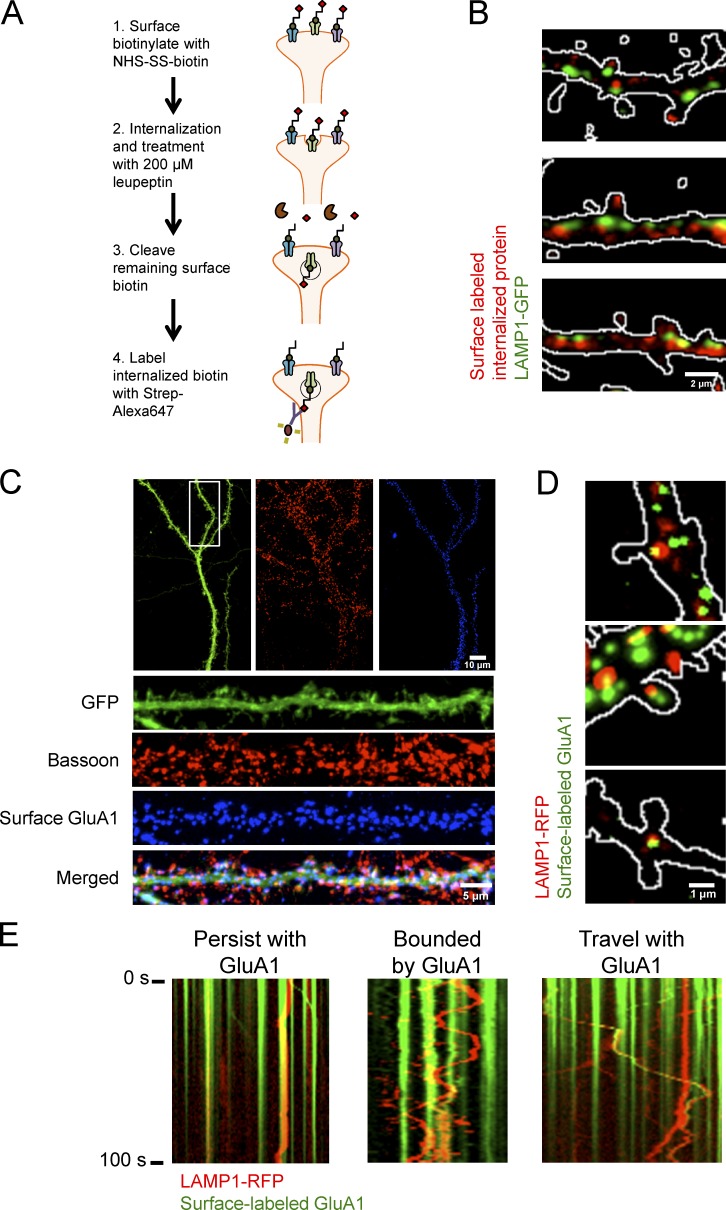
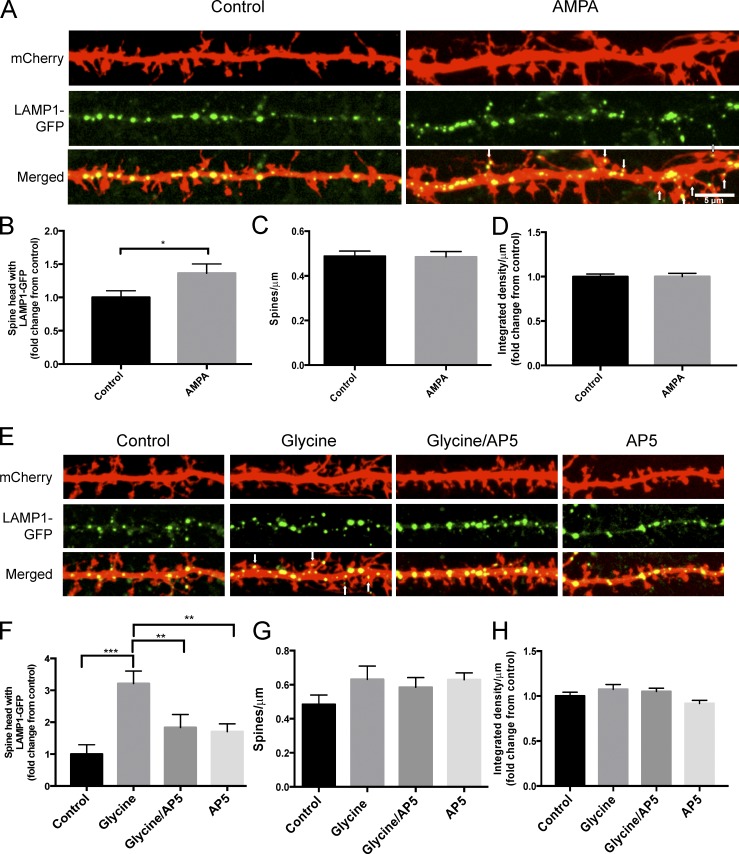
In neurons, lysosomes, which degrade membrane and cytoplasmic components, are thought to primarily reside in somatic and axonal compartments, but there is little understanding of their distribution and function in dendrites. Here, we used conventional and two-photon imaging and electron microscopy to show that lysosomes traffic bidirectionally in dendrites and are present in dendritic spines. We find that lysosome inhibition alters their mobility and also decreases dendritic spine number. Furthermore, perturbing microtubule and actin cytoskeletal dynamics has an inverse relationship on the distribution and motility of lysosomes in dendrites. We also find trafficking of lysosomes is correlated with synaptic α-amino-3-hydroxy-5-methyl-4-isoxazolepropionic acid-type glutamate receptors. Strikingly, lysosomes traffic to dendritic spines in an activity-dependent manner and can be recruited to individual spines in response to local activation. These data indicate the position of lysosomes is regulated by synaptic activity and thus plays an instructive role in the turnover of synaptic membrane proteins.
在神经元中,溶酶体负责降解膜和细胞质成分,一般认为主要存在于胞体和轴突区域,但人们对其在树突中的分布和功能了解甚少。在此,我们运用传统成像、双光子成像和电子显微镜技术,发现溶酶体在树突中双向运输,并存在于树突棘中。我们发现抑制溶酶体功能会改变其移动性,还会减少树突棘的数量。此外,微管和肌动蛋白细胞骨架动力学的扰动对溶酶体在树突中的分布和运动性具有相反的影响。我们还发现溶酶体的运输与突触α-氨基-3-羟基-5-甲基-4-异恶唑丙酸型谷氨酸受体相关。令人惊讶的是,溶酶体以活动依赖的方式运输到树突棘,并可响应局部激活而被招募到单个树突棘中。这些数据表明溶酶体的位置受突触活动调控,因此在突触膜蛋白的更新中发挥指导作用。