Li Yi, Sun Yuxia, Zhang Chunling, Wang Ke, Shen Peicheng, Huang Di, Ma Wen, Zhang Jin, Li Lin, He Liqun
Department of Nephrology, Shuguang Hospital Affiliated to Shanghai University of Traditional Chinese Medicine, Shanghai 200021, China.
Department of Cardiology, Shuguang Hospital Affiliated to Shanghai University of Traditional Chinese Medicine, Shanghai 201203, China.
Evid Based Complement Alternat Med. 2017;2017:7169547. doi: 10.1155/2017/7169547. Epub 2017 May 28.
To evaluate the therapeutic effects of moxibustion at Shenshu (BL-23) and Geshu (BL-17) acupoints in a focal segmental glomerulosclerosis (FSGS) model in rats.
A FSGS rat model was established by single nephrectomy and repeated injection of doxorubicin. The FSGS rats were randomly divided into the model group, losartan (positive control) group, Shenshu moxibustion group, and Geshu moxibustion group. Molecular indicators of kidney function and renal pathological changes were monitored.
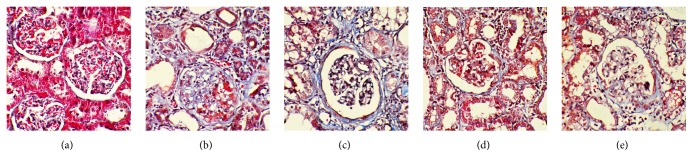
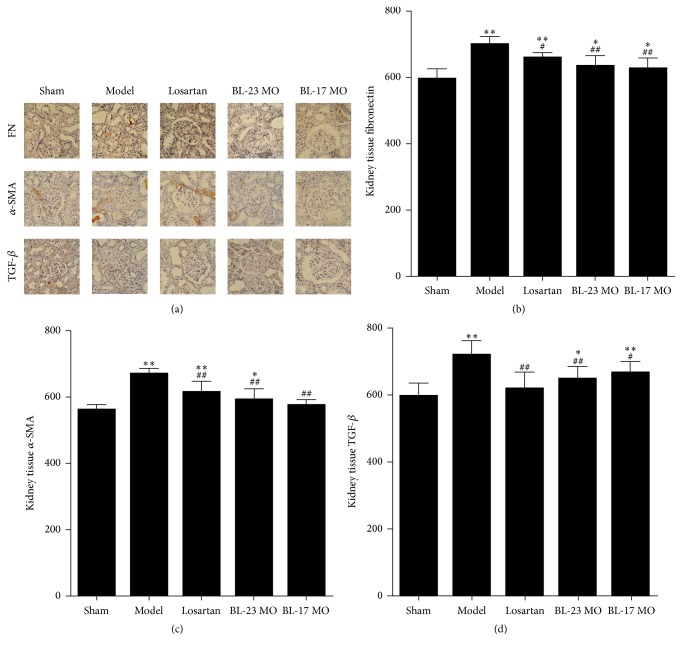
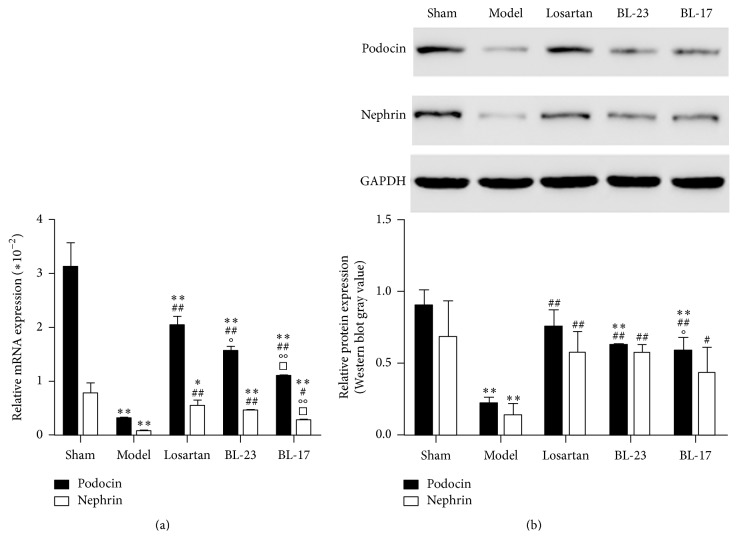
Urinary protein, serum creatinine, urea nitrogen, and serum uric acid were significantly reduced after 12-week intervention with losartan, Shenshu, or Geshu moxibustion. Renal -SMA, FN, and TGF- were also decreased, while podocin and nephrin protein and mRNA were increased. The pathological damage in renal tissue was obviously alleviated by all three treatments, which suggests that moxibustion may have similar efficacy to losartan in the treatment of FSGS.
Moxibustion alleviates podocyte injury and inhibits renal interstitial fibrosis in the FSGS rat model, thereby minimizing the progression of glomerular sclerosis and improving renal function.
评估艾灸肾俞穴(BL - 23)和膈俞穴(BL - 17)对大鼠局灶节段性肾小球硬化(FSGS)模型的治疗效果。
通过单侧肾切除并重复注射阿霉素建立FSGS大鼠模型。将FSGS大鼠随机分为模型组、氯沙坦(阳性对照)组、肾俞艾灸组和膈俞艾灸组。监测肾功能的分子指标和肾脏病理变化。
氯沙坦、肾俞或膈俞艾灸干预12周后,尿蛋白、血清肌酐、尿素氮和血清尿酸显著降低。肾平滑肌肌动蛋白(α - SMA)、纤连蛋白(FN)和转化生长因子 -β(TGF -β)也减少,而足细胞裂孔素(podocin)和nephrin蛋白及mRNA增加。三种治疗方法均明显减轻了肾组织的病理损伤,这表明艾灸在治疗FSGS方面可能具有与氯沙坦相似的疗效。
艾灸可减轻FSGS大鼠模型中的足细胞损伤并抑制肾间质纤维化,从而使肾小球硬化进展最小化并改善肾功能。