Laboratory of Molecular Biology Division of Intramural Research Programs, National Institute of Mental Health National Institutes of Health, Bethesda, MD 20892.
Genetic Engineering Core, National Eye Institute National Institutes of Health, Bethesda, MD 20892.
eNeuro. 2017 Jun 16;4(3). doi: 10.1523/ENEURO.0385-16.2017. eCollection 2017 May-Jun.
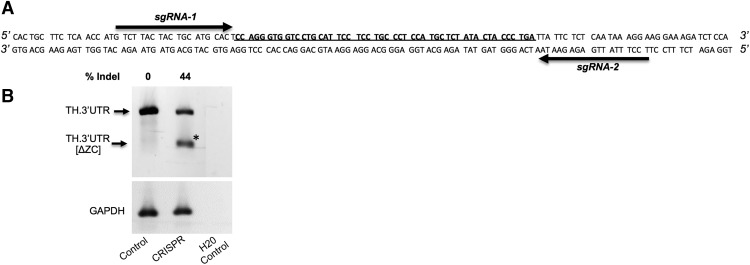
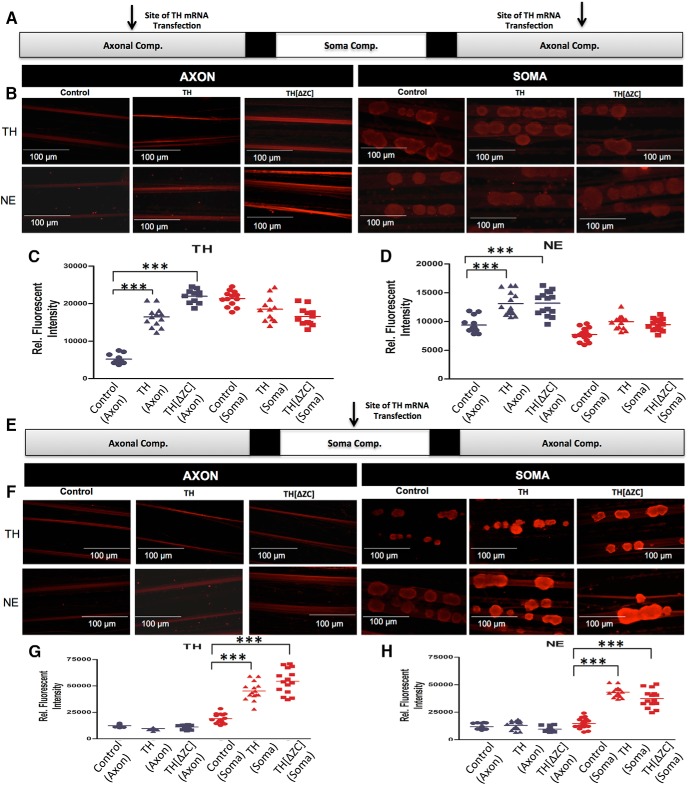
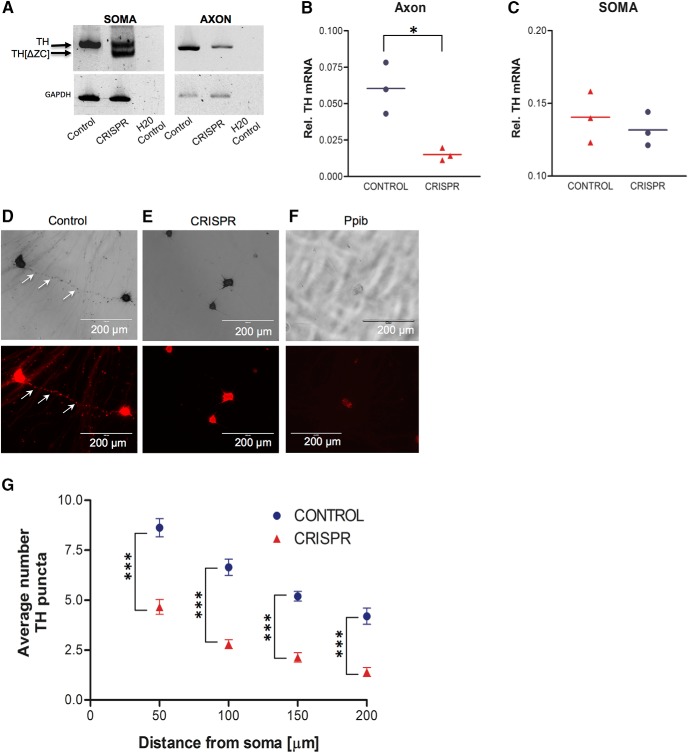
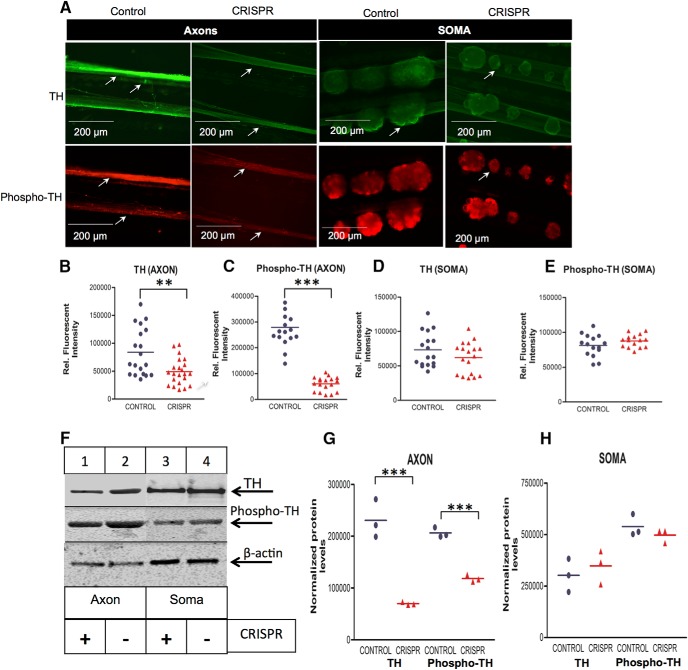
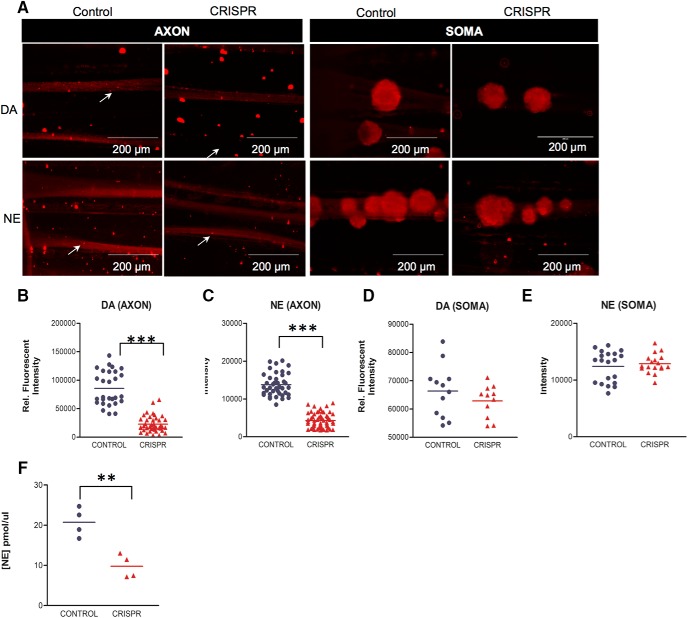
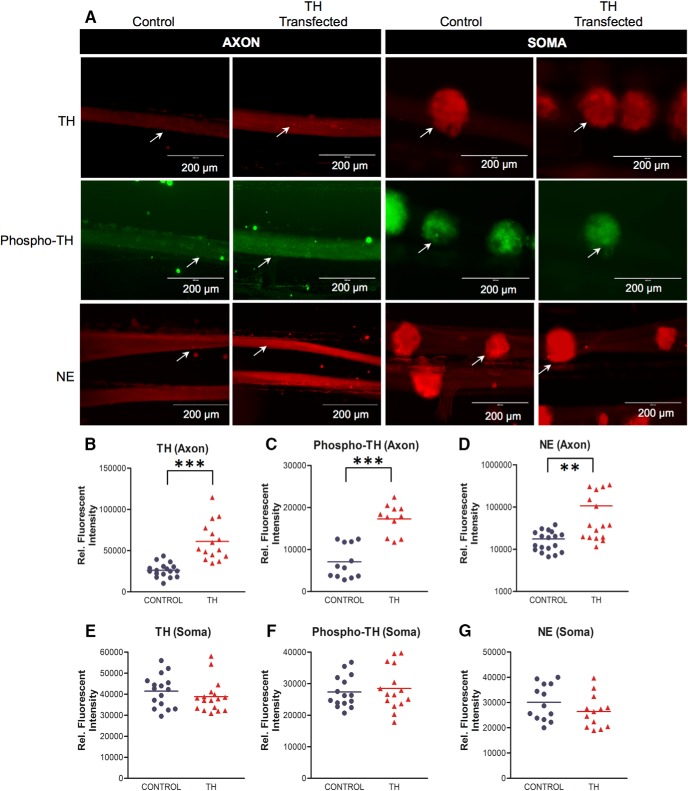
Tyrosine hydroxylase (TH) is the enzyme that catalyzes the rate-limiting step in the biosynthesis of the catecholamine neurotransmitters. In a previous communication, evidence was provided that TH mRNA is trafficked to the axon, where it is locally translated. In addition, a 50-bp sequence element in the 3'untranslated region (3'UTR) of TH mRNA was identified that directs TH mRNA to distal axons (i.e., zip-code). In the present study, the hypothesis was tested that local translation of TH plays an important role in the biosynthesis of the catecholamine neurotransmitters in the axon and/or presynaptic nerve terminal. Toward this end, a targeted deletion of the axonal transport sequence element was developed, using the lentiviral delivery of the CRISPR/Cas9 system, and two guide RNA (gRNA) sequences flanking the 50-bp acting regulatory element in rat superior cervical ganglion (SCG) neurons. Deletion of the axonal transport element reduced TH mRNA levels in the distal axons and reduced the axonal protein levels of TH and TH activity as measured by phosphorylation of SER40 in SCG neurons. Moreover, deletion of the zip-code diminished the axonal levels of dopamine (DA) and norepinephrine (NE). Conversely, the local translation of exogenous TH mRNA in the distal axon enhanced TH levels and activity, and elevated axonal NE levels. Taken together, these results provide direct evidence to support the hypothesis that TH mRNA trafficking and local synthesis of TH play an important role in the synthesis of catecholamines in the axon and presynaptic terminal.
酪氨酸羟化酶(TH)是催化儿茶酚胺神经递质生物合成限速步骤的酶。在之前的通讯中,有证据表明 TH mRNA 被运送到轴突,在那里进行局部翻译。此外,还鉴定了 TH mRNA 3'非翻译区(3'UTR)中的一个 50bp 序列元件,该元件将 TH mRNA 引导到远端轴突(即邮政编码)。在本研究中,测试了局部翻译 TH 在轴突和/或突触前神经末梢儿茶酚胺神经递质生物合成中起重要作用的假设。为此,使用慢病毒递送的 CRISPR/Cas9 系统开发了靶向缺失轴突运输序列元件的方法,并在大鼠颈上神经节(SCG)神经元中使用两个侧翼有 50bp 作用调节元件的指导 RNA(gRNA)序列。轴突运输元件的缺失降低了远端轴突中的 TH mRNA 水平,并降低了 TH 和 TH 活性的轴突蛋白水平,如 SCG 神经元中 SER40 的磷酸化所测量的。此外,删除邮政编码减少了多巴胺(DA)和去甲肾上腺素(NE)的轴突水平。相反,外源性 TH mRNA 在远端轴突中的局部翻译增强了 TH 水平和活性,并升高了轴突 NE 水平。总之,这些结果提供了直接证据支持这样的假设,即 TH mRNA 的运输和局部合成 TH 在轴突和突触前末端儿茶酚胺的合成中起重要作用。