Hanley J, Salit I E, Hofmann T
Infect Immun. 1985 Sep;49(3):581-6. doi: 10.1128/iai.49.3.581-586.1985.
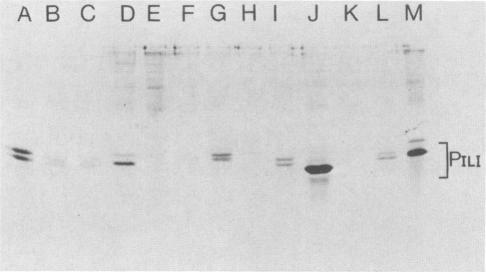
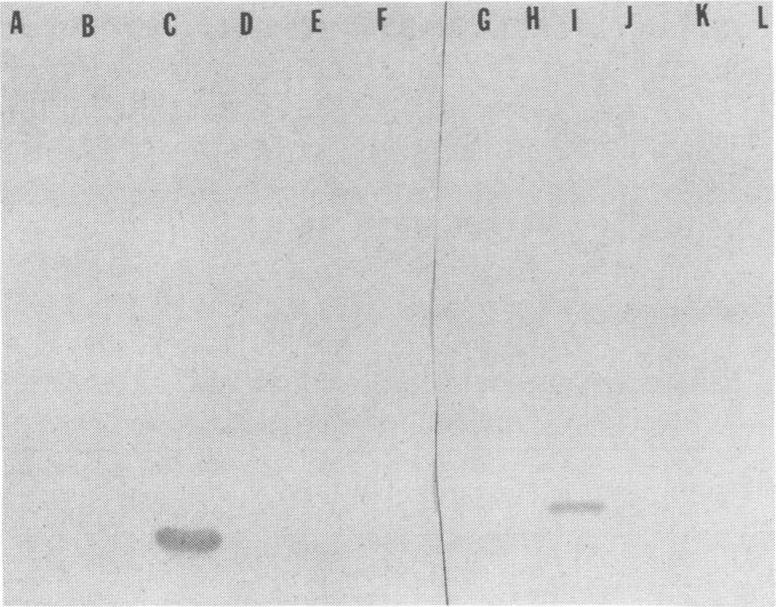
P pili (or fimbriae) are present on most pyelonephritogenic Escherichia coli strains, and they mediate binding to erythrocytes and epithelial cells. To determine the antigenic diversity of P pili, we purified the pili from 14 bacteremic E. coli strains which caused mannose-resistant hemagglutination. Pilus preparations consisted of one to three bands in sodium dodecyl sulfate-polyacrylamide gel electrophoresis and ranged in molecular weight from 14,000 to 19,500. There was no single band common to all the strains. An enzyme-linked immunosorbent inhibition assay detected 20 ng of pilus antigen. When four different rabbit antisera were used, only two or fewer heterologous strains could inhibit the enzyme-linked immunosorbent assay. Immunoblots yielded the same results. Protein sequences of four P pili had identical N termini. These results show that despite having identical amino-terminal sequences, P pili are antigenically heterogeneous. The receptor-binding domains which are likely to be identical in all strains must be immunorecessive.
P菌毛(或菌毛)存在于大多数引起肾盂肾炎的大肠杆菌菌株中,它们介导与红细胞和上皮细胞的结合。为了确定P菌毛的抗原多样性,我们从14株引起甘露糖抗性血凝的菌血症大肠杆菌菌株中纯化了菌毛。菌毛制剂在十二烷基硫酸钠-聚丙烯酰胺凝胶电泳中由一到三条带组成,分子量范围为14,000至19,500。所有菌株没有共同的单一条带。酶联免疫吸附抑制试验可检测到20 ng的菌毛抗原。当使用四种不同的兔抗血清时,只有两种或更少的异源菌株能抑制酶联免疫吸附试验。免疫印迹得到相同的结果。四种P菌毛的蛋白质序列具有相同的N端。这些结果表明,尽管P菌毛具有相同的氨基末端序列,但在抗原性上是异质的。所有菌株中可能相同的受体结合域一定是免疫隐性的。