Kruse Angela, Fattah-Hosseini Somayeh, Saha Surya, Johnson Richard, Warwick EricaRose, Sturgeon Kasie, Mueller Lukas, MacCoss Michael J, Shatters Robert G, Cilia Heck Michelle
Plant Pathology and Plant-Microbe Biology Section, School of Integrative Plant Sciences, Cornell University, Ithaca, New York, United States of America.
Boyce Thompson Institute, Ithaca, New York, United States of America.
PLoS One. 2017 Jun 20;12(6):e0179531. doi: 10.1371/journal.pone.0179531. eCollection 2017.
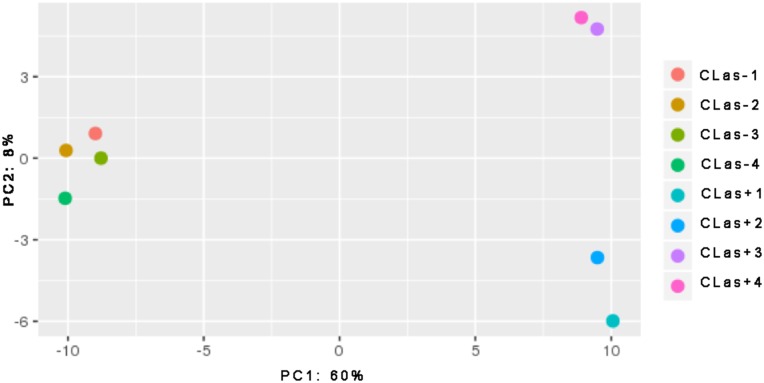
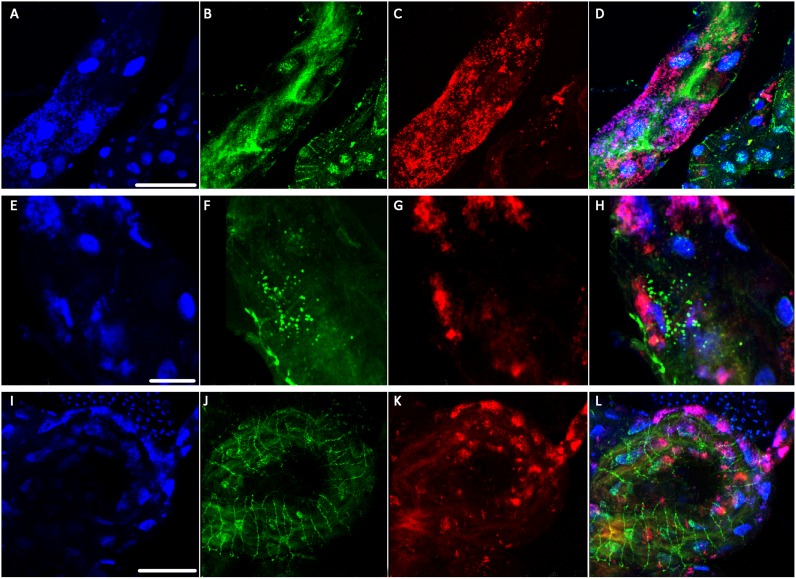
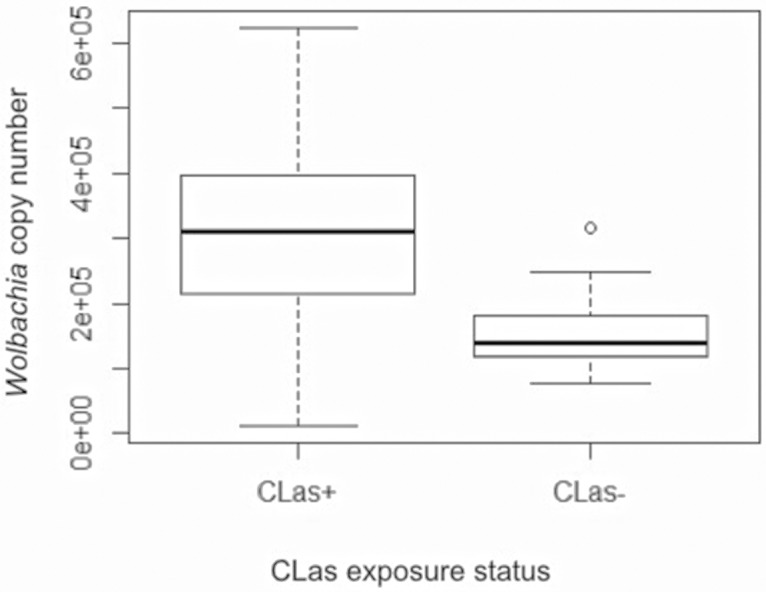
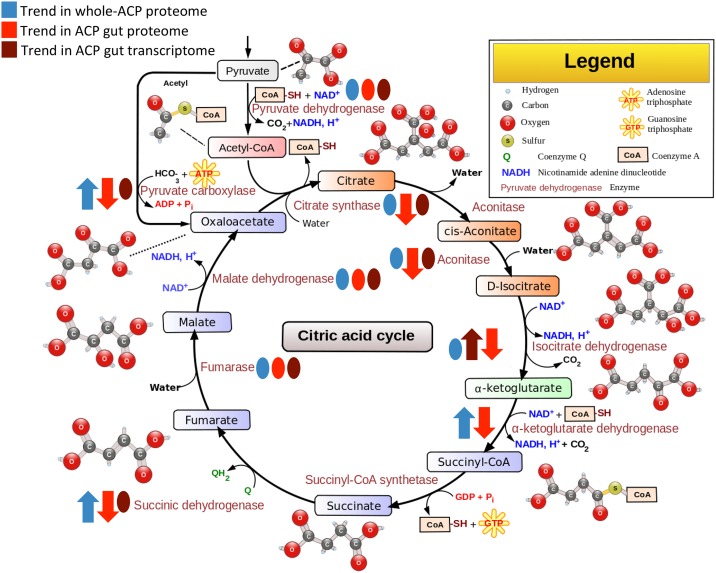
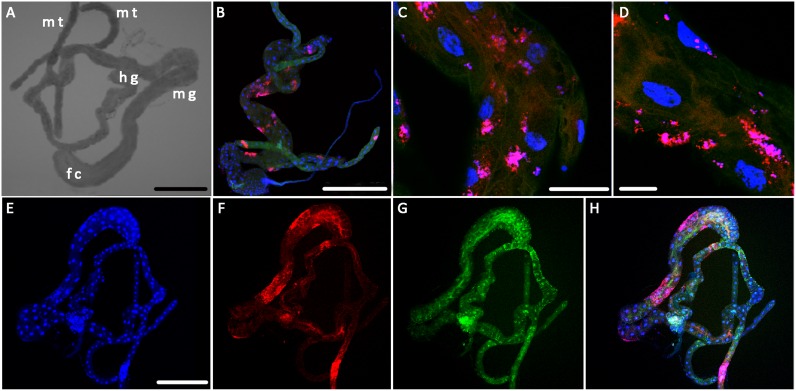
Huanglongbing, or citrus greening disease, is an economically devastating bacterial disease of citrus. It is associated with infection by the gram-negative bacterium Candidatus Liberibacter asiaticus (CLas). CLas is transmitted by Diaphorina citri, the Asian citrus psyllid (ACP). For insect transmission to occur, CLas must be ingested during feeding on infected phloem sap and cross the gut barrier to gain entry into the insect vector. To investigate the effects of CLas exposure at the gut-pathogen interface, we performed RNAseq and mass spectrometry-based proteomics to analyze the transcriptome and proteome, respectively, of ACP gut tissue. CLas exposure resulted in changes in pathways involving the TCA cycle, iron metabolism, insecticide resistance and the insect's immune system. We identified 83 long non-coding RNAs that are responsive to CLas, two of which appear to be specific to the ACP. Proteomics analysis also enabled us to determine that Wolbachia, a symbiont of the ACP, undergoes proteome regulation when CLas is present. Fluorescent in situ hybridization (FISH) confirmed that Wolbachia and CLas inhabit the same ACP gut cells, but do not co-localize within those cells. Wolbachia cells are prevalent throughout the gut epithelial cell cytoplasm, and Wolbachia titer is more variable in the guts of CLas exposed insects. CLas is detected on the luminal membrane, in puncta within the gut epithelial cell cytoplasm, along actin filaments in the gut visceral muscles, and rarely, in association with gut cell nuclei. Our study provides a snapshot of how the psyllid gut copes with CLas exposure and provides information on pathways and proteins for targeted disruption of CLas-vector interactions at the gut interface.
黄龙病,又称柑橘绿变病,是一种对柑橘经济造成严重破坏的细菌性病害。它与革兰氏阴性细菌亚洲韧皮杆菌(CLas)的感染有关。CLas由亚洲柑橘木虱(ACP)传播。为了实现昆虫传播,CLas必须在吸食受感染的韧皮部汁液时被摄入,并穿过肠道屏障进入昆虫媒介。为了研究在肠道 - 病原体界面处暴露于CLas的影响,我们分别进行了基于RNA测序和质谱的蛋白质组学分析,以分析ACP肠道组织的转录组和蛋白质组。暴露于CLas导致涉及三羧酸循环、铁代谢、杀虫剂抗性和昆虫免疫系统的途径发生变化。我们鉴定出83种对CLas有反应的长链非编码RNA,其中两种似乎是ACP特有的。蛋白质组学分析还使我们能够确定,当存在CLas时,ACP的共生菌沃尔巴克氏体的蛋白质组会受到调控。荧光原位杂交(FISH)证实,沃尔巴克氏体和CLas存在于同一ACP肠道细胞中,但在这些细胞内不共定位。沃尔巴克氏体细胞普遍存在于整个肠道上皮细胞的细胞质中,并且在暴露于CLas的昆虫肠道中,沃尔巴克氏体的滴度变化更大。在腔膜上、肠道上皮细胞细胞质中的斑点内、肠道内脏肌肉中的肌动蛋白丝上检测到CLas,很少与肠道细胞核相关联。我们的研究提供了木虱肠道应对CLas暴露的情况快照,并提供了有关在肠道界面靶向破坏CLas - 媒介相互作用的途径和蛋白质的信息。