Teoh Hooi Ling, Carey Kate, Sampaio Hugo, Mowat David, Roscioli Tony, Farrar Michelle
Department of Paediatric Neurology, Sydney Children's Hospital, Randwick, NSW, Australia.
Discipline of Paediatrics, School of Women's and Children's Health, UNSW Medicine, UNSW Sydney, Randwick, NSW, Australia.
Neural Plast. 2017;2017:6509493. doi: 10.1155/2017/6509493. Epub 2017 May 28.
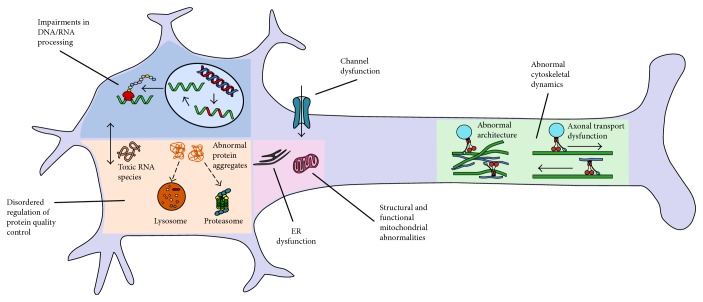
Paediatric motor neuron diseases encompass a group of neurodegenerative diseases characterised by the onset of muscle weakness and atrophy before the age of 18 years, attributable to motor neuron loss across various neuronal networks in the brain and spinal cord. While the genetic underpinnings are diverse, advances in next generation sequencing have transformed diagnostic paradigms. This has reinforced the clinical phenotyping and molecular genetic expertise required to navigate the complexities of such diagnoses. In turn, improved genetic technology and subsequent gene identification have enabled further insights into the mechanisms of motor neuron degeneration and how these diseases form part of a neurodegenerative disorder spectrum. Common pathophysiologies include abnormalities in axonal architecture and function, RNA processing, and protein quality control. This review incorporates an overview of the clinical manifestations, genetics, and pathophysiology of inherited paediatric motor neuron disorders beyond classic SMN1-related spinal muscular atrophy and describes recent advances in next generation sequencing and its clinical application. Specific disease-modifying treatment is becoming a clinical reality in some disorders of the motor neuron highlighting the importance of a timely and specific diagnosis.
儿童运动神经元疾病包括一组神经退行性疾病,其特征是在18岁之前出现肌肉无力和萎缩,这是由于大脑和脊髓中各种神经网络的运动神经元丧失所致。虽然其遗传基础多种多样,但下一代测序技术的进步已经改变了诊断模式。这强化了应对此类诊断复杂性所需的临床表型分析和分子遗传学专业知识。反过来,改进的基因技术和随后的基因鉴定使人们能够进一步深入了解运动神经元变性的机制,以及这些疾病如何成为神经退行性疾病谱的一部分。常见的病理生理学包括轴突结构和功能、RNA加工以及蛋白质质量控制方面的异常。本综述概述了除经典的与SMN1相关的脊髓性肌萎缩症之外的遗传性儿童运动神经元疾病的临床表现、遗传学和病理生理学,并描述了下一代测序技术的最新进展及其临床应用。在某些运动神经元疾病中,特定的疾病修饰治疗正成为临床现实,这凸显了及时和特异性诊断的重要性。