Manzella Livia, Stella Stefania, Pennisi Maria Stella, Tirrò Elena, Massimino Michele, Romano Chiara, Puma Adriana, Tavarelli Martina, Vigneri Paolo
Department of Clinical and Experimental Medicine, University of Catania, 95124 Catania, Italy.
Endocrinology, Department of Clinical and Experimental Medicine, Garibaldi Nesima Medical Center, University of Catania, 95122 Catania, Italy.
Int J Mol Sci. 2017 Jun 21;18(6):1325. doi: 10.3390/ijms18061325.
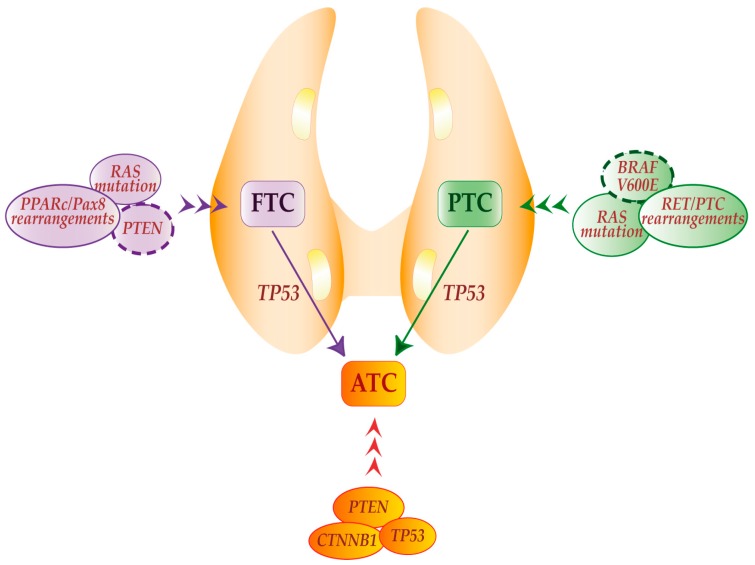
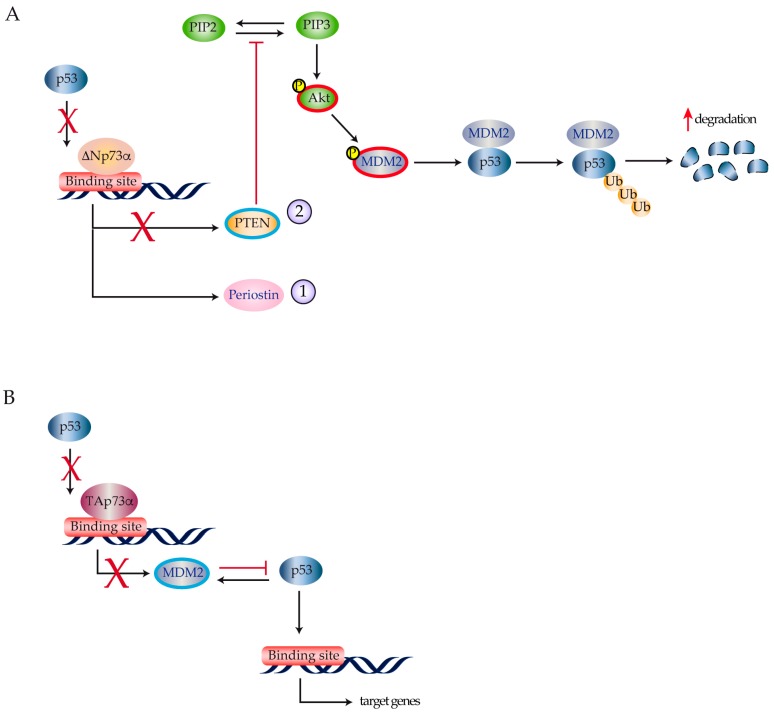
Thyroid cancers are common endocrine malignancies that comprise tumors with different clinical and histological features. Indeed, papillary and follicular thyroid cancers are slow-growing, well-differentiated tumors, whereas anaplastic thyroid cancers are undifferentiated neoplasias that behave much more aggressively. Well-differentiated thyroid carcinomas are efficiently cured by surgery and radioiodine, unlike undifferentiated tumors that fail to uptake radioactive iodine and are usually resistant to chemotherapy. Therefore, novel and more effective therapies for these aggressive neoplasias are urgently needed. Whereas most genetic events underlying the pathogenesis of well-differentiated thyroid cancers have been identified, the molecular mechanisms that generate undifferentiated thyroid carcinomas are still unclear. To date, one of the best-characterized genetic alterations leading to the development of poorly differentiated thyroid tumors is the loss of the p53 tumor suppressor gene. In addition, the existence of a complex network among p53 family members (p63 and p73) and their interactions with other factors that promote thyroid cancer progression has been well documented. In this review, we provide an update on the current knowledge of the role of p53 family proteins in thyroid cancer and their possible use as a therapeutic target for the treatment of the most aggressive variants of this disease.
甲状腺癌是常见的内分泌恶性肿瘤,由具有不同临床和组织学特征的肿瘤组成。实际上,乳头状和滤泡状甲状腺癌是生长缓慢、分化良好的肿瘤,而未分化甲状腺癌是未分化的肿瘤,其行为更具侵袭性。与未分化肿瘤不同,分化良好的甲状腺癌通过手术和放射性碘能有效治愈,未分化肿瘤无法摄取放射性碘,且通常对化疗耐药。因此,迫切需要针对这些侵袭性肿瘤的新型且更有效的治疗方法。虽然已确定了大多数分化良好的甲状腺癌发病机制背后的遗传事件,但导致未分化甲状腺癌产生的分子机制仍不清楚。迄今为止,导致低分化甲状腺肿瘤发生的最具特征性的遗传改变之一是p53肿瘤抑制基因的缺失。此外,p53家族成员(p63和p73)之间存在复杂网络及其与促进甲状腺癌进展的其他因素的相互作用已得到充分证明。在本综述中,我们提供了关于p53家族蛋白在甲状腺癌中的作用的当前知识更新,以及它们作为治疗该疾病最具侵袭性变体的治疗靶点的可能用途。