Sakamoto Ayako N, Lan Vo Thi Thuong, Fujimoto Satoru, Matsunaga Sachihiro, Tanaka Atsushi
Department of Radiation-Applied Biology Research, National Institutes for Quantum and Radiological Science and Technology, 1233 Watanuki-machi, Takasaki, Gunma 370-1292, Japan.
Faculty of Biology, Hanoi University of Science-Vietnam National University, 334 Nguyen Trai Street, Thanh Xuan, Hanoi, Vietnam.
J Radiat Res. 2017 Nov 1;58(6):772-781. doi: 10.1093/jrr/rrx024.
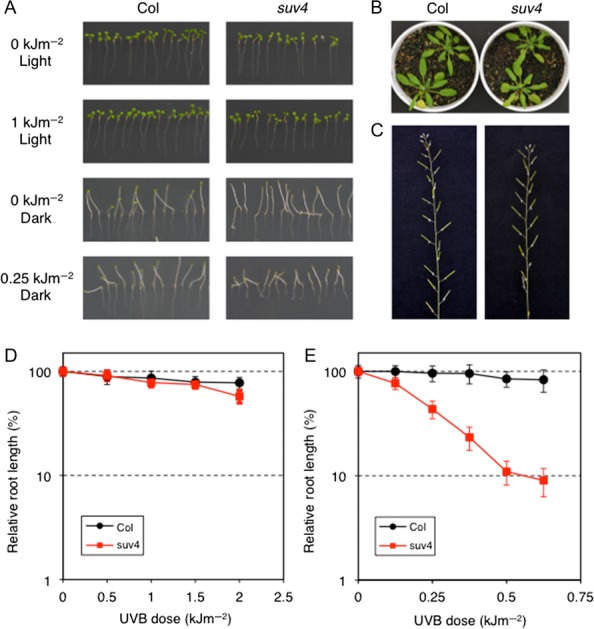
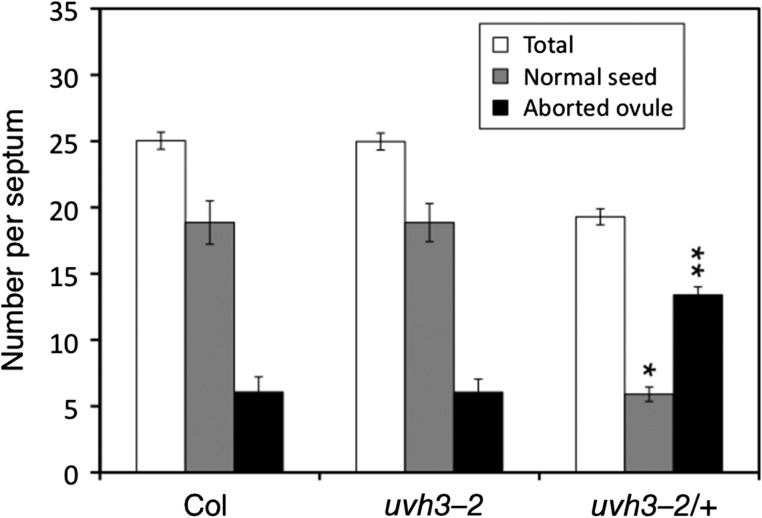
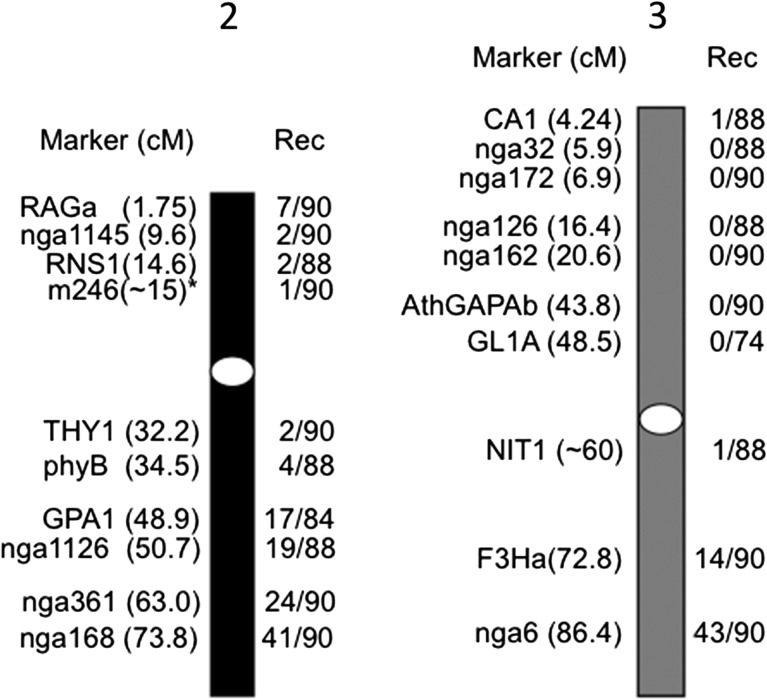
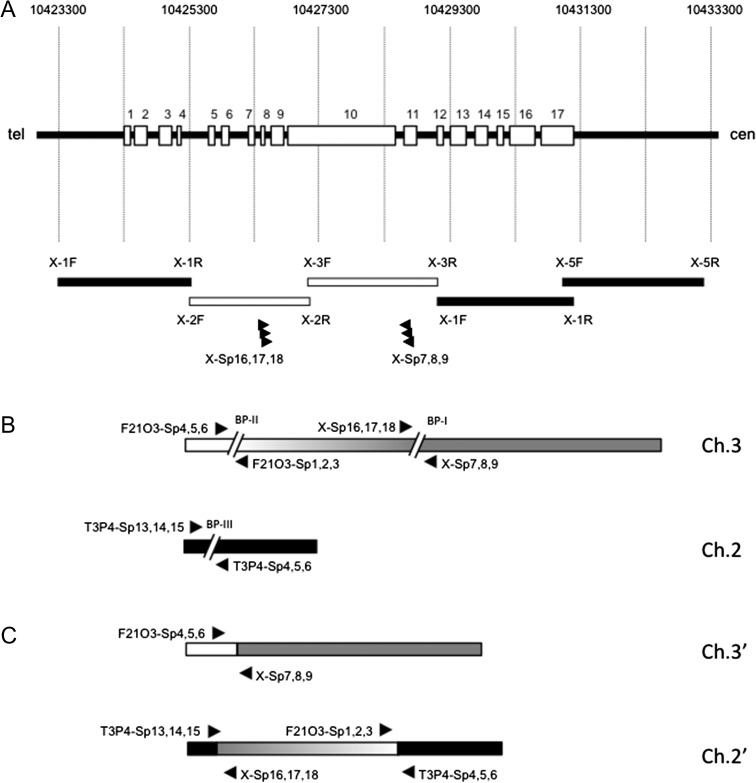
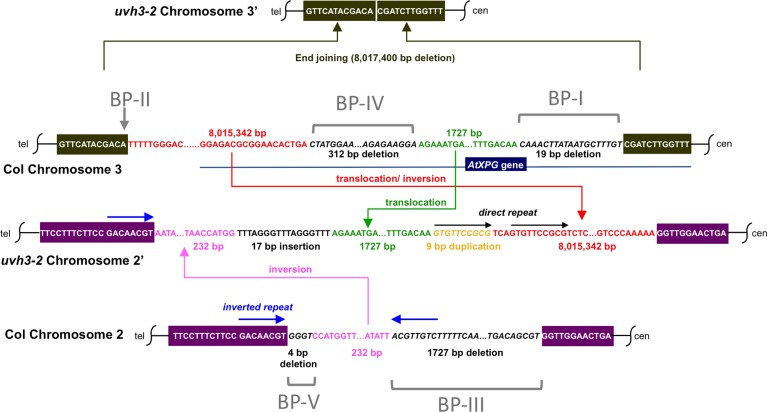
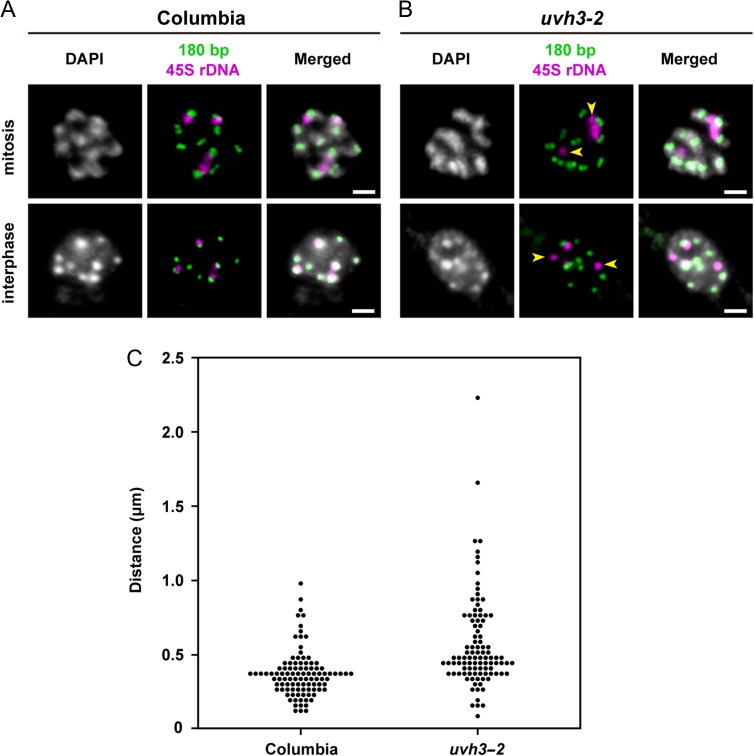
Ion beams have been used as an effective tool in mutation breeding for the creation of crops with novel characteristics. Recent analyses have revealed that ion beams induce large chromosomal alterations, in addition to small mutations comprising base changes or frameshifts. In an effort to understand the potential capability of ion beams, we analyzed an Arabidopsis mutant possessing an abnormal genetic trait. The Arabidopsis mutant uvh3-2 is hypersensitive to UVB radiation when photoreactivation is unavailable. uvh3-2 plants grow normally and produce seeds by self-pollination. SSLP and CAPS analyses of F2 plants showed abnormal recombination frequency on chromosomes 2 and 3. PCR-based analysis and sequencing revealed that one-third of chromosome 3 was translocated to chromosome 2 in uvh3-2. FISH analysis using a 180 bp centromeric repeat and 45S ribosomal DNA (rDNA) as probes showed that the 45S rDNA signal was positioned away from that of the 180 bp centromeric repeat in uvh3-2, suggesting the insertion of a large chromosome fragment into the chromosome with 45S rDNA clusters. F1 plants derived from a cross between uvh3-2 and wild-type showed reduced fertility. PCR-based analysis of F2 plants suggested that reproductive cells carrying normal chromosome 2 and uvh3-2-derived chromosome 3 are unable to survive and therefore produce zygote. These results showed that ion beams could induce marked genomic alterations, and could possibly lead to the generation of novel plant species and crop strains.
离子束已被用作诱变育种的有效工具,用于培育具有新特性的作物。最近的分析表明,除了包括碱基变化或移码在内的小突变外,离子束还会诱导大规模染色体改变。为了了解离子束的潜在能力,我们分析了一个具有异常遗传性状的拟南芥突变体。拟南芥突变体uvh3-2在无光复活作用时对UVB辐射高度敏感。uvh3-2植株正常生长并通过自花授粉产生种子。对F2植株的简单序列长度多态性(SSLP)和酶切扩增多态性序列(CAPS)分析表明,第2和第3号染色体上的重组频率异常。基于聚合酶链反应(PCR)的分析和测序显示,uvh3-2中第3号染色体的三分之一易位到了第2号染色体上。使用180 bp着丝粒重复序列和45S核糖体DNA(rDNA)作为探针的荧光原位杂交(FISH)分析表明,在uvh3-2中,45S rDNA信号的位置与180 bp着丝粒重复序列的信号位置不同,这表明一个大的染色体片段插入到了含有45S rDNA簇的染色体中。uvh3-2与野生型杂交产生的F1植株育性降低。对F2植株的PCR分析表明,携带正常第2号染色体和uvh3-2来源的第3号染色体的生殖细胞无法存活,因此无法产生合子。这些结果表明,离子束可诱导显著的基因组改变,并可能导致新植物物种和作物品系的产生。