Al-Kutbe Rabab, Payne Anne, de Looy Anne, Rees Gail A
School of Biomedical and Healthcare Sciences, Plymouth University, Drake Circus, Plymouth, Devon, PL4 8AA, UK.
School of Health Professions, Plymouth University, Plymouth, UK.
BMC Public Health. 2017 Jun 21;17(1):592. doi: 10.1186/s12889-017-4506-2.
Obesity rates in Saudi Arabia are amongst the highest in the world. It is known that teenage girls are less active than teenage boys, but less is known about the diet and activity patterns in younger girls. Therefore this study sought to investigate dietary intake and daily physical activity in girls aged 8-11 years old in Saudi Arabia.
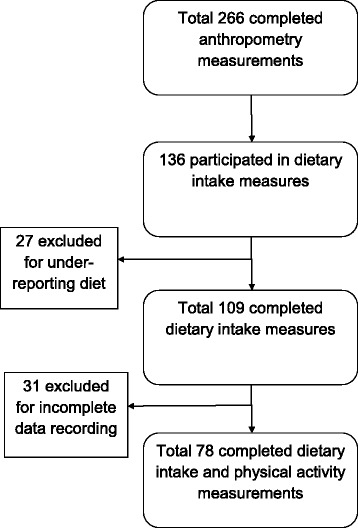
This was a cross- sectional observational study conducted in seven schools across the city of Makkah. A total of 266 girls had anthropometric measurements taken including height, weight, waist circumference and body fat estimations. Dietary assessment using a 4 day unweighed diet diary was undertaken in 136 of these participants, and 134 agreed to monitor their physical activity for the 4 days using an accelerometer. After exclusion for under-reporting, 109 remained in the dietary analysis and 78 in the physical activity analyses. Differences in means between BMI groups were determined using one-way ANOVA with post hoc Tukey test. Multivariable linear regression analysis was performed to look at the effect of multiple variables on body weight.
A total of 30% of participants were classified obese or overweight. There was a significant difference in the mean daily energy intake between the BMI groups with the obese group having the highest energy, fat, carbohydrate and protein intake (obese group: 2677 ± 804 kcal/d; healthy weight group: 1806 ± 403 kcal/d, p < 0.001), but the percentage contribution of the macronutrients to energy intake remained the same across the BMI groups. There were no differences in number of steps taken per day or time spent in moderate to vigorous intensity exercise according to BMI category. Most of the girls did not meet daily physical activity guidelines (5969 to 6773 steps per day and 18.5 - 22.5 mins per day of moderate to vigorous activity). Multiple linear regression showed that energy intake positively predicted body weight (Beta = 0.279, p =0 .001), whereas, total energy expenditure per kg of body weight and family income had a significant negative influence on body weight (Beta = -0.661, p < 0.001; -0.131, p = 0.028 respectively).
The results of this cross sectional analysis suggest that obesity in girls aged 8-11 years is linked to excessive energy intake from all macronutrients and the majority of girls in all weight categories are inactive. Research should be conducted to further investigate causal relationships in longitudinal studies and develop interventions to promote dietary change and activity that is culturally acceptable for girls in Saudi Arabia.
沙特阿拉伯的肥胖率位居世界前列。众所周知,少女的活动量比少男少,但对于年龄更小的女孩的饮食和活动模式了解较少。因此,本研究旨在调查沙特阿拉伯8至11岁女孩的饮食摄入量和日常身体活动情况。
这是一项在麦加市七所学校开展的横断面观察性研究。共对266名女孩进行了人体测量,包括身高、体重、腰围和体脂估计。其中136名参与者使用4天非称重饮食日记进行饮食评估,134名同意使用加速度计监测其4天的身体活动。在排除报告不足的情况后,109名留在饮食分析中,78名留在身体活动分析中。使用单因素方差分析和事后Tukey检验确定BMI组之间的均值差异。进行多变量线性回归分析以观察多个变量对体重的影响。
共有30%的参与者被归类为肥胖或超重。BMI组之间的平均每日能量摄入量存在显著差异,肥胖组的能量、脂肪、碳水化合物和蛋白质摄入量最高(肥胖组:2677±804千卡/天;健康体重组:1806±403千卡/天,p<0.001),但各BMI组中宏量营养素对能量摄入的贡献百分比保持不变。根据BMI类别,每日步数或中度至剧烈强度运动所花费的时间没有差异。大多数女孩未达到每日身体活动指南(每天5969至6773步,每天18.5至22.5分钟的中度至剧烈活动)。多线性回归显示,能量摄入正向预测体重(β=0.279,p=0.001),而每千克体重的总能量消耗和家庭收入对体重有显著负面影响(β=-0.661 p<0.001;-0.131,p=0.028)。
这项横断面分析的结果表明,8至11岁女孩的肥胖与所有宏量营养素的能量摄入过多有关,所有体重类别的大多数女孩都缺乏活动。应进行研究以在纵向研究中进一步调查因果关系,并制定干预措施以促进沙特阿拉伯女孩在文化上可接受的饮食变化和活动。