da Silva Isabela Rios, Tiveron Luciana Colombo Rodrigues da Cunha, da Silva Marcos Vinicius, Peixoto Alberto Borges, Carneiro Carla Aparecida Xavier, Dos Reis M A, Furtado Pedro Carvalho, Rodrigues Bárbara Rocha, Rodrigues Virmondes, Rodrigues Denise Bertulucci Rocha
Federal University of Triângulo Mineiro (UFTM) ICBN and CEFORES, Uberaba, MG, Brazil.
Laboratory of Biopathology and Molecular Biology, University of Uberaba (UNIUBE), Uberaba, MG, Brazil.
Mediators Inflamm. 2017;2017:6573802. doi: 10.1155/2017/6573802. Epub 2017 May 30.
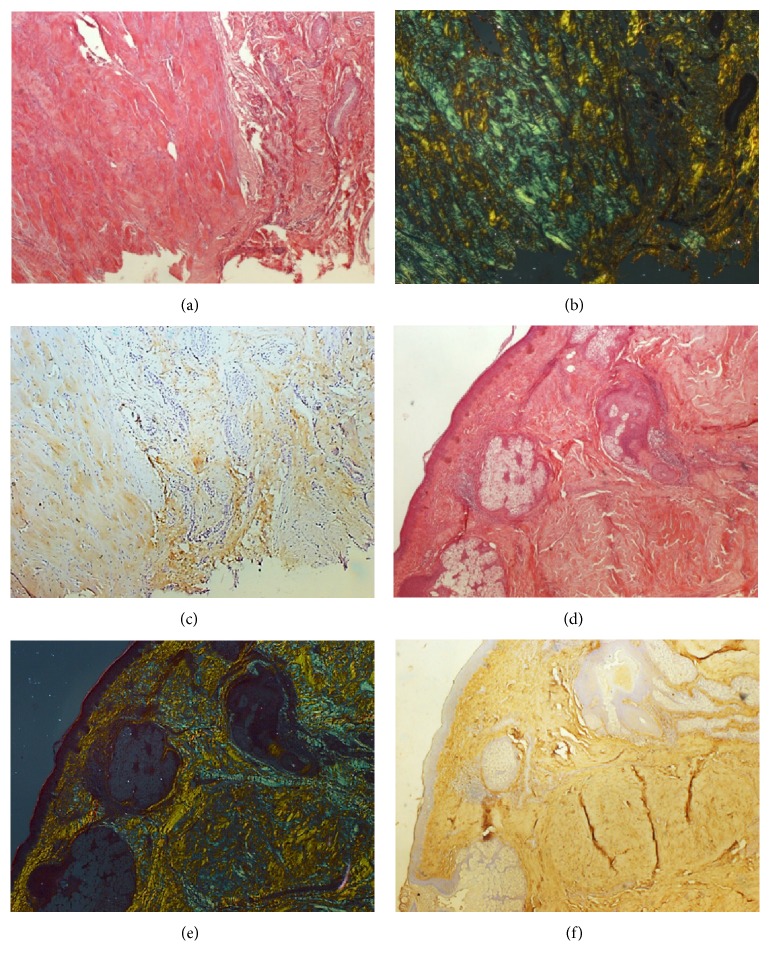
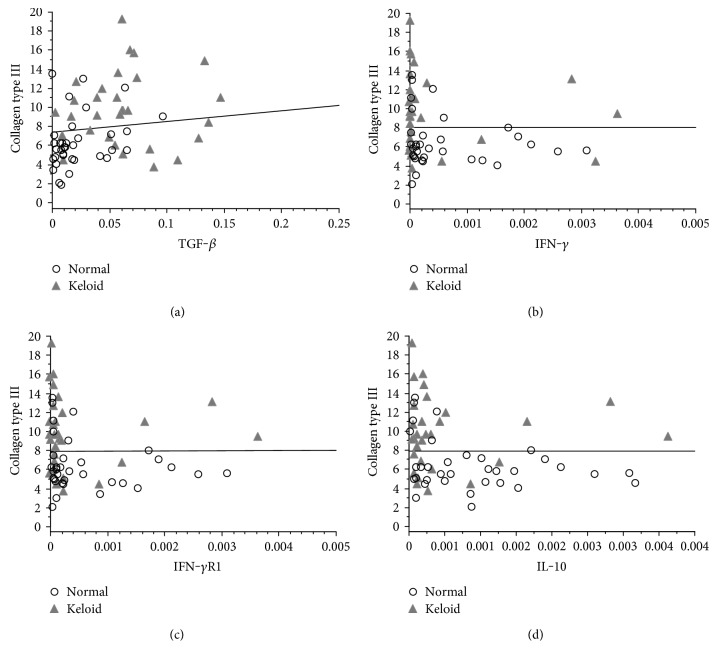
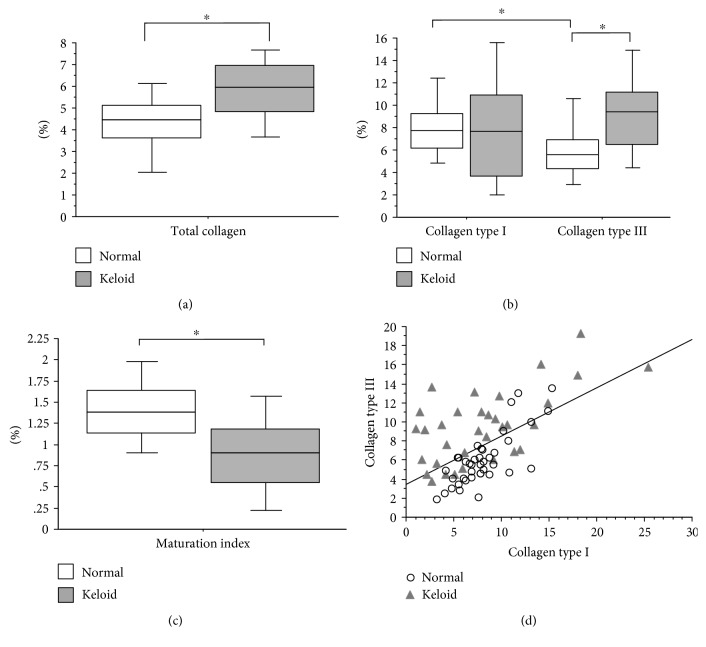
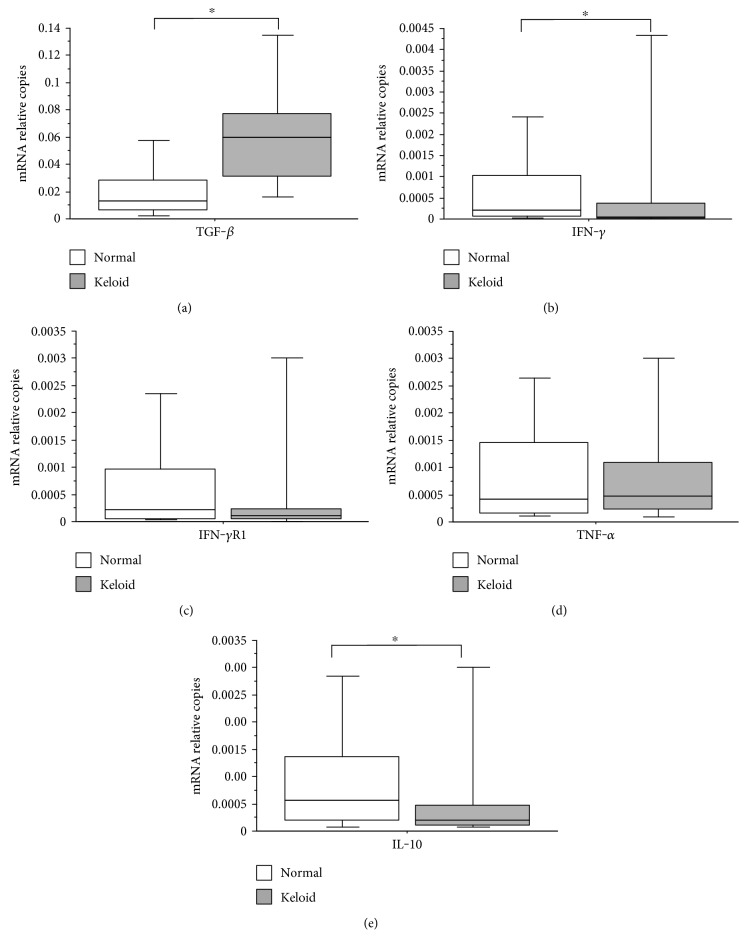
Keloids are characterized by excessive collagen deposition and growth beyond the edges of the initial injury, and cytokines may be related to their formation. The objective of this study was to evaluate the collagen fibers, analyze in situ expression of cytokines in keloid lesions, and compare to the control group. Results showed that there was a predominance of women and nonwhite and direct black ancestry. Keloid showed a significant increase in total and type III collagen. Significantly, the expression of mRNA for TGF- in keloid was increased, the expressions of IFN-, IFN-R1, and IL-10 were lower, and IFN-R1 and TNF- had no statistical difference. Correlations between collagen type III and TGF- mRNA expression were positive and significant, IFN-, IFN-R1, and IL-10 were negative and significant, and TNF- showed no statistical difference. We conclude that there was a significant increase of total collagen in keloid and predominance of collagen type III compared to the controls, showing keloid as an immature lesion. There is a significant increase in TGF- mRNA in keloid lesions, and a significant decrease in IFN- and IL-10, suggesting that these cytokines are related to keloid lesions.
瘢痕疙瘩的特征是胶原蛋白过度沉积且生长超出初始损伤边缘,细胞因子可能与其形成有关。本研究的目的是评估瘢痕疙瘩病变中的胶原纤维,分析细胞因子的原位表达,并与对照组进行比较。结果显示,女性、非白人和直接的黑人血统占主导。瘢痕疙瘩中总胶原蛋白和III型胶原蛋白显著增加。值得注意的是,瘢痕疙瘩中转化生长因子(TGF-)的mRNA表达增加,干扰素(IFN-)、干扰素受体1(IFN-R1)和白细胞介素10(IL-10)的表达较低,且干扰素受体1和肿瘤坏死因子(TNF-)无统计学差异。III型胶原蛋白与转化生长因子mRNA表达之间呈显著正相关,与干扰素、干扰素受体1和白细胞介素10呈显著负相关,肿瘤坏死因子无统计学差异。我们得出结论,与对照组相比,瘢痕疙瘩中总胶原蛋白显著增加且III型胶原蛋白占主导,表明瘢痕疙瘩是一种不成熟的病变。瘢痕疙瘩病变中转化生长因子mRNA显著增加,干扰素和白细胞介素10显著减少,表明这些细胞因子与瘢痕疙瘩病变有关。